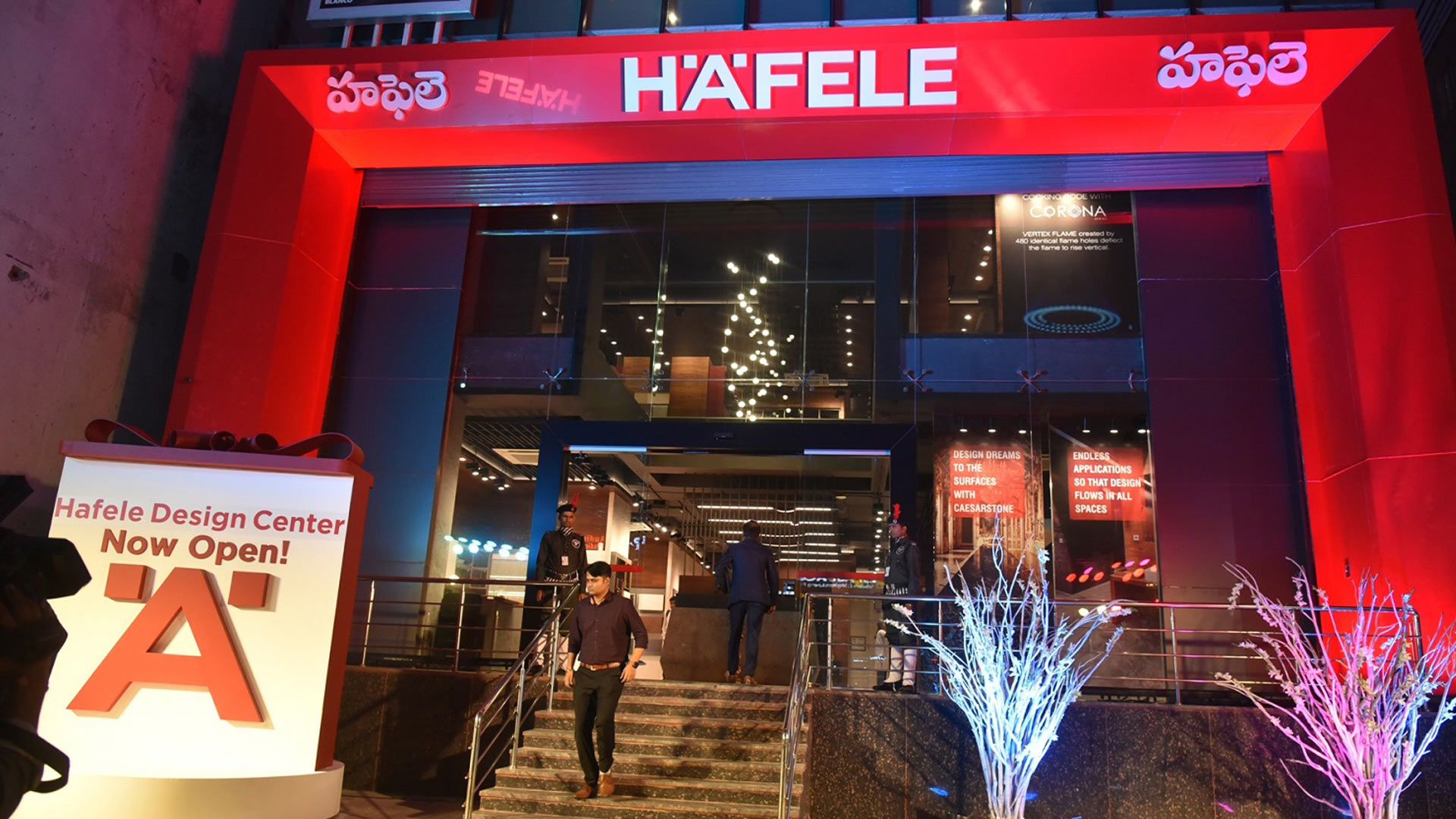
Hafele Kitchen Systems Reflect Changing Urban Living Needs
India’s evolving housing market is increasingly shaping demand for modular kitchen systems, with new product innovations highlighting a shift towards flexible, space-efficient, and design-led interiors. The introduction of aluminium profile-based island systems by Hafele reflects how urban homes are being reimagined to accommodate changing lifestyles and spatial constraints.
At the centre of this shift is the growing popularity of kitchen islands as multifunctional spaces—serving not just as cooking zones, but as social and work areas within compact urban homes. Modular systems built with aluminium profiles allow these islands to be customised using different surface materials such as wood, glass, or stone, enabling adaptable layouts that respond to varied household needs. Unlike traditional fixed cabinetry, modular island systems are designed for flexibility. Their elevated structures and lightweight frameworks allow easier installation, reconfiguration, and maintenance, aligning with the needs of increasingly dynamic urban living environments. This is particularly relevant in Indian cities, where housing layouts are becoming more compact and multifunctional.Urban planners note that such innovations are part of a broader transformation in interior design, where efficiency and adaptability are replacing permanence. As homes double up as workplaces and social spaces, kitchen design is being integrated into the wider living environment rather than treated as a separate utility zone.The use of aluminium profiles also reflects a material shift in residential interiors. Compared to traditional materials, aluminium offers durability, corrosion resistance, and a lighter structural footprint—making it suitable for modular applications. Its compatibility with multiple finishes and surfaces enables designers to maintain aesthetic consistency while improving structural performance.
From a sustainability perspective, modular systems can contribute to resource efficiency. Their ability to be reassembled or repurposed reduces material wastage during renovations, supporting incremental upgrades rather than complete replacements. Experts suggest that such approaches are aligned with circular design principles, which are becoming increasingly relevant in the built environment.The trend also intersects with the rise of organised home improvement and interior solutions markets. As more consumers seek end-to-end design solutions, companies are expanding portfolios to include integrated systems that combine functionality with visual appeal. This is driving innovation not only in products but also in installation methods and after-sales services.However, adoption remains uneven across income segments. While modular kitchen systems are gaining traction in mid- to premium housing, affordability and awareness continue to influence uptake in lower-income urban areas. Bridging this gap will be key to ensuring inclusive access to improved housing quality.
Looking ahead, the growing demand for adaptable interiors suggests that modular design will play a central role in India’s housing evolution. As cities continue to densify, solutions that optimise space, improve usability, and reduce lifecycle costs are likely to define the next phase of residential development.The rise of systems such as aluminium-based kitchen islands ultimately reflects a deeper shift—from static layouts to flexible living environments that can evolve alongside urban lifestyles.