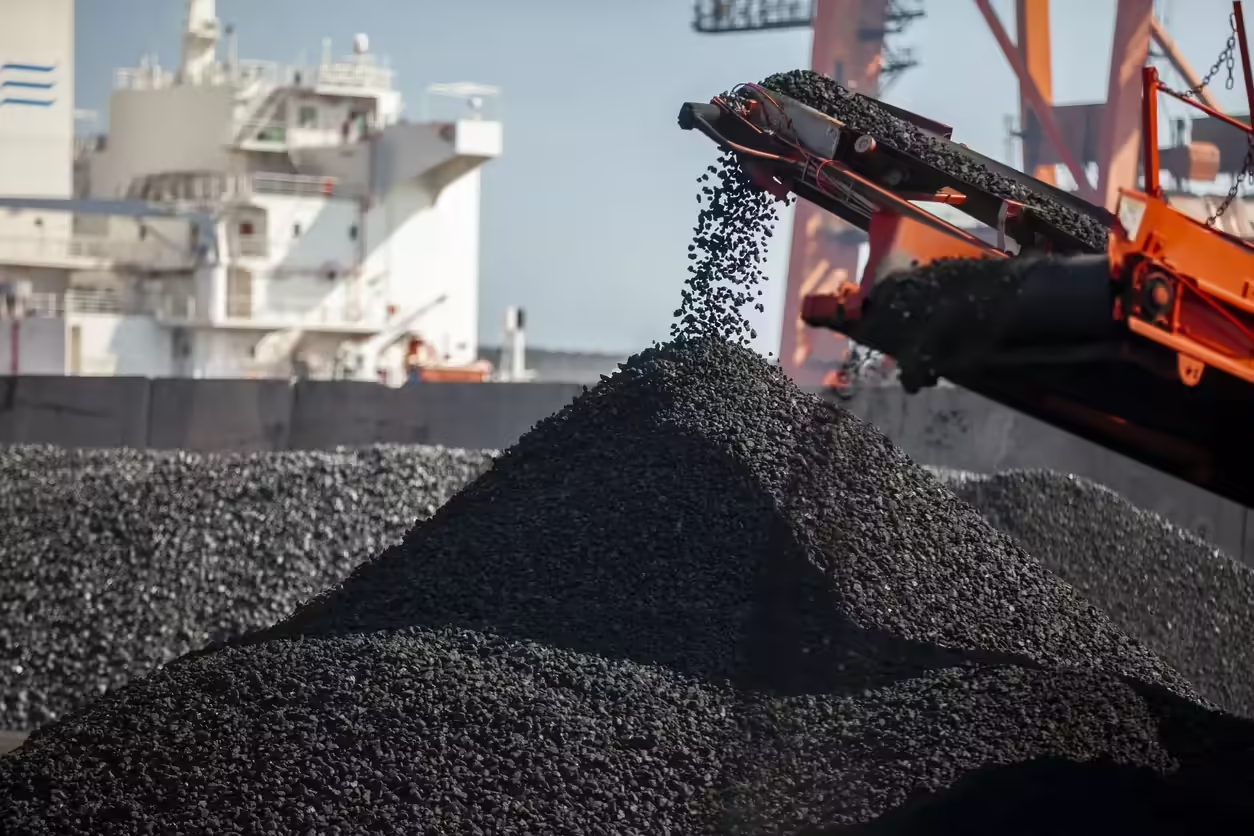
India Coal Gasification Push Targets Energy Security
India’s push to accelerate coal gasification is gaining urgency as global fuel disruptions expose the risks of heavy dependence on imported natural gas. Policymakers and industry stakeholders are increasingly viewing the technology as a strategic bridge between energy security and industrial growth.
Coal gasification converts solid coal into synthetic gas, or syngas—a mix of hydrogen, carbon monoxide, and other gases—which can be used to produce fuels, fertilisers, and industrial chemicals. This makes it a versatile alternative to imported hydrocarbons, particularly at a time when global supply chains remain volatile.The renewed focus follows delays in implementation despite earlier policy announcements. Experts note that India’s coal gasification programme has struggled to gain traction, even as the country holds one of the world’s largest coal reserves. With energy disruptions linked to geopolitical tensions, the gap between policy intent and execution is now under sharper scrutiny.At the core of the push is import substitution. India remains heavily reliant on imported natural gas, methanol, and ammonia—key inputs for sectors such as fertilisers, chemicals, and refining. Coal gasification offers a pathway to produce these domestically, potentially reducing import bills and strengthening industrial self-reliance. Government policy is beginning to align with this objective. Incentive schemes, dedicated coal block allocations, and financial support mechanisms have been introduced to encourage private and public sector participation. The broader target is to gasify 100 million tonnes of coal by 2030, signalling a long-term commitment to scaling the technology.
For urban and infrastructure systems, the implications are significant. Gasification can supply cleaner industrial fuels for sectors such as steel, cement, and urban utilities, reducing reliance on imported energy inputs. It also enables decentralised production of key materials, potentially lowering logistics costs and improving supply chain resilience for city-building activities.However, the transition is not without challenges. Coal gasification projects are capital-intensive and require specialised technology, which remains limited domestically. Additionally, India’s high-ash coal presents technical constraints, necessitating customised solutions rather than direct adoption of global models. Environmental considerations further complicate the picture. While gasification can reduce certain pollutants compared to direct coal combustion, it still generates significant carbon emissions unless paired with carbon capture technologies. Experts emphasise that its role must be carefully integrated within broader decarbonisation strategies.Despite these hurdles, industry momentum is building. Energy analysts suggest that coal gasification is increasingly being positioned as a transitional solution—one that leverages existing domestic resources while supporting a gradual shift towards cleaner fuels.
As India navigates a complex energy landscape shaped by geopolitical risks and climate commitments, the success of coal gasification will depend on execution as much as intent. For rapidly urbanising regions, the technology could play a pivotal role in ensuring that growth is supported by reliable, diversified, and increasingly efficient energy systems.