


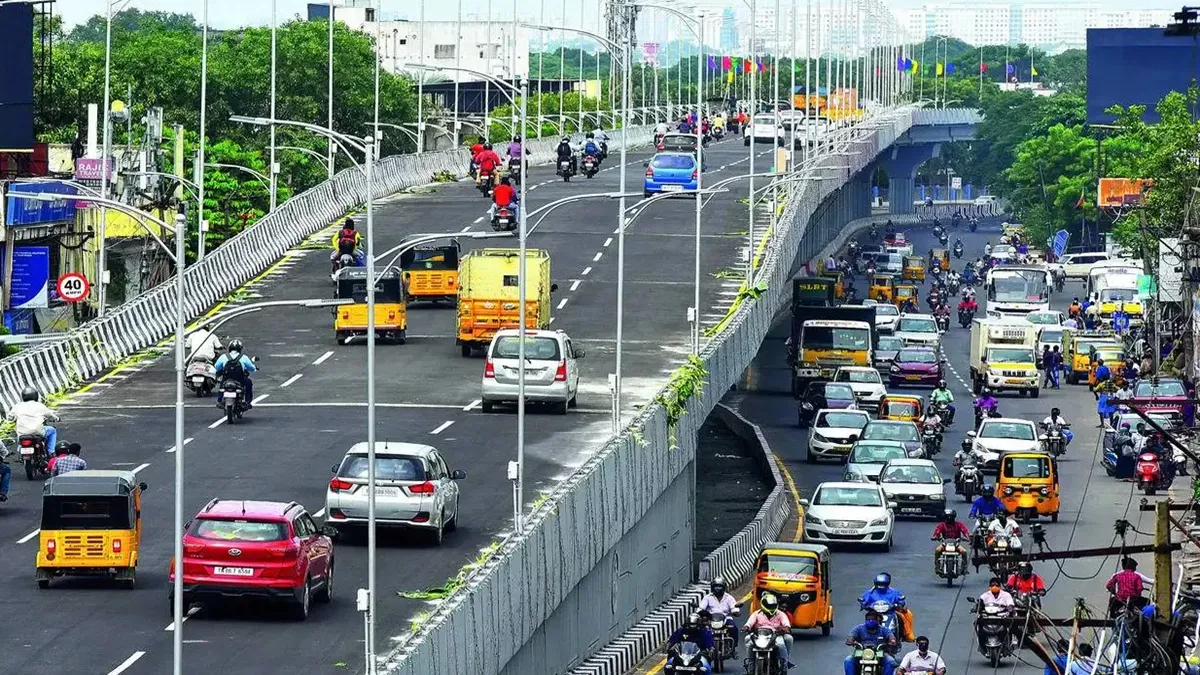
Chennai is preparing to roll out a major infrastructure upgrade aimed at easing chronic traffic congestion, with plans for a new flyover and road expansion project forming part of a broader urban mobility strategy.
The initiative reflects growing urgency to address bottlenecks in one of India’s busiest metropolitan corridors, where rising vehicle numbers and limited road capacity continue to strain daily commutes.The Chennai traffic plan focuses on improving connectivity across key junctions and arterial routes, where delays and congestion have become routine. By expanding road capacity and introducing grade-separated corridors, the project aims to reduce travel time, enhance traffic flow, and improve overall efficiency within the city’s transport network.Urban mobility experts note that infrastructure-led solutions like flyovers can provide immediate relief in high-density areas, particularly where intersections experience heavy traffic volumes. However, they also emphasise that such interventions must be integrated with long-term planning to ensure sustainable outcomes. The Chennai traffic plan highlights the need to balance capacity expansion with demand management strategies.From an economic perspective, reducing congestion can have significant benefits for urban productivity.Shorter travel times improve workforce efficiency, lower fuel consumption, and reduce logistical delays for businesses.For Chennai, a major industrial and commercial hub, enhanced mobility is critical to maintaining competitiveness and supporting economic growth.The project also underscores the importance of coordinated infrastructure development. Road expansion must be aligned with public transport systems, pedestrian pathways, and last-mile connectivity to create a comprehensive mobility framework.
Without such integration, isolated interventions may offer only temporary relief.Environmental considerations are central to the discussion. While improved traffic flow can reduce idling emissions in the short term, increased road capacity may encourage higher vehicle usage over time.Urban planners therefore stress the importance of complementing the Chennai traffic plan with investments in sustainable transport options, including public transit, cycling infrastructure, and electric mobility.The initiative also raises questions about land use and urban design.Expanding road infrastructure in densely populated areas often requires careful planning to minimise displacement and ensure equitable access. Transparent decision-making and community engagement are essential to maintaining public trust and achieving balanced outcomes.Technology is expected to play a role in enhancing the effectiveness of the project. Smart traffic management systems, real-time monitoring, and data-driven planning can optimise the use of new infrastructure and improve traffic regulation across the city.As Chennai moves forward with its congestion mitigation efforts, the success of the Chennai traffic plan will depend on its ability to integrate short-term solutions with long-term urban mobility goals.
The project represents a step towards addressing immediate challenges while highlighting the need for a more sustainable and inclusive transport strategy.Looking ahead, the focus will be on ensuring that infrastructure investments translate into lasting improvements in mobility, quality of life, and environmental performance, supporting Chennai’s continued growth as a dynamic urban centre.
Also Read:Chennai Cardiac Care Programme Targets High Risk Patients
