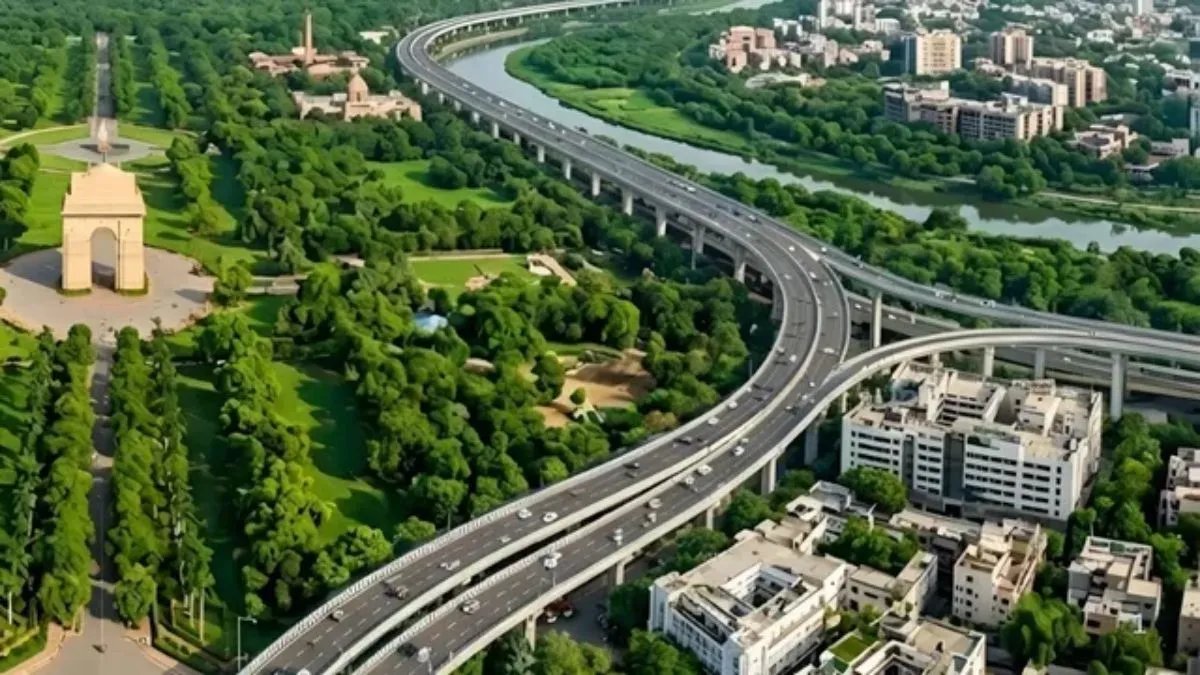
Delhi Yamuna Elevated Corridor To Reshape City Mobility
Authorities in Delhi are evaluating a major transport proposal that could reshape mobility across the capital through a high-speed elevated roadway along the banks of the Yamuna River. The proposed Yamuna Elevated Corridor, stretching about 19 kilometres between northern and south-eastern sections of the city, is being studied as part of a broader strategy to address chronic congestion while aligning road infrastructure with the expanding metro network. Urban transport officials say the corridor could become a continuous elevated route connecting several of the capital’s busiest transit nodes. If implemented, the road would link areas around Wazirabad in north Delhi to the DND Flyway near the eastern edge of the city, creating a bypass for through-traffic that currently depends on surface roads passing through dense neighbourhoods.
The Yamuna Elevated Corridor is being structured in three segments to manage construction and traffic integration more effectively. These sections would connect Surghat to the Inter-State Bus Terminal zone, extend further to the Sarai Kale Khan transport hub, and eventually reach the DND Flyway corridor. Planners believe that dividing the project into phases may allow authorities to align the infrastructure rollout with traffic demand and environmental approvals. The concept emerged during a recent review of the city’s transport infrastructure pipeline involving senior government officials and representatives of Delhi Metro Rail Corporation. The discussions focused on synchronising road expansion with mass transit development to ensure that mobility projects complement rather than compete with each other. Delhi is simultaneously witnessing one of the most significant expansions of its rail-based public transport network. Several corridors under Phase IV of the metro programme are under construction, adding more than 100 kilometres of new tracks and dozens of stations across the metropolitan region.
Transport planners argue that integrating road corridors with metro lines could reduce travel time while improving multimodal connectivity. In addition to the Yamuna Elevated Corridor, authorities are assessing a smaller flyover project linking the Tripolia Gate area with Barfkhana over a distance of just over two kilometres. The structure is intended to improve traffic circulation in one of the city’s most congested heritage districts, where narrow streets often slow vehicle movement. Infrastructure specialists say projects such as the Yamuna Elevated Corridor illustrate how Indian megacities are experimenting with multi-level mobility systems. Elevated highways, metro viaducts and double-decker structures are increasingly used to maximise limited urban land while maintaining traffic flow.
However, urban planners also emphasise the importance of balancing transport expansion with environmental sensitivity, especially in riverfront zones that play a critical role in flood management and urban ecology. Careful design, environmental safeguards and integrated mobility planning will be essential as the project advances through feasibility studies and regulatory approvals. For Delhi, where daily commuting patterns continue to evolve alongside rapid population growth, the Yamuna Elevated Corridor represents one of several infrastructure ideas being considered to build a more connected and resilient transport network.