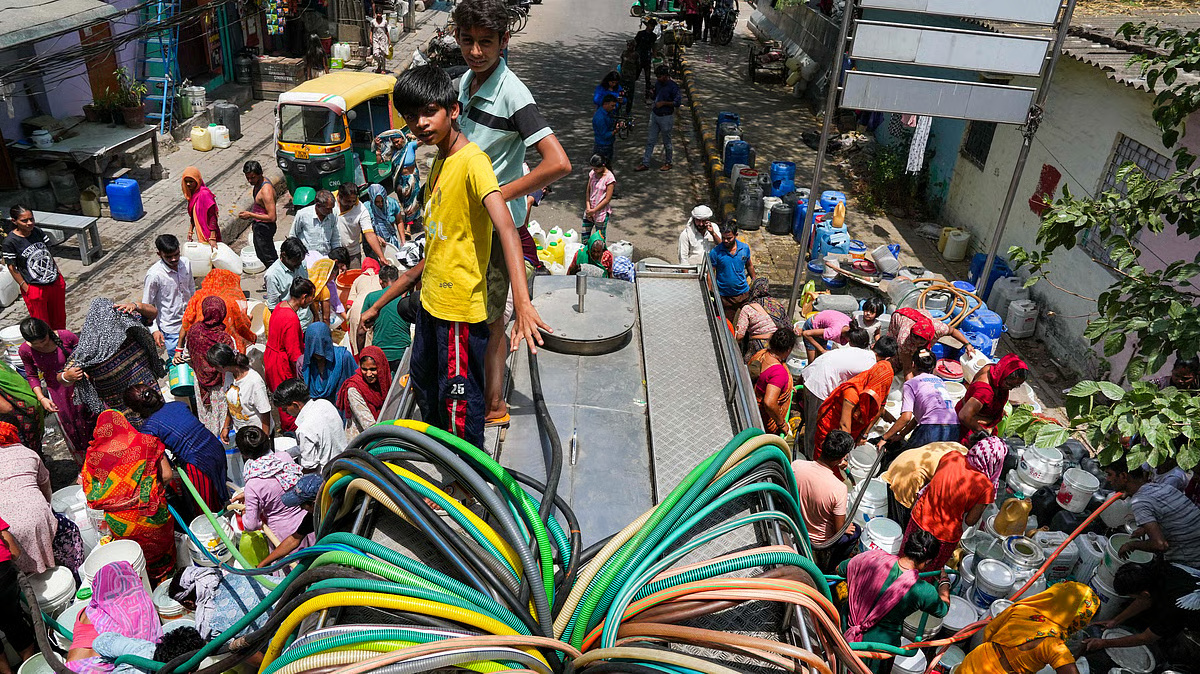
A new government audit has raised serious concerns about the scale of the Delhi water crisis, pointing to widespread contamination, ageing infrastructure and policy gaps that threaten the long-term sustainability of the capital’s water system. The assessment of the city’s water utility highlights deep structural challenges in managing drinking water supply for one of the world’s fastest-growing metropolitan regions. Investigators found that a large share of groundwater samples tested in recent years did not meet drinking water standards, raising alarms about public health risks and the reliability of the city’s broader water distribution network.
According to the audit findings, more than half of the groundwater samples analysed across multiple testing laboratories between 2017 and 2022 were unsuitable for human consumption. These results point to extensive contamination in aquifers that millions of residents depend on for household supply, particularly in areas where piped water availability remains inconsistent. Urban infrastructure specialists say the Delhi water crisis is being exacerbated by a combination of factors, including deteriorating pipelines, insufficient treatment capacity and rapid population growth. The capital’s population is projected to approach nearly 28 million in the coming decades, significantly increasing demand for safe drinking water and placing additional strain on already stressed supply networks. The audit also highlights weaknesses in governance and planning. Experts involved in the review identified the absence of a comprehensive water management framework and insufficient regulatory authority over groundwater extraction as major obstacles to effective resource management. Policy proposals intended to strengthen oversight have remained pending for years, creating gaps in accountability across agencies responsible for water supply.
Infrastructure challenges extend beyond groundwater contamination. Several sewage treatment facilities have failed to meet environmental discharge standards, allowing untreated or partially treated waste to enter the Yamuna river system. Analysts say that without significant improvements in wastewater treatment capacity, efforts to restore the river’s ecological health will remain limited. Operational constraints within the water utility have also been flagged. A significant portion of sanctioned posts remain vacant, leaving technical teams stretched and limiting the ability to monitor pipelines, treatment facilities and distribution systems around the clock. This shortage of skilled personnel complicates efforts to detect leaks, manage repairs and maintain quality testing protocols. Residents across multiple neighbourhoods have increasingly reported concerns about discoloured water, unpleasant odours and suspected contamination in household supply. Urban planners suggest that leaks in ageing pipelines located close to drainage lines may allow sewage or industrial waste to seep into the potable water network, particularly in older districts where infrastructure is decades old.
Environmental analysts say these vulnerabilities reflect a broader challenge facing rapidly urbanising cities. As demand rises and infrastructure ages, cities must invest in modern treatment plants, smart monitoring systems and resilient pipeline networks to ensure safe drinking water for growing populations. Experts argue that addressing the Delhi water crisis will require coordinated policy reforms, stronger regulatory oversight and sustained investment in water infrastructure. Without systemic changes, the risks posed by contamination, shortages and deteriorating supply networks are likely to intensify in the coming years.