Chandigarh Region Expansion Boosts Planned Urban Growth
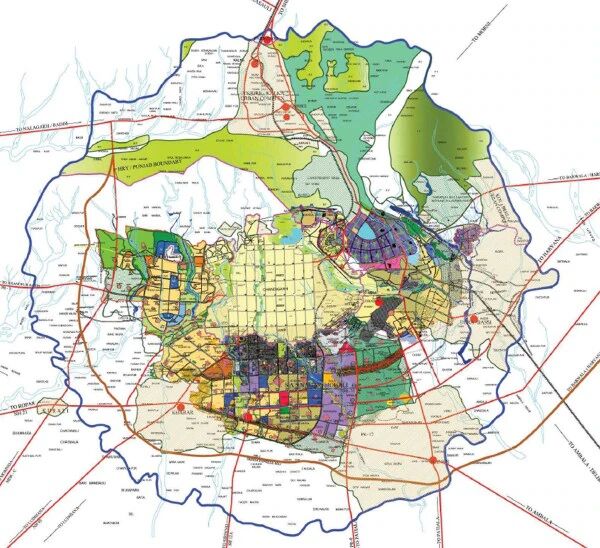
Punjab is preparing a large-scale land acquisition drive in Mohali, with plans to secure over 11,000 acres to support a new phase of urban expansion around the Chandigarh region. The move signals a significant shift in regional planning, as authorities seek to accommodate future population growth, infrastructure demand and economic activity through a planned urban extension.
The proposed development is expected to function as a complementary urban zone to Chandigarh, easing pressure on the existing city while creating capacity for residential, commercial and institutional growth. Officials indicate that the initiative is being framed as a long-term strategy to address land scarcity and rising demand in one of north India’s fastest-growing urban clusters. At the centre of the proposal is the Mohali land acquisition Chandigarh expansion, which aims to transform peri-urban areas into structured development zones. The scale of acquisition reflects the increasing need for integrated planning in regions where urban boundaries are rapidly blurring. Mohali, already a key part of the tri-city region with Chandigarh and Panchkula, has seen accelerated real estate and infrastructure growth over the past decade. Urban planners suggest that such large-scale land pooling or acquisition exercises are critical to avoiding fragmented, unregulated expansion.
By securing land in advance, authorities can design infrastructure networks—roads, drainage, utilities and public spaces—in a coordinated manner, rather than retrofitting them into already congested areas. The initiative is also expected to unlock new opportunities for economic development. Planned urban extensions often attract investment in sectors such as IT, logistics, education and healthcare, creating employment and diversifying the regional economy. Mohali’s proximity to Chandigarh’s administrative and institutional base makes it a natural candidate for such expansion. However, the scale of the Mohali land acquisition Chandigarh expansion raises important questions around land use, rehabilitation and environmental impact. Experts emphasise the need for transparent processes, fair compensation frameworks and inclusive planning to ensure that local communities are not adversely affected. Integrating green buffers, water management systems and climate-resilient infrastructure will also be critical, given the ecological sensitivity of the region.
The proposal aligns with a broader national trend where cities are expanding through planned satellite developments rather than unstructured sprawl. Such approaches aim to create balanced urban regions, distributing population and economic activity across multiple nodes while maintaining connectivity through transport corridors. From a real estate perspective, the announcement is likely to influence land values and investment patterns in and around Mohali. Developers and investors typically respond to large-scale infrastructure announcements with early-stage land aggregation, potentially reshaping the region’s property market dynamics. The success of the project will depend on execution—particularly how effectively planning translates into on-ground development. Coordinating multiple agencies, ensuring infrastructure readiness and maintaining regulatory oversight will be essential to avoid delays and speculative distortions.
As Punjab advances this ambitious expansion plan, the coming years will determine whether the region can evolve into a more balanced and sustainable urban cluster. If implemented with strong governance and environmental safeguards, the project could redefine growth patterns in the Chandigarh tri-city region and offer a model for planned urban expansion across India.