



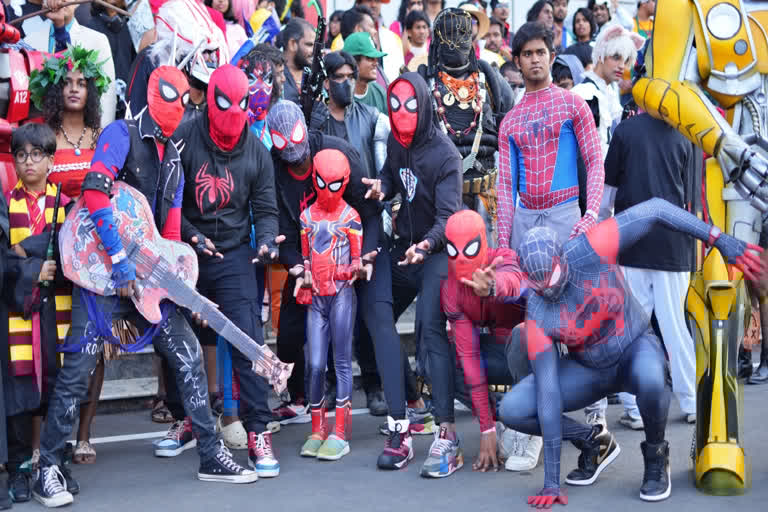
Kolkata’s growing prominence in India’s experiential economy was on display as the city’s latest Comic Con edition drew large crowds, underlining the rising demand for immersive cultural events that blend global pop culture with local identity.
The scale of participation signals a shift in how urban centres are leveraging entertainment-led gatherings to drive economic activity, tourism, and youth engagement.With tens of thousands of attendees over the event period, Kolkata Comic Con has positioned itself as more than a fan convention—it has become a platform for creative industries, independent artists, and local businesses to converge. Exhibitors ranged from merchandise creators and illustrators to gaming studios and content producers, reflecting the diversification of India’s cultural economy. Urban analysts note that such events are increasingly contributing to city-level economic ecosystems by generating short-term employment, boosting hospitality demand, and encouraging ancillary spending.The success of the event also points to Kolkata’s evolving urban identity, where heritage and contemporary culture coexist. By integrating local artistic expressions with global fandoms, the convention created opportunities for regional creators to access wider audiences. This hybridisation is seen as critical for cities aiming to remain culturally relevant while participating in global creative networks.
From an infrastructure perspective, large-scale experiential events place new demands on urban systems, including venue capacity, transport connectivity, and crowd management. Experts highlight that cities hosting such gatherings must invest in adaptable public spaces and efficient mobility solutions to support growing footfall without straining existing infrastructure. In this context, Comic Con-style events serve as a test case for how well urban environments can handle periodic surges in activity.Sustainability considerations are also becoming increasingly important in the planning of such events. Waste management, energy use, and material consumption are key areas where organisers and city authorities are expected to collaborate. Integrating eco-friendly practices into large gatherings aligns with broader goals of building climate-conscious urban economies, particularly as experiential events continue to scale.The rise of events like Kolkata Comic Con reflects a broader trend across Indian cities, where experience-driven consumption is reshaping economic priorities. Younger demographics, in particular, are driving demand for interactive and community-oriented spaces, prompting both public and private stakeholders to rethink urban development strategies.
As Kolkata continues to host and expand such events, the focus is likely to shift towards creating a more structured ecosystem that supports the creative economy while ensuring inclusivity and sustainability. Strengthening infrastructure, enabling local talent, and embedding responsible practices will be key to sustaining the momentum generated by the city’s growing experiential landscape.
Also Read:Kolkata LPG Shortage Impacts Poila Boishakh Celebrations
