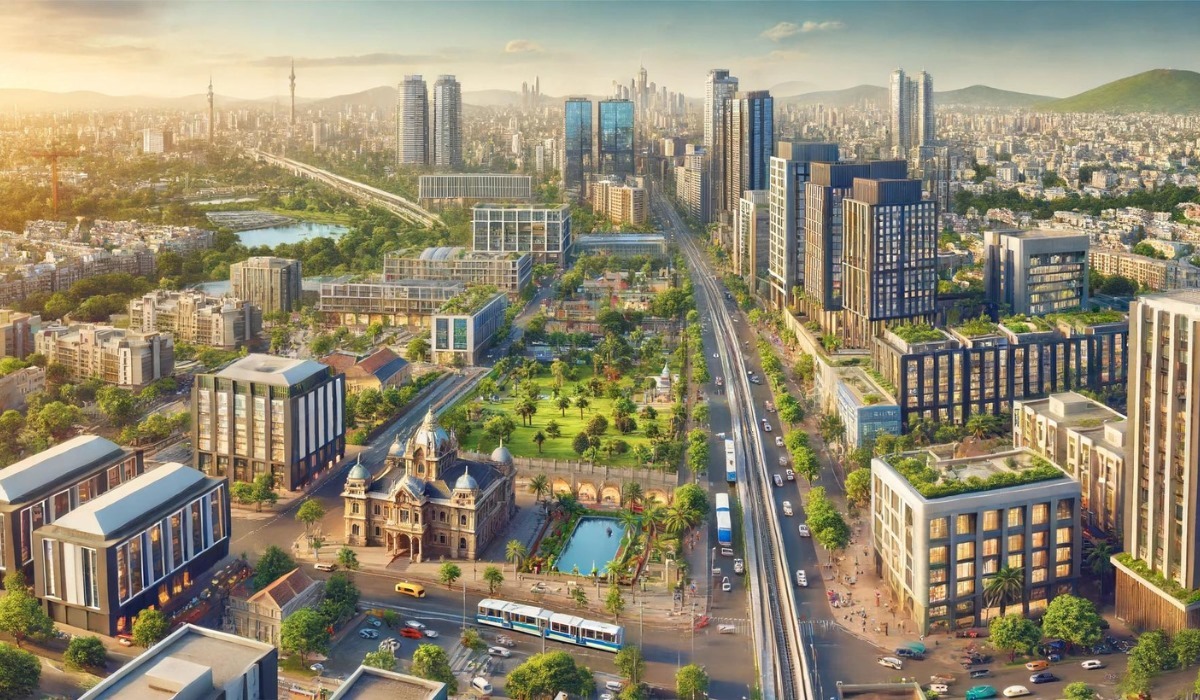
Pune Real Estate Growth Reshapes Urban Development Outlook
Pune’s urban expansion is entering a new phase, with fresh industry assessments pointing to sustained momentum in housing demand, infrastructure investment, and construction-led economic activity. The latest sectoral review indicates that Pune’s real estate growth has accelerated significantly in recent years, positioning the city as one of India’s most closely watched urban markets.
Estimates suggest that annual residential sales have climbed to nearly ₹66,000 crore, marking a sharp rise compared to levels seen earlier this decade. Analysts attribute this surge to a combination of stable employment drivers, relatively affordable housing compared to metros, and sustained migration linked to the city’s education and technology sectors. Pune’s real estate growth, in this context, reflects not just market appetite but also deeper structural shifts in how mid-tier cities are absorbing urban expansion. A key factor underpinning this trajectory is the scale of planned and ongoing infrastructure upgrades. Transport investments including metro rail extensions, proposed ring road corridors, and integrated regional planning across municipal jurisdictions are gradually reshaping land use patterns. Urban planners note that such connectivity improvements tend to unlock peripheral zones, redistribute density, and create new residential clusters, though they also raise concerns about managing sprawl and ecological stress.
Beyond physical infrastructure, the construction ecosystem itself is undergoing transformation. Industry observers highlight the increasing interdependence between developers, design professionals, contractors, and financial intermediaries. This collaborative model is becoming critical in navigating regulatory compliance, cost pressures, and evolving buyer expectations. Digital tools, in particular, are being used to streamline project execution and sales processes, signalling a gradual shift towards more data-driven real estate practices. At the policy level, experts point to redevelopment opportunities within established neighbourhoods as a parallel growth driver. As land availability tightens in core areas, redevelopment offers a pathway to optimise existing urban footprints while improving building standards and resilience. However, this approach requires careful balancing of stakeholder interests, especially in terms of tenant rehabilitation and infrastructure capacity.
The broader implication of Pune’s real estate growth lies in its potential to influence sustainable urbanisation. While the expansion supports economic activity and job creation, it also places pressure on water resources, mobility systems, and green cover. Urban development specialists argue that future growth must align more closely with climate-responsive planning, compact city principles, and inclusive housing strategies to ensure long-term liveability. As Pune continues to evolve, the focus is likely to shift from rapid expansion to managed growth where infrastructure, policy, and market forces converge to shape a more resilient urban environment. The coming years will test whether this growth can be sustained without compromising environmental balance or social equity.