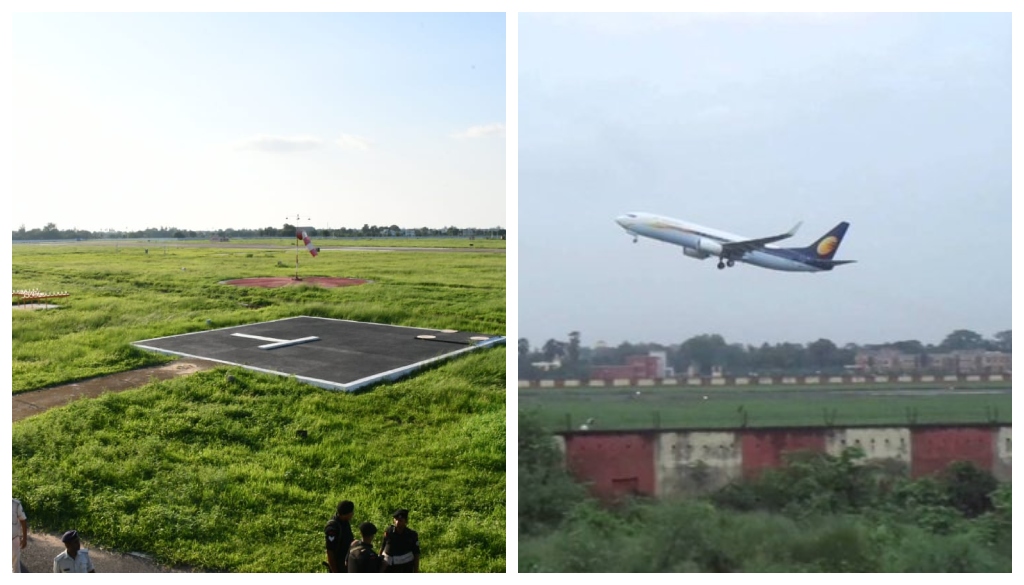
Patna Runway Expansion Plan Faces Urban Constraints
Efforts to expand the runway at Patna’s airport have re-entered policy focus, with authorities initiating fresh institutional discussions to resolve long-standing land and technical constraints. The evolving Patna runway expansion plan is being positioned as critical to improving aircraft operations, easing capacity limitations, and enabling the city’s transition toward enhanced regional and international connectivity.
A recent high-level review has led to the formation of a dedicated coordination mechanism to examine feasibility, signalling a shift from fragmented deliberations to a more structured approach. The move reflects growing urgency as passenger demand rises and infrastructure upgrades—such as a new terminal—begin to outpace airside capacity. At present, the airport operates with a relatively short runway of around 6,800 feet, which restricts the full-load operation of several aircraft types. Aviation experts note that such limitations often require airlines to impose payload restrictions or limit route expansion, reducing the economic efficiency of flights. Extending the runway to accommodate larger aircraft has been a long-standing requirement to unlock higher-capacity operations and support potential international services. However, the Patna runway expansion plan remains deeply entangled in urban geography. The airport is located within a densely built environment, bordered by critical infrastructure and natural assets, leaving limited scope for physical expansion. Previous assessments have highlighted the need to acquire additional land at both ends of the runway—an exercise complicated by the presence of transport corridors, institutional land, and ecological zones.
Land acquisition continues to be the most significant barrier. Multiple agencies—including railways, environmental authorities, and local administration—must align before any extension can proceed. Earlier delays have been attributed to the inability to secure contiguous land parcels, underscoring the complexity of expanding legacy infrastructure within constrained urban settings. From an urban development perspective, the implications extend beyond aviation. Expanding runway capacity could reshape Patna’s economic geography by enabling direct long-haul routes, improving cargo movement, and attracting investment linked to logistics, tourism, and services. For a city witnessing rapid population growth and spatial expansion, improved air connectivity is increasingly tied to its competitiveness within eastern India. At the same time, planners caution that large-scale airside expansion must be integrated with broader urban systems. Road access, public transport links, and land-use planning around the airport will need to evolve in parallel to prevent congestion and ensure equitable access. Environmental considerations—particularly noise, emissions, and land use—are also expected to influence project design in the coming stages. The Patna runway expansion plan is also being evaluated alongside alternative aviation strategies, including the development of new or supplementary airport infrastructure in the wider region. This dual-track approach reflects the recognition that incremental upgrades alone may not fully address long-term demand in a rapidly urbanising state.
As deliberations progress, the project’s trajectory will depend on how effectively institutional coordination, land negotiations, and technical feasibility converge. If executed successfully, the runway expansion could mark a turning point in Bihar’s aviation infrastructure, enabling safer, more efficient operations while supporting the city’s broader ambitions for economic and urban transformation.