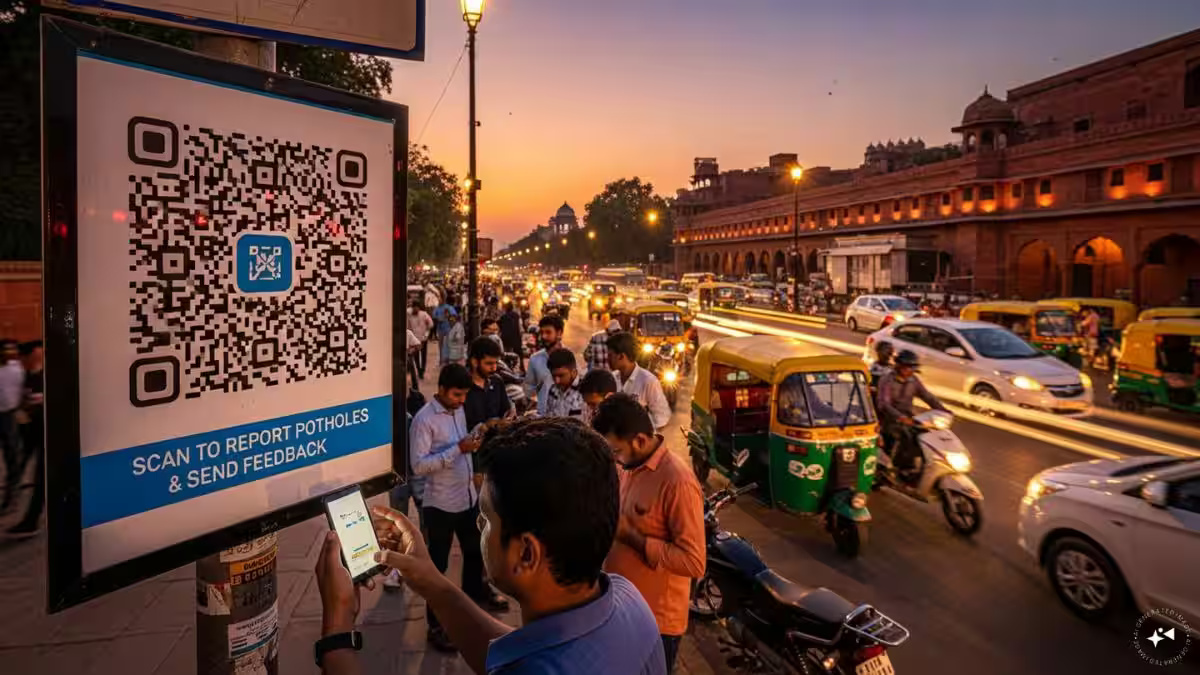
Delhi’s public road network is set to become more transparent and accountable with the introduction of a QR Code Road Monitoring System, an initiative aimed at giving citizens direct access to information about road construction and maintenance projects across the city. The new mechanism, introduced by the city’s public works department, places scannable QR codes on display boards installed near newly repaired or resurfaced roads. Once fully implemented, the boards will appear at major intersections, bus stops and high-traffic corridors. Officials say the move is designed to make public infrastructure spending more transparent while also enabling residents to report defects such as potholes or damaged surfaces in real time.
When scanned using a smartphone, the code directs users to a webpage that outlines key details of the roadwork undertaken. This includes the name and length of the road segment, the completion date of the project, and the total cost of construction funded through public expenditure. The portal also identifies the executing contractor and the government agency responsible for overseeing the work. Urban governance experts say initiatives like the QR Code Road Monitoring System represent a shift toward data-driven civic management. By publishing project specifications and financial details in an accessible format, authorities can strengthen oversight of infrastructure contracts while improving public trust in municipal spending. The system also introduces a maintenance accountability component. Information linked to each code specifies the warranty period during which contractors remain legally responsible for fixing defects such as cracks or potholes at no additional cost to the government. This mechanism is expected to discourage poor construction practices and encourage higher-quality road building. A key feature of the initiative is the integrated citizen feedback portal.
Residents scanning the code can submit complaints or observations about the condition of the road, allowing authorities to track issues more quickly than traditional reporting channels According to officials involved in the programme, this digital feedback loop will help departments prioritise repairs and monitor contractor performance. To maintain reliability, procedural safeguards have been introduced. Local engineering divisions must install QR code boards within a week of completing roadwork projects and submit compliance reports within ten days. Inspection teams will also conduct periodic checks to ensure the codes remain functional and that the information displayed online remains accurate. Urban planners note that such technology-led monitoring systems are increasingly becoming part of smart city governance models. In dense urban environments like Delhi, where road infrastructure is under constant stress from heavy traffic, real-time reporting and transparent project data can help improve maintenance cycles and extend asset life.
If implemented effectively, the QR-based monitoring system could transform how citizens interact with civic infrastructure, turning routine roadworks into a publicly trackable process. Authorities say the initiative will expand gradually across the capital, potentially setting a precedent for other Indian cities seeking more accountable and digitally enabled urban management.