


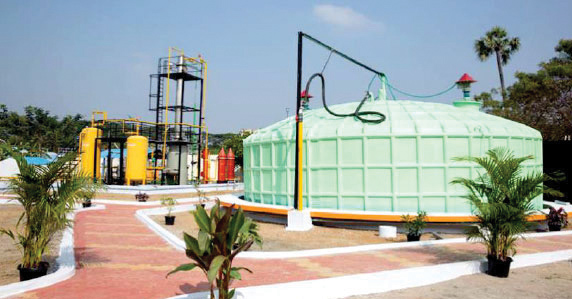
Indore has strengthened its position as a leader in sustainable urban systems by converting wet waste into biogas to power hundreds of city buses, demonstrating a scalable model of circular economy in public transport. The initiative links solid waste management directly with clean mobility, reducing both landfill dependency and fossil fuel consumption. The Indore biogas project processes organic waste collected from households and commercial establishments to generate compressed biogas, which is then used as fuel for public transport buses. By integrating waste treatment with fuel production, the city has created a closed-loop system that maximises resource efficiency while addressing multiple urban challenges simultaneously.
Officials indicate that the project has significantly reduced the volume of wet waste reaching landfills, while also lowering emissions associated with conventional fuels. For a city managing growing waste volumes, this dual benefit is critical in improving environmental outcomes and operational efficiency. Urban sustainability experts highlight that the Indore biogas project represents a shift from linear waste disposal models to regenerative systems. Instead of treating waste as a liability, cities can convert it into a resource that supports essential services such as transport and energy. This approach not only reduces environmental impact but also creates economic value from existing urban streams. The initiative also contributes to cleaner urban mobility. Public buses powered by biogas emit fewer pollutants compared to diesel vehicles, helping improve air quality in densely populated areas. As cities across India grapple with rising vehicular emissions, such models offer practical pathways for transitioning to low-carbon transport systems. From an economic perspective, the project can reduce fuel costs for public transport operations over time, while creating new opportunities in waste processing and energy production. It also strengthens the resilience of urban systems by diversifying energy sources and reducing dependence on external fuel supply chains. The Indore biogas project has broader implications for urban planning and infrastructure development. Integrating waste management with energy and transport systems requires coordinated governance and investment, but it can lead to more efficient and sustainable cities. Such models are increasingly relevant as urban populations grow and resource pressures intensify. There are also social benefits. Improved waste management reduces health risks associated with unmanaged garbage, while cleaner transport enhances the quality of life for residents. Ensuring that such systems are inclusive and accessible can further strengthen their impact.
Experts note that scaling similar initiatives in other cities will depend on factors such as waste segregation practices, institutional capacity, and financial viability. Public participation, particularly in segregating waste at source, remains a critical component of success. As Indore continues to expand its sustainability initiatives, the integration of waste-to-energy systems with public transport offers a compelling blueprint for other cities. The Indore biogas project illustrates how urban infrastructure can be reimagined to deliver environmental, economic, and social benefits in a single framework.
ALSO READ – Indore Auto Manufacturing Hub Expands With New Facility
Indore Biogas Project Powers Buses With Urban Waste
