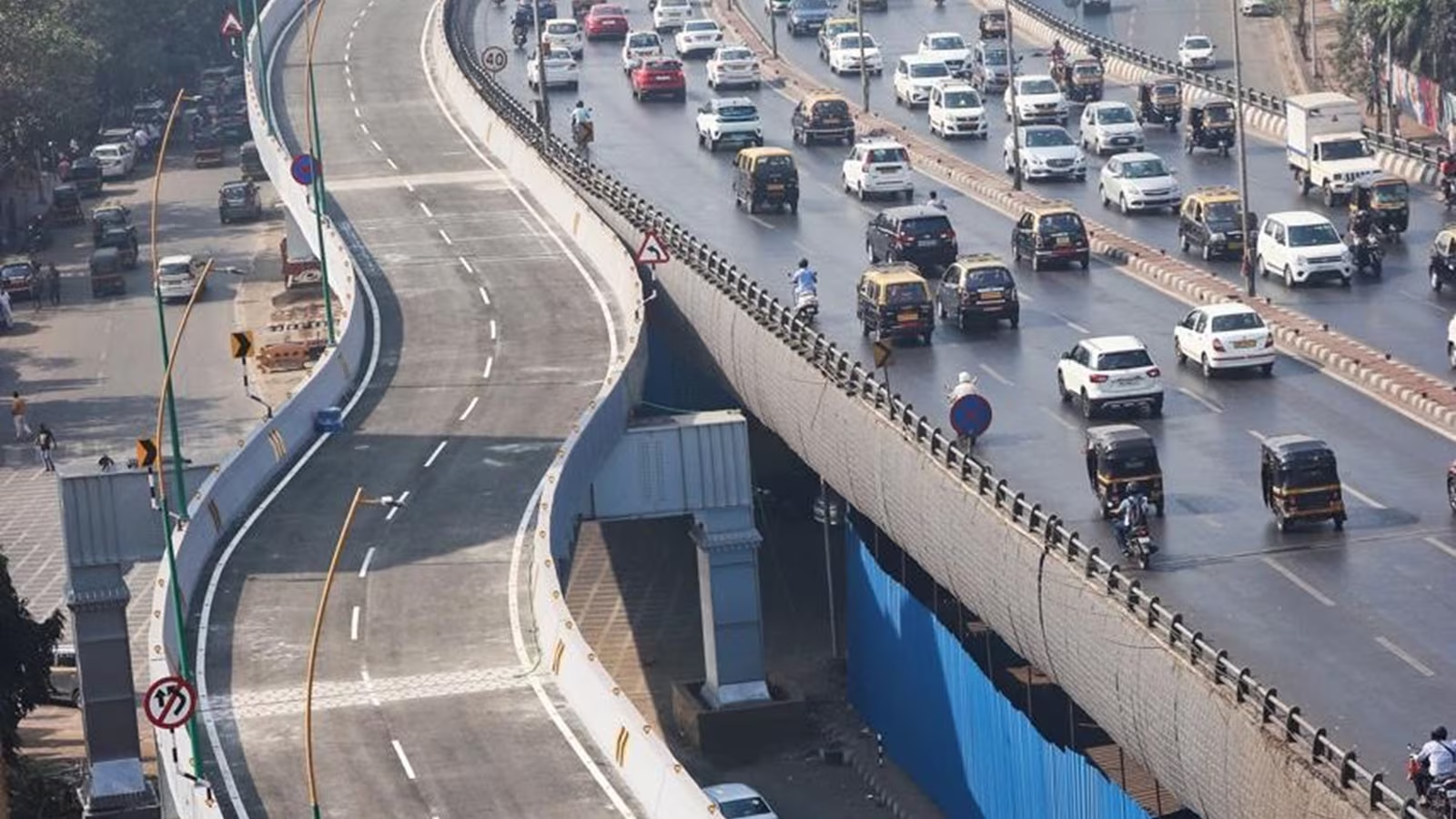
Mumbai’s ongoing expansion of the Tilak Flyover in Dadar reflects a broader push to upgrade ageing transport infrastructure and ease congestion along some of the city’s busiest corridors. The widening work underway is aimed at improving traffic flow capacity in a high-density urban zone that serves as a key east-west connector.The project focuses on strengthening and widening the existing structure to accommodate increasing vehicular volumes. Authorities are redesigning the flyover to handle heavier and more continuous traffic movement, reducing bottlenecks that have intensified with rising urbanisation and vehicle ownership.
Located in Dadar—one of Mumbai’s most critical transit nodes—the Tilak Flyover plays a vital role in linking residential, commercial, and transport hubs. Its strategic position means even minor disruptions can ripple across the wider city network, affecting commute times and logistics efficiency.The upgrade is part of a larger effort to modernise legacy infrastructure across Mumbai. Many of the city’s flyovers and bridges were designed decades ago for lower traffic volumes and are now under pressure from exponential growth in mobility demand. Expanding existing structures, rather than building entirely new corridors, is increasingly being adopted as a pragmatic solution in space-constrained urban environments.In parallel, a broader redevelopment plan is also underway to replace the ageing Tilak Bridge with a six-lane structure being constructed in phases. The first phase, expected to deliver three operational lanes, is targeted for completion in 2026, with full expansion planned in subsequent stages. This phased approach allows traffic to continue flowing while upgrades are executed incrementally.Urban mobility experts note that such interventions are essential but not sufficient on their own. While widening projects can ease immediate congestion, long-term solutions will depend on integrated planning that combines road upgrades with public transport expansion, demand management, and transit-oriented development.
From a commuter perspective, the benefits are expected to include smoother traffic flow, reduced idling time, and improved travel reliability along one of Mumbai’s busiest stretches. However, short-term disruptions during construction—such as diversions and restricted access—remain a challenge for daily users.The project also highlights the complexities of infrastructure upgrades in dense cities. Construction must be carried out alongside active traffic movement, requiring careful coordination between civic agencies, traffic authorities, and contractors. Delays or misalignment between agencies can extend timelines and increase costs.From a sustainability standpoint, easing congestion has indirect environmental benefits. Reduced stop-and-go traffic can lower vehicular emissions and fuel consumption, contributing to improved urban air quality. However, experts caution that capacity expansion should be balanced with investments in public transport to avoid inducing additional traffic demand.
Looking ahead, the Tilak Flyover expansion represents a microcosm of Mumbai’s broader infrastructure challenge—modernising critical assets while keeping the city moving.As urban growth continues to intensify, the success of such projects will depend not just on engineering upgrades, but on how effectively they are integrated into a wider mobility strategy that prioritises efficiency, resilience, and long-term sustainability.