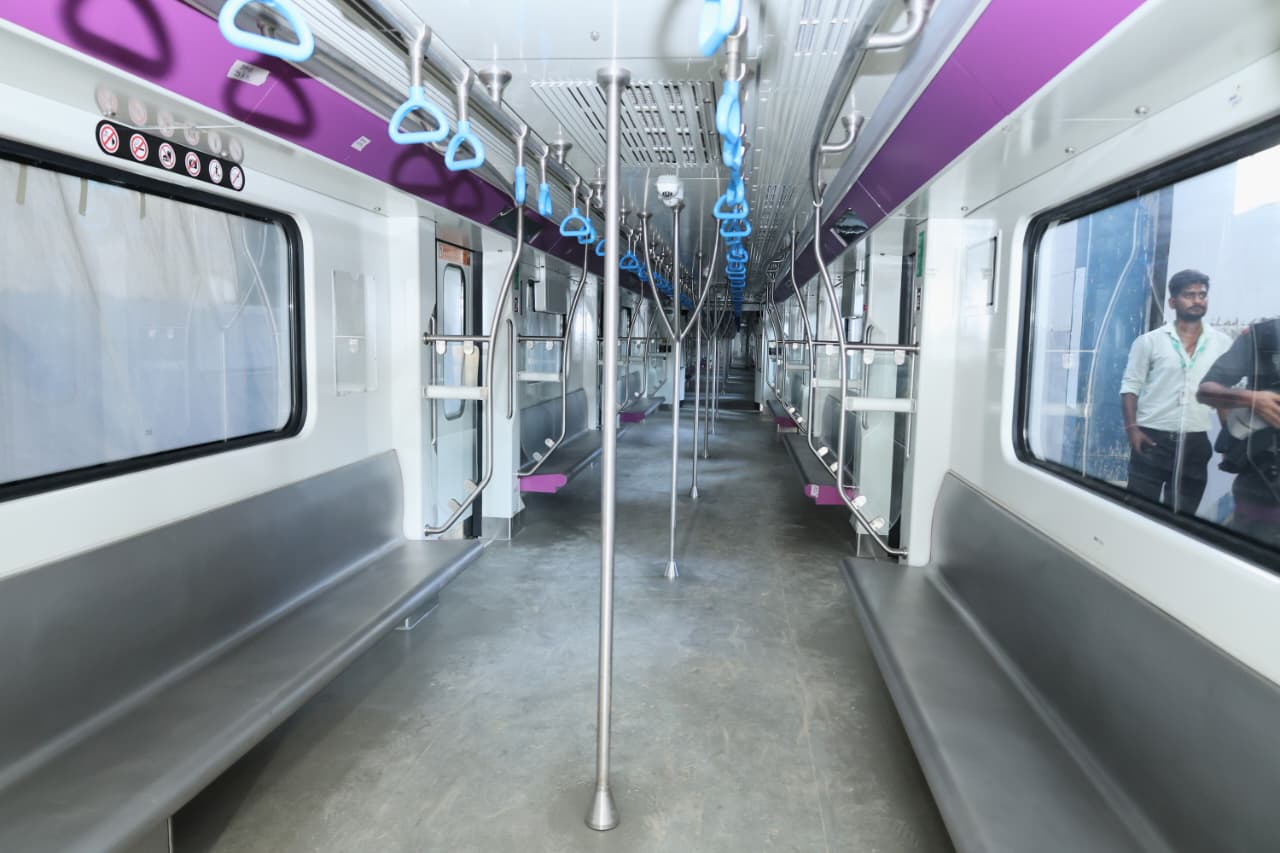
Patna’s urban transport network is preparing for its next expansion phase after a successful round of operational testing cleared the way for two additional metro stations to begin services. The development follows earlier trial operations on the city’s priority corridor and marks another step in the gradual rollout of the Patna Metro system, which is expected to reshape daily commuting patterns in the Bihar capital.
The new stations are part of the elevated stretch that connects key residential and commercial neighbourhoods in eastern Patna. Public information on the project indicates that stations such as Malahi Pakri and Khemnichak are among the major nodes on the corridor, both designed to serve densely populated areas that currently rely heavily on road transport. Urban transport planners say the expansion is significant not because of the distance covered, but because it extends high-capacity public transit deeper into neighbourhoods where congestion has been growing rapidly. The priority corridor, which links the city’s eastern growth belt to a major bus terminal, was always intended to open in phases so that operations could begin while construction continues in other sections.
The Patna Metro project includes two main corridors with more than 20 planned stations and is being implemented with financial and technical support from multiple agencies, including international development partners. Project documents indicate that the system has been designed to minimise land acquisition while improving connectivity between residential zones, administrative centres and emerging commercial districts. The trial runs completed earlier were intended to test signalling, train speeds, braking systems and passenger safety features before wider public access is allowed. A government development newsletter released late last year confirmed that the testing phase had already reached a key milestone, with metro trains being evaluated for operational readiness before further expansion of services.
For residents, the opening of additional stations could gradually reduce dependence on private vehicles and informal transport, which currently dominate mobility in the city. Urban mobility experts point out that even small extensions can have a noticeable impact in high-density cities, particularly when stations are located near residential clusters and bus routes that feed passengers into the metro network. There is also a broader urban-development implication. Reliable metro connectivity often changes how cities grow, encouraging more compact, transit-oriented neighbourhoods rather than uncontrolled outward expansion. In a city like Patna, where infrastructure growth has struggled to keep pace with population increase, the gradual extension of the metro system could support more balanced development while improving air quality and travel time reliability.
With the next set of stations likely to become operational soon after the festive period, attention will shift to safety certification and integration with other modes of public transport. How effectively the expanded network connects commuters to workplaces, schools and commercial areas will determine whether the metro becomes a central part of daily mobility in the city.