Chandigarh Tactile Home By IDS Reflects Minimal Living
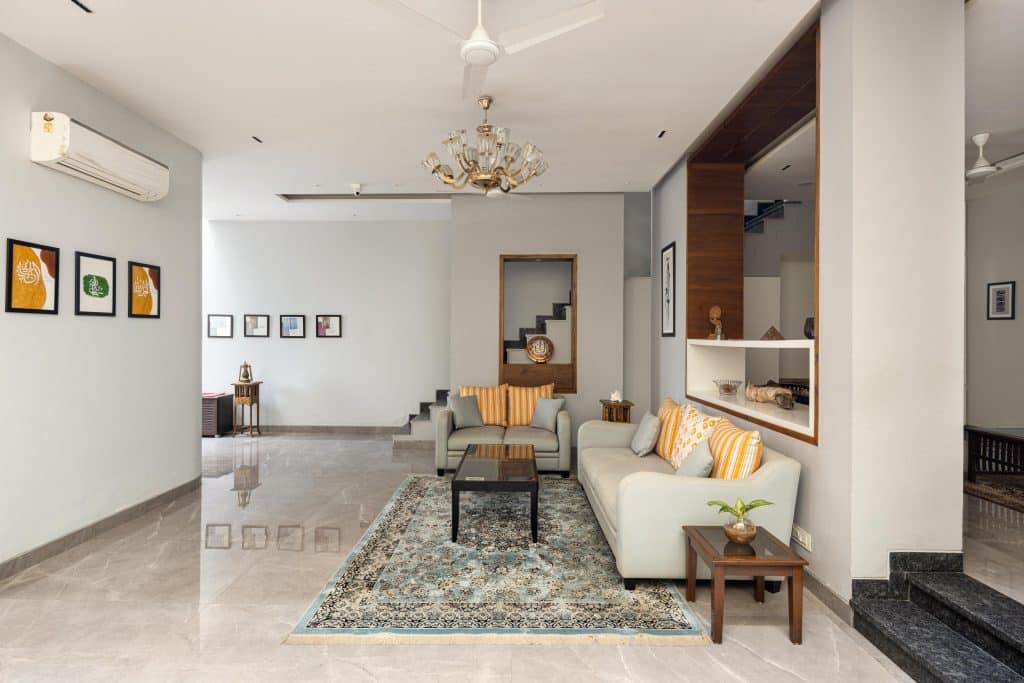
A compact residence in Chandigarh is redefining how small urban homes can deliver both sensory richness and spatial efficiency, as a 425 sq ft project by Sargam Sethi IDS demonstrates the potential of tactile, material-led design in dense city environments.Conceived as an exploration of texture and materiality, the home—named ‘Maati’—focuses on creating a grounded, earthy experience within a limited footprint. The design prioritises natural finishes, muted tones, and handcrafted elements, transforming a compact layout into a layered and immersive living space.
Rather than relying on visual opulence, Sargam Sethi IDS adopts a restrained approach that emphasises touch, warmth, and sensory engagement. Materials such as natural plaster, wood, and stone are used to create a cohesive palette, reinforcing a connection to the earth while enhancing the perceived depth of the interiors.The spatial planning of the 425 sq ft home reflects a growing shift in urban housing design, where efficiency is balanced with experiential quality. Multi-functional zones, seamless transitions, and minimal partitions help maximise usable space without compromising comfort. This approach is increasingly relevant in cities where rising land costs and densification are driving demand for smaller, more efficient homes.Design experts note that such projects signal a departure from conventional compact housing, which often prioritises functionality over experience. By focusing on tactile qualities and material authenticity, homes like this introduce a new dimension to small-space living—one that engages occupants beyond visual aesthetics.
From an urban development perspective, the Chandigarh residence aligns with broader trends towards sustainable and mindful living. The use of natural materials not only reduces reliance on synthetic finishes but also contributes to healthier indoor environments. Passive design strategies, including the careful use of light and ventilation, further enhance comfort while lowering energy consumption.The project also reflects a cultural shift in how urban dwellers perceive space. Instead of equating larger homes with better living, there is a growing appreciation for well-designed, compact spaces that offer both functionality and emotional connection. This is particularly relevant for younger urban populations and professionals seeking efficient yet meaningful living environments.By grounding the design in material honesty and sensory richness, Sargam Sethi IDS demonstrates how compact homes can achieve a strong identity without excess. The emphasis on craftsmanship and simplicity also supports local design practices, reinforcing the role of regional materials and techniques in contemporary architecture.
Looking ahead, such projects are likely to influence the future of urban housing in India. As cities continue to densify, the focus will increasingly shift towards quality over quantity—where thoughtful design, sustainability, and sensory experience define the next generation of homes within constrained urban footprints.