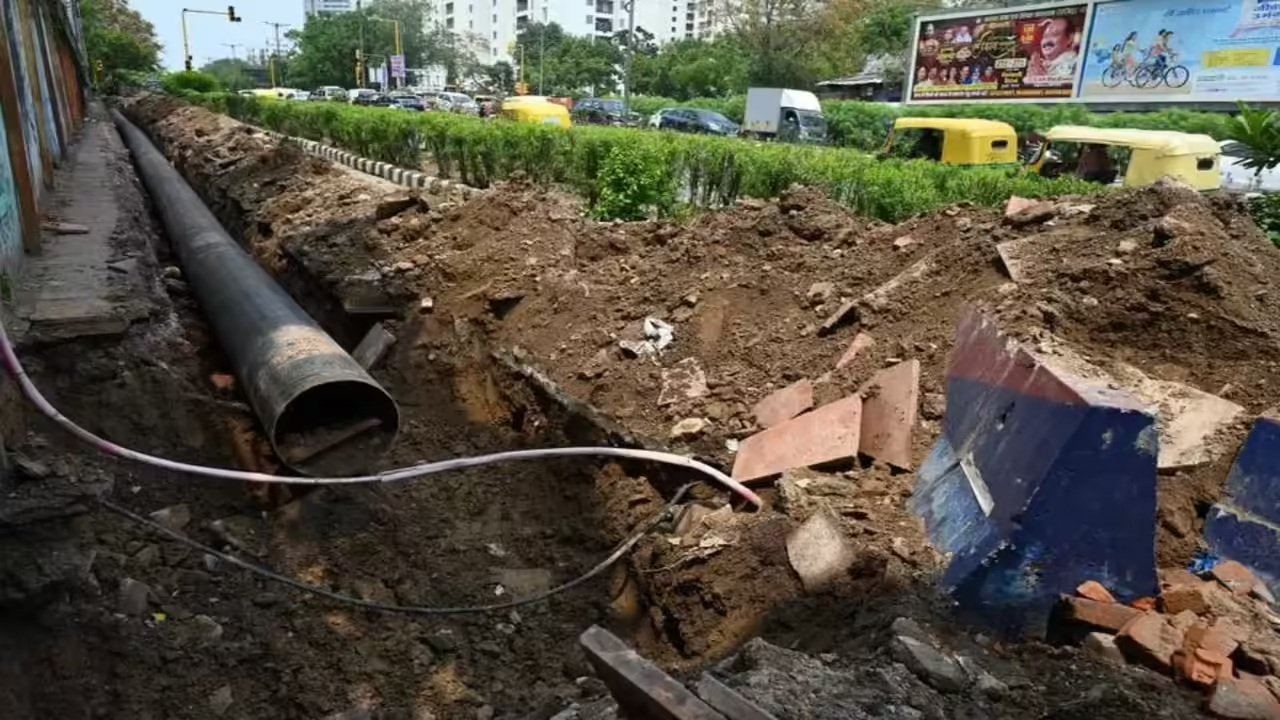
A critical urban infrastructure upgrade in west Delhi is facing delays, raising concerns over public health and service delivery in one of the capital’s residential clusters. Authorities have reported that less than half of the planned sewer line construction in Janakpuri has been completed, even as contamination risks in drinking water continue to draw regulatory scrutiny. The project, designed to prevent the mixing of sewage with potable water, has achieved only partial progress so far. Officials attribute the slowdown to construction restrictions imposed during periods of severe air pollution, when activities are curtailed under graded response measures. These interruptions have disrupted timelines, pushing completion targets further into the summer months.
The urgency of the sewer line construction stems from repeated findings of microbial contamination in local water samples. Monitoring by pollution control agencies has indicated the presence of coliform bacteria, including E. coli, which are widely recognised as indicators of faecal contamination. Such findings suggest potential breaches in pipeline integrity, often linked to ageing infrastructure and inadequate separation between sewage and water supply networks. Urban infrastructure specialists note that pipeline corrosion and leakages remain a persistent issue in older neighbourhoods. When pressure imbalances occur—particularly in intermittent water supply systems—contaminants can enter drinking water pipelines through cracks or faulty joints. Addressing these vulnerabilities requires not only new sewer lines but also comprehensive rehabilitation of water distribution systems. The case has also come under judicial oversight, following complaints from residents regarding unsafe water quality. Legal intervention has added pressure on implementing agencies to expedite work while maintaining compliance with environmental regulations.
Authorities have responded by increasing manpower and deploying additional machinery in an effort to recover lost time. From a broader perspective, the situation highlights the complex interplay between environmental governance and infrastructure delivery. While pollution control measures are essential for public health, they can inadvertently slow critical urban projects if alternative execution strategies are not in place. Experts suggest that building resilience into project planning—such as phased construction or off-site fabrication—could help mitigate such disruptions. The implications extend beyond a single neighbourhood. Reliable sanitation and safe drinking water are foundational to urban liveability, influencing health outcomes, property values, and overall quality of life. Inadequate infrastructure can also lead to higher long-term costs, as repeated repairs and emergency interventions strain public resources.
As the revised deadline approaches, the focus will be on whether accelerated efforts can bridge the gap between planned and actual progress. The outcome will serve as a test of how effectively city agencies can balance regulatory constraints with the urgent need for infrastructure upgrades in densely populated areas.