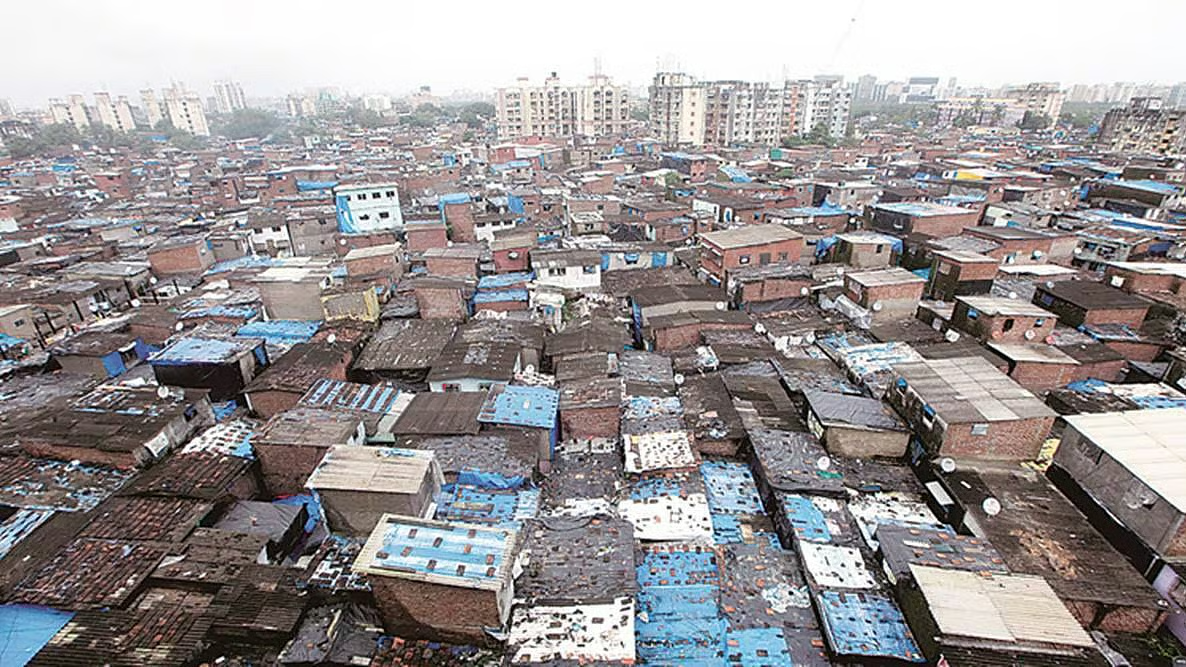
Indore has initiated a targeted sanitation programme focused on improving living conditions across informal settlements, aiming to address persistent gaps in waste management and basic urban services. The campaign, covering multiple slum clusters across the city, reflects a shift towards more inclusive urban cleanliness strategies that extend beyond central areas. The initiative is designed to strengthen waste collection, sanitation practices, and community participation in neighbourhoods that often face limited municipal attention. Civic officials indicate that the effort will involve coordinated cleaning drives, infrastructure support, and awareness programmes to promote sustained behavioural change.
In rapidly expanding cities like Indore, informal settlements play a critical role in supporting the urban economy but frequently remain underserved in terms of sanitation infrastructure. Poor waste management in these areas can lead to health risks, environmental degradation, and reduced quality of life. Addressing these challenges is essential for building equitable urban systems. Urban development experts highlight that improving sanitation in slum areas requires more than periodic clean-up drives. Long-term success depends on integrating these settlements into formal service networks, ensuring regular waste collection, and providing access to basic infrastructure such as toilets and drainage systems. Community engagement is also crucial, as local participation can help sustain improvements over time. The Indore slum sanitation drive aligns with broader national and global priorities around inclusive urban development and public health. Cleaner neighbourhoods contribute to reduced disease burden, improved environmental conditions, and greater social equity. For cities, this translates into lower healthcare costs and more resilient communities. From a climate perspective, better waste management systems can also reduce emissions associated with unmanaged waste, such as methane from open dumping. Strengthening decentralised waste processing and encouraging segregation at source are key steps towards more sustainable urban sanitation practices. The programme also underscores the importance of data-driven planning. Identifying priority areas and tailoring interventions to local needs can improve efficiency and ensure that resources are directed where they are most needed. Monitoring outcomes will be critical to assessing the effectiveness of the initiative and guiding future efforts.
However, experts caution that scaling such interventions requires consistent funding, institutional capacity, and policy support. Without sustained attention, gains made during focused campaigns can be difficult to maintain, particularly in densely populated informal settlements. As Indore continues to build on its reputation for urban cleanliness, the expansion of sanitation efforts into underserved areas marks an important evolution in its approach. The success of this initiative will depend on how effectively it bridges service gaps and creates lasting improvements in the everyday lives of residents.