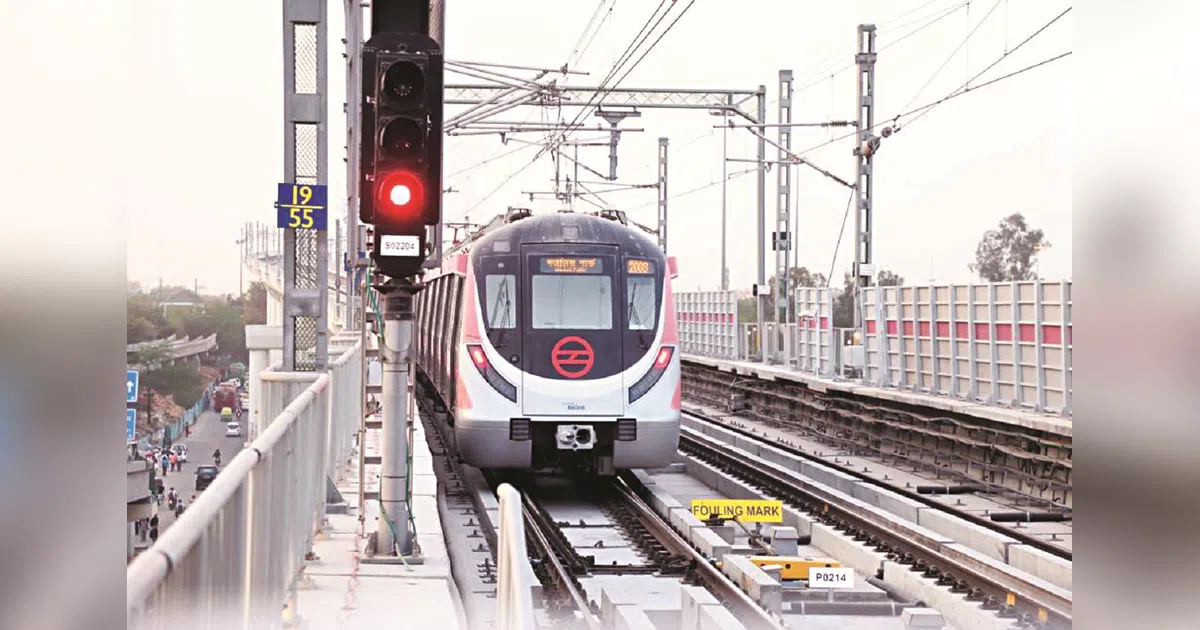
Delhi Metro Network Length Places Capital Among Global Leaders
The expanding Delhi Metro network length has positioned the National Capital Region among the world’s largest urban rail systems, reflecting the growing role of high-capacity transit in India’s rapidly urbanising cities. Recent additions to the metro corridors have further extended the system, placing the capital’s network sixth globally in terms of operational track length. Urban transport officials say the development highlights how sustained investment in rail-based public transport is reshaping mobility across the region. As the Delhi Metro network length continues to grow, the system has become the backbone of daily commuting for millions of residents travelling across Delhi and neighbouring cities.
The capital’s metro infrastructure now forms the core of a broader regional transit ecosystem linking multiple urban centres. Connectivity between Delhi and surrounding cities such as Noida, Greater Noida and Gurugram has strengthened through the integration of parallel metro networks and feeder systems. Transport planners say this regional integration is crucial for managing travel demand across the wider National Capital Region. With employment hubs, residential clusters and commercial districts spread across different cities, seamless public transport links are essential for reducing dependence on private vehicles. India’s operational metro rail network has expanded significantly over the past decade and now spans more than a thousand kilometres across dozens of cities. Within this national network, the Delhi Metro network length accounts for a substantial share of operational corridors and stations, highlighting the capital’s early adoption of large-scale urban rail transit. Daily operations across the network involve hundreds of trains running thousands of scheduled services every day. The metro system collectively covers extensive train kilometres daily, maintaining frequent services designed to accommodate peak-hour commuter flows.
Urban mobility analysts note that the reliability of services has played a key role in the metro’s success. High punctuality levels have helped establish commuter confidence, particularly in a city where road congestion often affects travel times. Ridership data from recent years also indicates a strong recovery in passenger numbers following disruptions during the pandemic. Annual passenger journeys have steadily increased, reflecting renewed commuter reliance on rail-based public transport. Several new ridership milestones have been recorded as the network expanded and urban travel demand rebounded. On certain peak days, the system has carried record passenger volumes, underlining the increasing dependence of residents on high-capacity transit. Urban planners say the continued growth of the Delhi Metro network length has implications beyond transportation. Large metro systems influence patterns of urban development, encouraging higher-density housing, commercial centres and mixed-use neighbourhoods around stations. Such transit-oriented development strategies are increasingly viewed as essential for building sustainable and climate-resilient cities. By improving access to efficient public transport, metro networks can reduce road congestion, cut transport-related emissions and support more compact urban growth. Experts also point out that metro systems improve mobility access for a wide range of residents, including students, workers and elderly commuters who depend on reliable public transport to reach workplaces, educational institutions and healthcare facilities.
As India continues to invest in urban rail infrastructure, the Delhi Metro network length stands as one of the most significant examples of how large-scale transit systems can reshape city mobility. Future corridor expansions and regional integrations are expected to further strengthen the role of rail transit in supporting sustainable urban development across the National Capital Region.