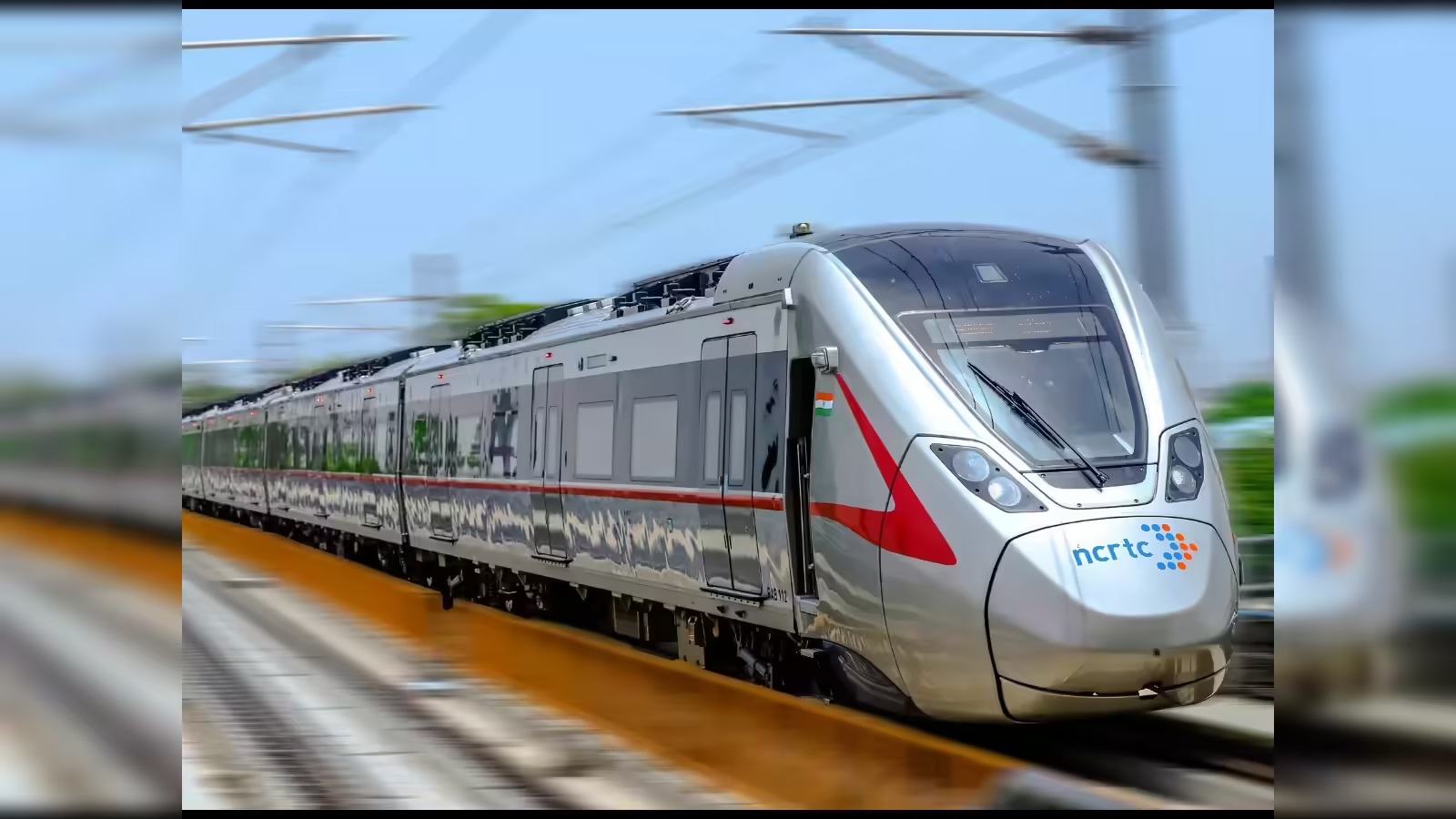
Gurugram Faridabad Metro Plan Linked To Namo Bharat
Plans to strengthen public transport links across the National Capital Region have advanced with a proposal to integrate a new Gurugram Faridabad metro corridor with the high-speed Namo Bharat rail network. The initiative aims to create a shared infrastructure system that connects two rapidly expanding urban centres while improving commuter mobility and reducing dependence on private vehicles. Officials involved in regional transit planning say the proposed corridor will include 18 stations distributed across Gurugram and Faridabad, forming part of a broader effort to improve cross-city connectivity within the NCR. Transport authorities have recommended that metro services operate on infrastructure being developed for the Namo Bharat regional rail network, allowing both systems to function along selected sections of track.
Under the current proposal, eight stations are planned within Gurugram, linking key residential, commercial and transit hubs across the city. Several of these stations are expected to function as interchanges with existing and planned metro lines. One of the major interchange nodes will be located at Ifco Chowk, where the corridor is expected to connect with the operational metro network serving Delhi and Gurugram. Additional stations proposed within Gurugram include locations near established commercial and residential zones such as Sector 29, Millennium City Centre, Sector 52, Wazirabad and Sector 57. A further interchange is planned near Sector 61, where planners intend to connect the corridor with another proposed metro extension linking Sector 56 to Pachgaon. The project extends into Faridabad through a 16-kilometre segment designed to link residential neighbourhoods with emerging economic districts. The Gurugram Faridabad metro route is expected to begin in the Sainik Colony area before continuing towards Badshahpur, creating a continuous transit corridor between the two cities.
Urban mobility specialists say integrating metro services with the Namo Bharat system could help optimise infrastructure investments by allowing different rail systems to operate on compatible corridors. The approach also reflects a broader shift towards multimodal transit planning across the NCR, where metro, regional rail and bus networks are increasingly being designed to function as interconnected systems rather than isolated lines. However, planners have also highlighted environmental and community considerations linked to the high-speed rail infrastructure. The Namo Bharat system is designed to operate at speeds approaching 160 to 180 kilometres per hour, raising concerns about noise levels in densely populated areas along the alignment. To address this, transport agencies have proposed installing specialised noise barrier systems along sections of the corridor that pass through residential neighbourhoods. Such infrastructure is widely used in global high-speed rail systems to reduce the impact of sound generated by fast-moving trains. If implemented as planned, the Gurugram Faridabad metro corridor could significantly reshape daily commuting patterns across southern NCR. Improved rail connectivity between the two cities may reduce travel times, ease road congestion and support more sustainable patterns of urban growth in one of India’s fastest-growing metropolitan regions.
For planners and city authorities, the success of the project will depend on how effectively it integrates with existing transport networks while balancing mobility, environmental protection and the demands of rapidly expanding urban populations.