


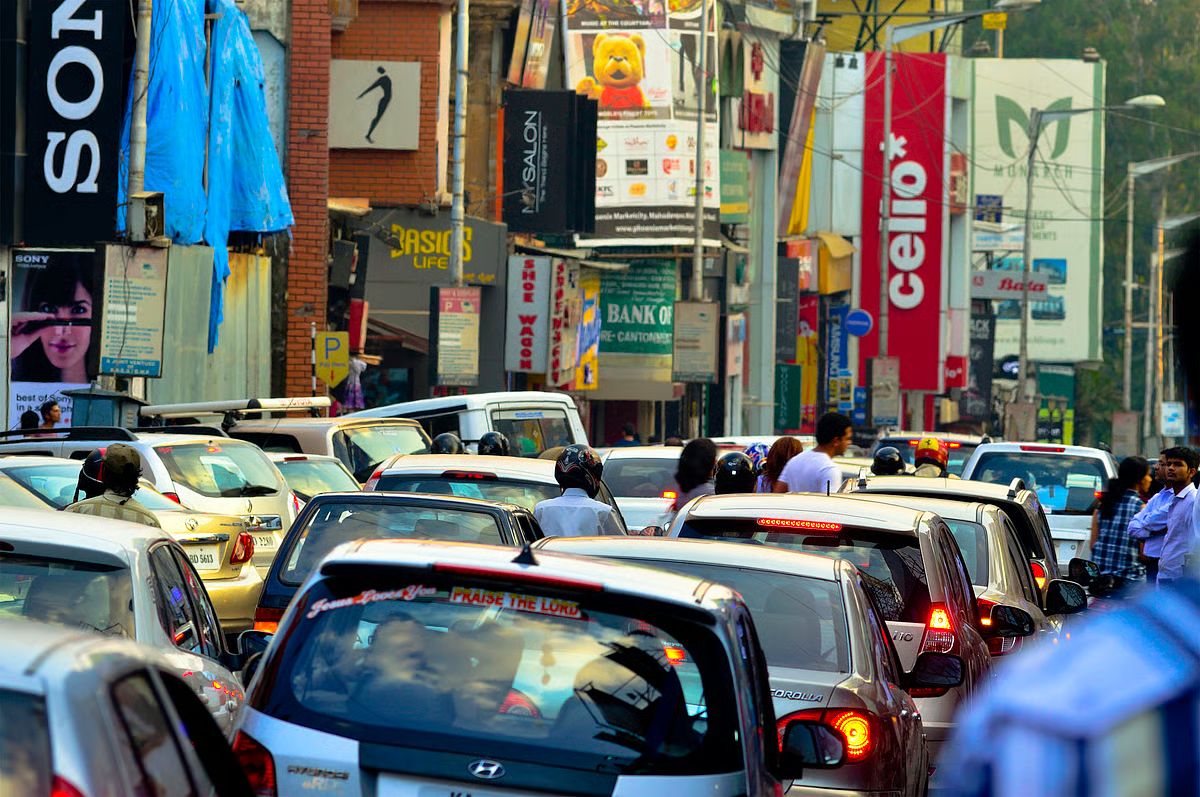
A short commute across Bengaluru has once again drawn attention to the city’s growing mobility challenges after a widely shared video showed how a journey of just a few kilometres stretched into an hour-long drive during peak traffic.
The incident has reignited debate around Bengaluru traffic congestion, highlighting the widening gap between the city’s rapid urban growth and the capacity of its transport infrastructure.The footage, recorded during a morning commute, shows a driver navigating slow-moving traffic while attempting to reach a workplace located less than seven kilometres away. Navigation data displayed in the vehicle suggested that despite travelling for more than half an hour, a significant portion of the journey still remained, with the estimated arrival time indicating a total commute exceeding an hour.The viral clip quickly resonated with thousands of residents who shared similar experiences of lengthy travel times for relatively short distances. For many urban commuters in Bengaluru, such delays have become a routine part of daily life, particularly along key arterial roads that serve large residential and technology employment hubs.Urban mobility analysts say the episode reflects a broader pattern of Bengaluru traffic congestion linked to the city’s rapid expansion over the past decade. As India’s largest technology cluster, Bengaluru has experienced sustained population growth, attracting professionals and businesses from across the country. While this growth has strengthened the local economy, it has also placed immense pressure on roads, junctions and public transport networks.Transport experts note that vehicle ownership in Bengaluru has risen sharply, contributing to severe congestion during peak hours. With millions of registered vehicles operating within the metropolitan area, traffic speeds across many corridors have declined significantly.
Studies conducted by mobility researchers suggest that average travel speeds in some central areas can fall below 15 kilometres per hour during rush periods.Infrastructure development has attempted to address these challenges through road widening, flyovers and the expansion of the metro rail network. However, urban planners say the scale and pace of growth in Bengaluru’s technology corridor have made it difficult for transport systems to keep up with demand.Experts argue that addressing Bengaluru traffic congestion will require a combination of solutions rather than relying solely on road expansion. Integrated public transport systems, last-mile connectivity improvements and transit-oriented development are increasingly seen as critical components of sustainable urban mobility.From an environmental perspective, prolonged traffic congestion also contributes to rising fuel consumption and higher urban emissions. Climate researchers warn that reducing dependency on private vehicles will be essential if cities like Bengaluru are to meet long-term sustainability and climate resilience goals.The viral commute video has therefore become more than just a social media moment; it reflects the lived reality of thousands of commuters navigating the city each day. While residents often turn to navigation apps to identify faster routes, the underlying issue remains the growing mismatch between mobility demand and available infrastructure.
Urban policy specialists say that solving Bengaluru’s congestion challenges will require coordinated planning across transport, housing and land-use policies. Without such integration, daily journeys across the city could continue to become longer and more unpredictable for years to come.
Also Read:Kolkata LPG Booking System Restored After Outage
