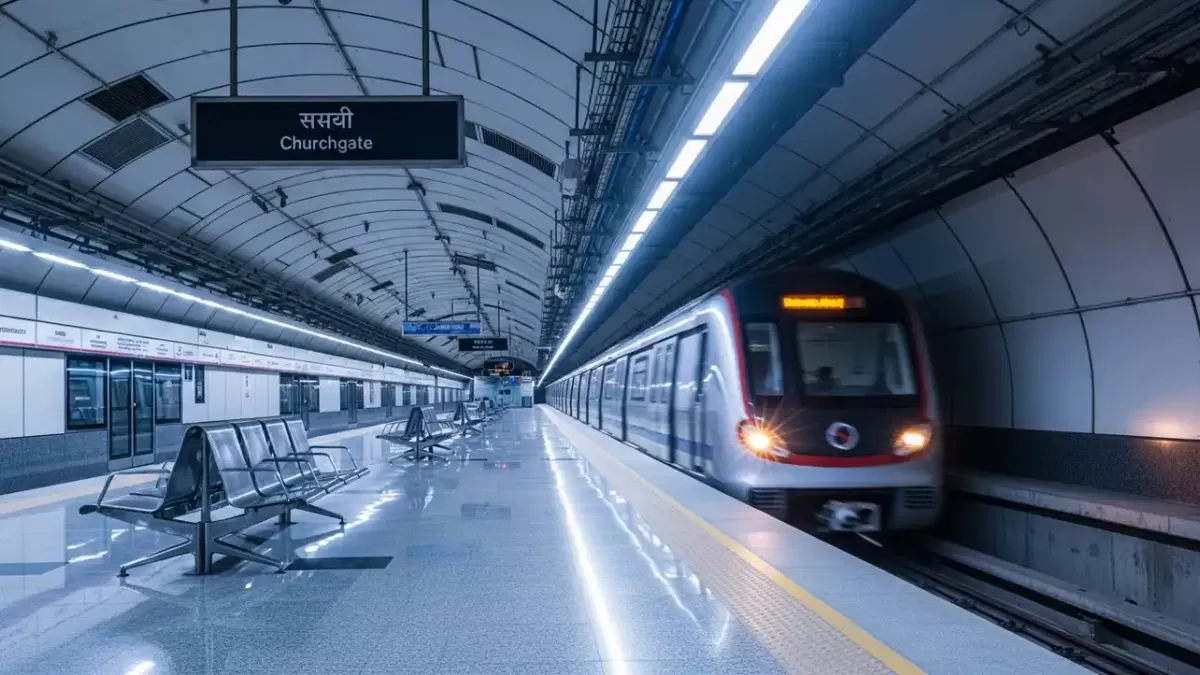
A new underground metro corridor proposed for Mumbai could significantly reshape travel between the city’s central districts and the historic business and tourism hub in the south. The Maharashtra government has outlined plans for Mumbai Metro Line 11, a fully underground route connecting Wadala with the Gateway of India, with an estimated investment exceeding ₹23,000 crore.
The project, announced during the state’s latest budget presentation, aims to improve public transport access to South Mumbai, a part of the city that currently relies heavily on suburban rail services and road transport. Urban planners say the proposed Mumbai Metro Line 11 could help address long-standing connectivity gaps in an area that hosts major financial institutions, heritage precincts and government offices. According to officials involved in the transport planning process, the metro corridor will run entirely below ground to minimise disruption in densely built neighbourhoods. Underground construction has become increasingly common in central Mumbai due to space constraints and the need to preserve existing urban infrastructure.
Authorities have also indicated that the corridor could be extended in future phases to connect Dharavi with Bandra’s suburban railway station and the intercity rail terminal in the same district. If implemented, such extensions would strengthen links between the metro network and key rail hubs, enabling smoother transfers between local and long-distance services. Urban mobility experts note that projects like Mumbai Metro Line 11 form part of a wider shift towards integrated public transport systems in large Indian cities. As road congestion and pollution intensify, expanding metro networks is seen as a critical strategy for reducing dependence on private vehicles while improving travel reliability.
The state government has set ambitious long-term targets for urban transit expansion across Maharashtra. Officials say hundreds of kilometres of metro corridors are already operational or under construction in cities including Mumbai, Pune and Nagpur, with additional routes planned over the coming decade. Transport planners say the proposed corridor will also complement other infrastructure developments underway in the region. These include underground road tunnels designed to connect eastern parts of the city with the southern business district, reducing surface traffic pressure and improving travel time across key corridors.
At the metropolitan level, expanding metro connectivity is increasingly linked with urban development patterns. Improved transit access often stimulates real estate investment and encourages higher-density, transit-oriented development near stations. Experts say such planning approaches can help create more walkable neighbourhoods while reducing overall carbon emissions from transport. However, infrastructure analysts caution that underground metro projects involve significant engineering complexity and financial commitments. Delivering large-scale transit infrastructure in historic city districts requires careful planning to manage geological challenges, heritage protection and coordination with existing utilities.
For Mumbai, the success of Mumbai Metro Line 11 could mark another milestone in the city’s evolving mass transit network. If implemented as planned, the corridor would extend high-capacity rail connectivity into South Mumbai while supporting the long-term goal of building a more sustainable and accessible urban mobility system for the metropolitan region.
Maharashtra Plans Underground Metro Corridor Linking Wadala And South Mumbai