


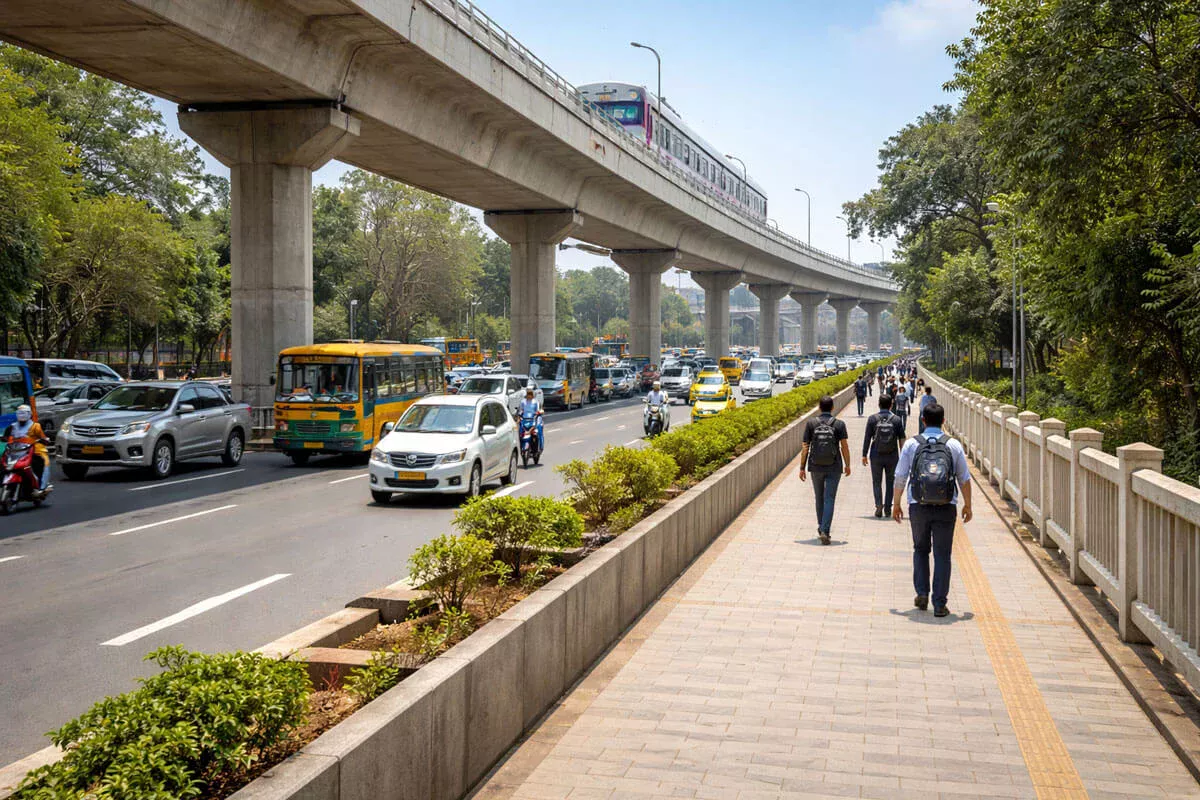
Bengaluru is set for a major infrastructure overhaul as the state government unveils multi-thousand-crore investments aimed at flood mitigation, urban mobility, and sustainable development. The initiatives, spanning road expansion, metro network extensions, water management, and urban greening, reflect a strategy to position the city as one of India’s most liveable urban centres.
Chief Minister Siddaramaiah announced that Rs 5,000 crore has been earmarked for disaster management programmes over the next five years, a response to the city’s recurrent floods and ageing drainage networks. Complementing this, the Cauvery 6th Stage project, costing Rs 6,939 crore with JICA support, will bring an additional 6 TMC of water to meet Bengaluru’s growing demand.To guide long-term growth, the government is implementing the Revised Master Plan-2041, due for completion by 2027, alongside a Comprehensive Mobility Plan (CMP) within six months. Urban planners emphasise that these frameworks will integrate sustainable land-use planning, flood-resilient infrastructure, and multi-modal transport solutions.The budget also details substantial investments in roads and connectivity. Over the next three years, more than 450 km of roads will be white-topped at a projected cost of Rs 3,000 crore, and a short-tunnel road and elevated corridor between Hebbal Junction and Mekhri Circle is planned for Rs 2,250 crore. Further, beautification of 175 junctions, upgrading of 500 km of footpaths, and construction of 100 skywalks are planned, funded through municipal resources.
In public transport, 41 km of additional Metro lines are slated to benefit approximately 15 lakh commuters daily, while the Bengaluru Business Corridor Phase-1 and the Intermediate Ring Road will strengthen inter-city and intra-city connectivity. A digital traffic management platform, supported by Rs 25 crore, will integrate data from multiple agencies to optimise traffic flow.Environmental resilience is another focal point. The budget allocates for filling over 500 tanks and lakes under the Hebbala-Nagawara and Vrishabhavathi Valley projects, alongside the creation of 100 Miyawaki parks to introduce dense, native urban green spaces. A Centre of Excellence for Kayaking and Canoeing at Hesaraghatta Lake is also planned, promoting urban recreational infrastructure.The Amrutha Nagarothana Phase-4 scheme, with Rs 3,885 crore earmarked, will oversee broader municipal development, ensuring public amenities, urban mobility, and sustainable drainage systems are upgraded systematically. Officials note that such coordinated investment will strengthen flood resilience, economic opportunity, and livability, providing Bengaluru with a blueprint for future urban growth.
Also Read:Silchar Polo Hotels Plans First Five Star Property
Bengaluru Allocates Major Budget to Upgrade Infrastructure
