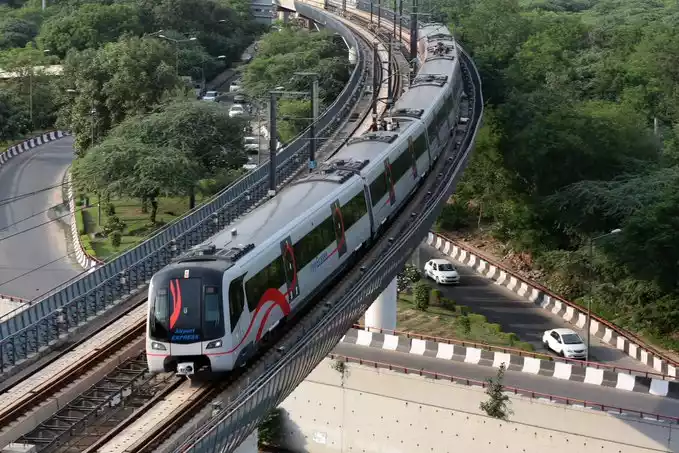
Delhi’s rapid transit network is set to expand further as new extensions on two key corridors move toward public operations, reinforcing the capital’s push for a more connected and sustainable urban mobility system.
The latest expansion introduces additional sections on the Pink and Magenta lines of the Delhi Metro, part of a broader infrastructure investment exceeding ₹18,000 crore aimed at easing congestion and improving regional connectivity across the National Capital Region. The new stretches are expected to significantly strengthen travel links between North, West and East Delhi, while also integrating several underserved neighbourhoods into the metro grid. One of the new corridors extends the Pink Line by about 12 kilometres between Majlis Park and Maujpur-Babarpur. With this addition, the orbital Pink Line will effectively complete a circular metro route across much of Delhi, forming what planners describe as the country’s first operational “Ring Metro”. The ring alignment is designed to enable cross-city travel without passing through the already crowded central interchange stations, potentially reducing travel time for commuters moving between peripheral districts.
A second corridor expands the Magenta Line by nearly 10 kilometres between Deepali Chowk and Majlis Park. This section introduces several elevated stations connecting residential districts such as Pitampura, Haiderpur and Bhalswa to the broader metro network. The line will also create additional interchange opportunities with other corridors, helping passengers access major employment hubs in South Delhi and Noida without relying on road transport. Transport planners note that these extensions serve areas that historically depended heavily on buses and private vehicles. By extending rapid transit coverage into emerging residential clusters, authorities aim to shift a portion of daily travel away from congested arterial roads toward mass transit.
The projects also include several engineering features designed to accommodate dense urban conditions. One section of the Magenta Line extension rises more than 28 metres above ground level, making it among the highest elevated stretches within the Delhi Metro network. Alongside the inauguration of these corridors, groundwork has also been initiated for additional metro routes planned under the next stage of expansion. These future projects are expected to connect key urban zones including central administrative districts, the airport corridor and new residential clusters, reinforcing the metro’s role as the backbone of Delhi’s public transport system.
Urban mobility specialists say continued metro expansion is essential for managing population growth and travel demand in large metropolitan regions. Delhi’s road network already handles millions of daily trips, and without high-capacity public transport systems the pressure on roads would intensify significantly. Metro systems also contribute to broader climate goals by reducing dependence on private vehicles and lowering urban emissions. With Delhi frequently facing air-quality challenges, expanding electric mass transit infrastructure is viewed as a critical component of long-term sustainability planning.
As the network expands further into peripheral districts and neighbouring NCR cities, planners expect the metro to shape new patterns of urban development around stations. Improved connectivity could encourage transit-oriented development, enabling residential and commercial growth to cluster around high-capacity public transport corridors rather than car-dependent urban sprawl.