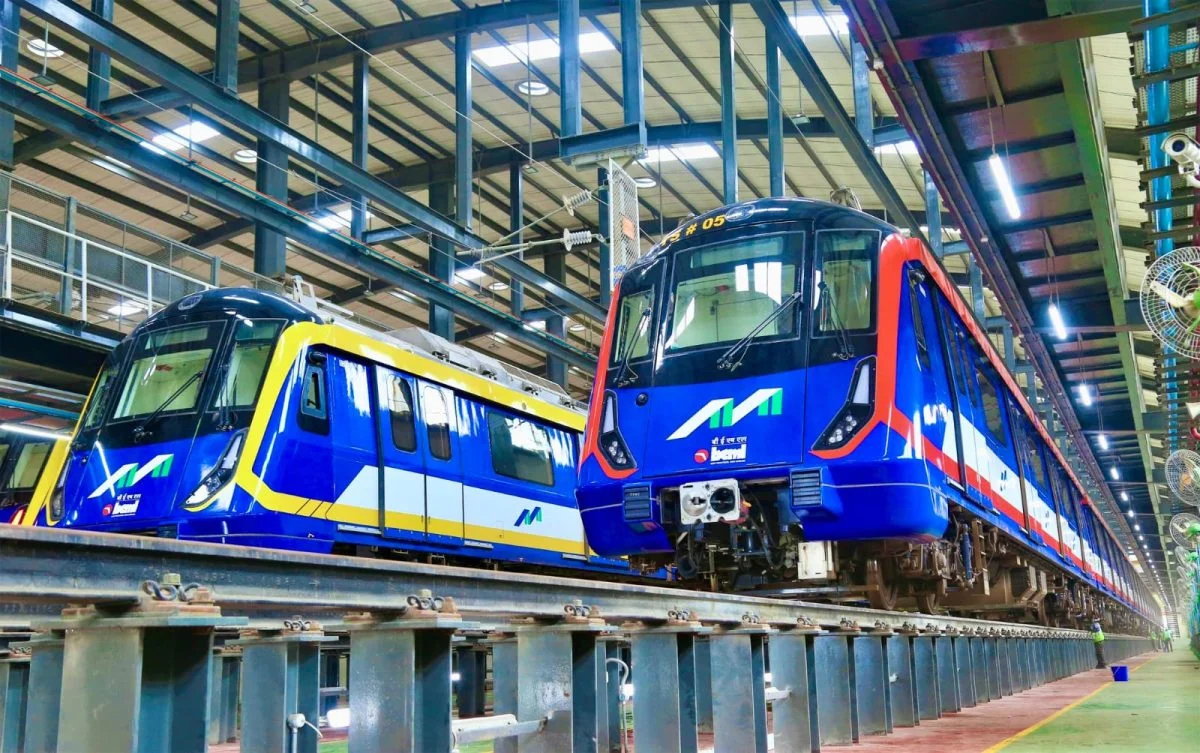
Mumbai’s upcoming underground transit corridor linking the eastern waterfront to South Mumbai is set to grow significantly, with authorities approving a further extension of Mumbai Metro Line 11 beyond its previously planned alignment. The expansion will push the corridor westward from Wadala to Bandra Terminus, adding nearly seven kilometres to the project and strengthening cross-city connectivity between key residential and transport hubs.
Urban development officials confirmed that the revised alignment will increase the length of Mumbai Metro Line 11 from about 16.5 kilometres to roughly 23.4 kilometres. The line, originally conceived to connect Wadala with the Gateway of India in South Mumbai, will now extend further across the city’s central belt before terminating near one of Mumbai’s major long-distance railway terminals. The extended underground route is expected to introduce five additional stations along the western stretch. Proposed stops include Chunabhatti, Sion, Central Dharavi, Bandra West and Bandra Terminus. Transport planners believe these locations could play a crucial role in improving mobility across dense neighbourhoods while connecting residential districts with employment centres and regional rail services.
According to officials involved in the planning process, the alignment will run beneath redeveloped sections of Dharavi and pass below the Mithi river before reaching Bandra. Engineers say tunnelling beneath this stretch will require careful coordination because of the complex urban landscape and existing infrastructure in the corridor. Urban mobility experts note that the Mumbai Metro Line 11 extension could help strengthen east–west transit links in a city where travel between the harbour corridor and the western suburbs remains time-consuming. By connecting Wadala with Bandra Terminus through an underground rapid transit line, planners aim to reduce reliance on road-based travel and ease congestion on some of Mumbai’s busiest arterial routes.
The extension will also enhance interchange opportunities with other transport networks. Bandra Terminus serves as a major hub for long-distance rail travel, while the proposed stations in Sion and Dharavi could integrate with other metro lines and suburban railway corridors planned or under construction in the Mumbai Metropolitan Region. Infrastructure financing for the corridor is expected to be reassessed following the route extension. Earlier financial planning for the project included contributions from municipal agencies, port authorities and both state and central governments, alongside loans from financial institutions. With the addition of new stations and tunnelling work, planners are expected to re-evaluate the project’s cost structure.
Transport analysts say the expansion reflects Mumbai’s evolving transit strategy, where metro corridors are increasingly designed to connect large redevelopment zones and transport terminals rather than operating as isolated routes. Linking high-density districts such as Dharavi with regional transit nodes could also support more transit-oriented urban growth in surrounding areas. As the project moves into its next planning phase, authorities will review design and financing parameters before construction planning progresses further. For a city grappling with growing travel demand and limited road capacity, the extended Mumbai Metro Line 11 could become a key piece of the long-term strategy to deliver faster, cleaner and more connected urban mobility.
Mumbai Metro Line 11 Extended To Bandra Terminus