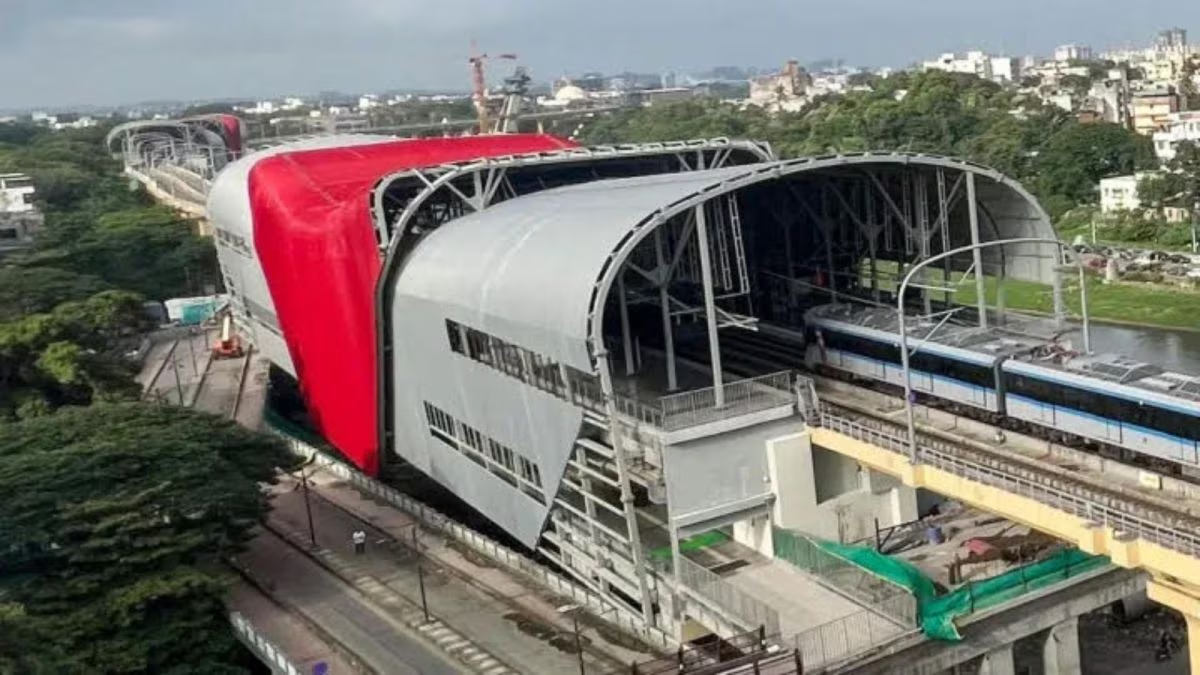
Pune’s civic administration is preparing to introduce structured vehicle parking zones near Metro stations as part of a broader strategy to improve commuter access to the city’s expanding rail network. The plan involves developing parking infrastructure across dozens of identified amenity plots located within walking distance of stations, a step urban planners believe could strengthen public transport adoption in one of India’s fastest-growing metropolitan regions.
Municipal officials have identified several parcels of land situated roughly within a 500-metre radius of Metro stations that could be converted into organised parking areas. Most of these plots are currently designated amenity spaces under city development plans but remain underutilised. Authorities now intend to repurpose them to support last-mile mobility for Metro passengers.The initiative comes as Pune’s Metro system continues to scale up operations across key corridors linking the city centre with rapidly expanding residential and industrial zones. Two major lines connecting western and northern parts of the city are already operational, carrying a substantial number of daily commuters. Another corridor linking the technology hub of Hinjewadi with Shivajinagar is approaching the final phase of construction and is expected to open soon.
Officials say the Pune metro station parking plan is designed to address a practical barrier faced by many riders. While Metro services provide fast urban connectivity, commuters who rely on two-wheelers or cars often struggle to find secure parking spaces near stations. In the absence of designated facilities, vehicles frequently spill onto surrounding roads or beneath elevated rail structures, creating congestion and enforcement challenges. Urban transport experts argue that such problems can discourage public transport use if left unresolved. Convenient access to stations, especially in cities where private two-wheelers dominate commuting patterns, is considered essential for sustaining ridership growth.
By formalising parking infrastructure, the city hopes to create a “park and ride” ecosystem that allows residents to travel part of their journey using private vehicles before switching to mass transit. Planners say this model has proved effective in many global cities where suburban commuters rely on structured parking hubs near rail networks. The Pune metro station parking plan also reflects a broader shift in how Indian cities are approaching mobility planning. Rather than focusing solely on building transit lines, authorities are increasingly examining the supporting infrastructure required for seamless urban travel including pedestrian access, cycling links, and organised parking.
Transport analysts note that well-planned parking facilities can reduce roadside congestion around transit hubs while improving safety for pedestrians and cyclists. However, they caution that design and management will be critical to ensure such facilities do not encourage excessive car dependency.
For Pune, where population growth and real estate expansion continue to reshape the metropolitan landscape, integrating mobility infrastructure with land-use planning remains a key challenge. If implemented effectively, the new parking facilities could improve access to Metro stations, reduce informal roadside parking, and strengthen the role of mass transit in the city’s mobility mix. As Pune’s Metro network expands further in the coming years, planners will likely face increasing pressure to develop similar integrated transport solutions across emerging urban corridors.
Pune Metro Station Parking Plan Targets Commuter Shift