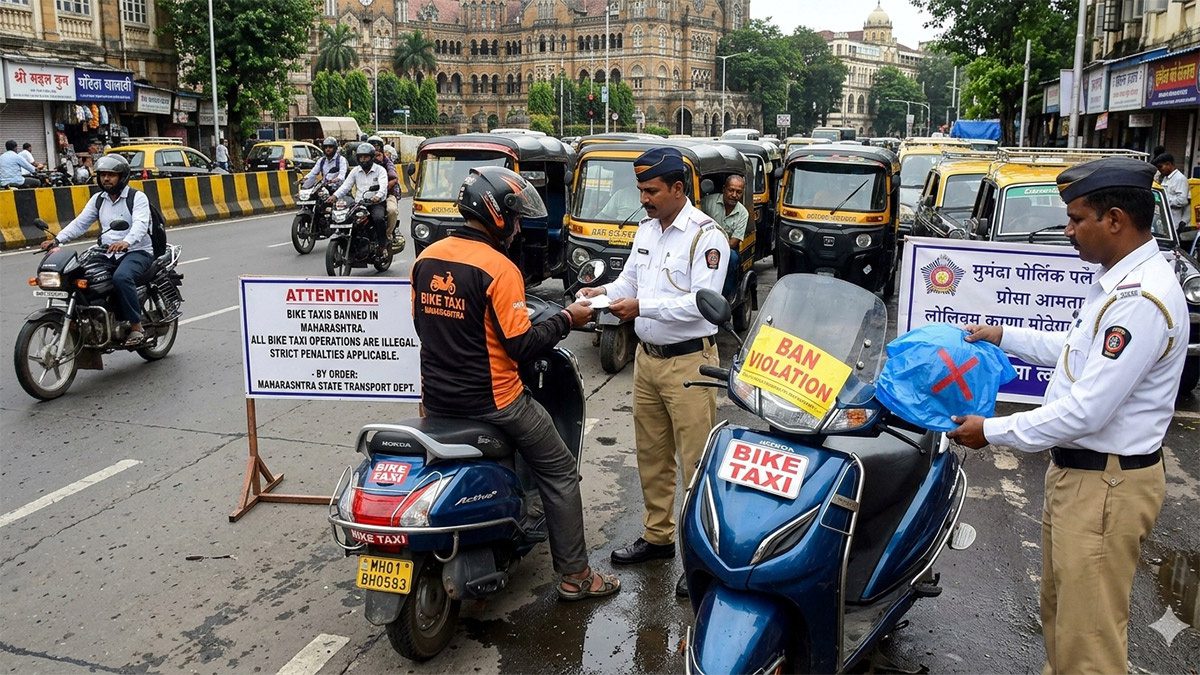
Maharashtra Bike Taxi Policy May Allow Private Bikes
Maharashtra is considering a major shift in its urban mobility framework by proposing a flexible permit system that could allow privately owned two-wheelers to operate as bike taxis. The policy rethink comes at a time when cities like Mumbai and Pune are grappling with rising demand for affordable last-mile connectivity and a rapidly expanding gig economy. The proposed Maharashtra bike taxi policy aims to replace rigid licensing norms with a more adaptable model, enabling short-term permits that can be issued on a daily or weekly basis. This would mark a departure from existing regulations that require commercial vehicle registration, a condition that has limited participation from part-time riders and informal operators.
Transport officials suggest the new framework is intended to bring currently unregulated services into a formal system without imposing high entry costs. By allowing individuals to use their private two-wheelers under defined conditions, the state hopes to expand the supply of on-demand transport while maintaining oversight through digital platforms and permit tracking. A key element of the proposal involves assigning permit quotas to aggregators, who would onboard riders and manage compliance. This structure is expected to create a controlled marketplace where participation is monitored, yet flexible enough to accommodate fluctuating demand. Industry observers note that such a model could provide a legal pathway for thousands of riders who currently operate outside formal regulations. The Maharashtra bike taxi policy also reflects changing commuter preferences. In dense urban areas, two-wheelers offer a faster and often more cost-effective alternative for short distances, particularly in congested corridors where larger vehicles struggle. By improving access to such services, authorities aim to enhance first- and last-mile connectivity to public transport systems like metro and suburban rail.
However, the proposal raises important questions around safety, regulation and environmental impact. Experts emphasise that clear guidelines on rider training, insurance, and vehicle standards will be essential to ensure passenger safety. Additionally, while the policy may increase the number of vehicles on the road, integrating a gradual transition towards electric two-wheelers could help align the initiative with long-term climate goals. The move could also influence the return of app-based mobility operators whose bike taxi services have faced regulatory hurdles in the state. Revised rules may open the door for their re-entry, provided they comply with updated conditions, including timelines for adopting cleaner vehicle technologies. From an economic standpoint, the policy has the potential to generate income opportunities in a flexible work environment. For many urban residents, especially younger workers, short-term permits could offer a low-investment entry into the gig economy. At the same time, urban planners caution that such growth must be balanced with infrastructure capacity and traffic management strategies.
As the proposal moves towards finalisation, its success will depend on how effectively it balances accessibility with accountability. For Maharashtra’s cities, the outcome could redefine the role of two-wheelers in public transport—shifting them from informal solutions to an integrated component of a more responsive and inclusive urban mobility system.