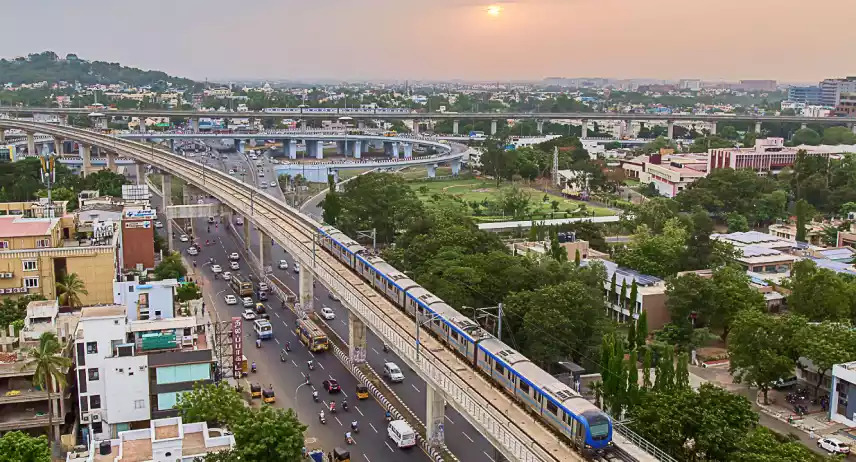
Chennai Metro Plans Major Phase II Property Growth
Chennai’s urban landscape is set for a substantial transformation as the city’s metro authority prepares to develop over 73 lakh square feet of commercial space across at least 37 sites along its Phase-II corridors. This marks a strategic move to leverage transit-oriented development (TOD) for revenue generation while reshaping mobility and land use in the city.
Officials indicate that the initiative extends beyond traditional station properties, signalling an ambitious approach to urban integration. By clustering commercial buildings within walking distance of metro stations, the authority aims to enhance public transport adoption, reduce private vehicle dependency, and create active neighbourhood nodes. Analysts note that such projects could significantly influence daily commuting patterns, particularly in dense corridors connecting IT hubs, transport terminals, and cultural centres.Key areas earmarked for development include central locations like Kutchery Road near heritage precincts, the Boat Club residential zone, and transit-heavy hubs such as Mandaveli, Vadapalani, and Alandur. Planned structures range from standalone commercial blocks to integrated multi-storey complexes with underground station connections, reflecting an intention to harmonise infrastructure with the built environment. Construction is expected to begin at terminus-cum-bus depots, with design-and-build contracts set for multiple parcels.
Industry observers highlight that the move mirrors trends in other Indian cities, where metro authorities increasingly prioritise non-fare revenue to improve financial resilience. Comparable models in Delhi and Bengaluru demonstrate that commercial integration can supplement operational budgets while shaping dense, walkable urban districts. Urban planners caution, however, that the success of TOD depends on adequate pedestrian infrastructure, seamless station access, and careful integration with surrounding land use. Without these elements, commercial growth risks undermining transit efficiency and public adoption.
Beyond revenue, the initiative carries broader civic implications. Strategic development near stations could support gender-inclusive and climate-resilient urban design, by promoting walkability, reducing transport emissions, and increasing accessibility. Well-planned integration with existing neighbourhoods may also stimulate local economic activity, create jobs, and encourage equitable urban growth. Conversely, poorly executed development may exacerbate congestion or displace sensitive cultural and residential zones, underscoring the need for coordinated planning between transit authorities, urban designers, and municipal regulators. As Chennai accelerates its metro expansion, the Phase-II property programme illustrates a growing trend where transit authorities act as urban developers, not just transport operators. The coming years will test how effectively commercial initiatives can coexist with sustainable mobility goals, offering insights for Indian cities balancing infrastructure growth with social and environmental responsibility.