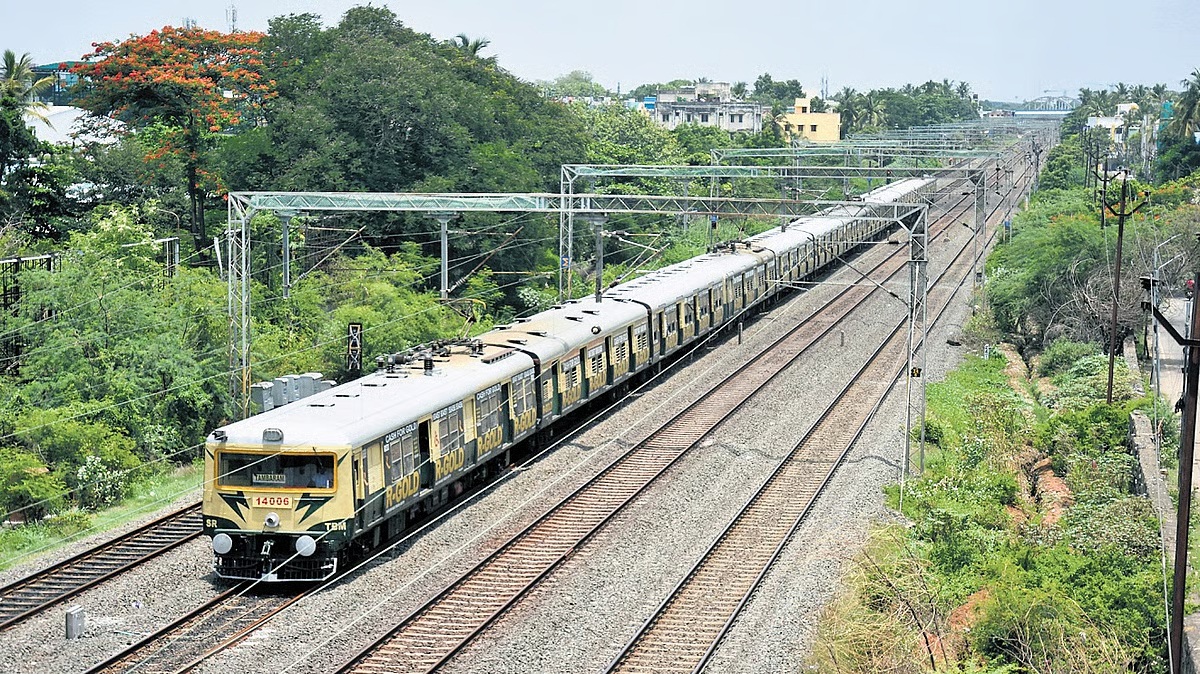
Chennai’s suburban rail network is on the cusp of expansion as the city gears up for the inauguration of the Mount–Velachery Mass Rapid Transit System (MRTS) extension. Ahead of the scheduled regulatory safety inspection on March 5, the electrical department of Southern Railway conducted comprehensive tests along the stretch connecting Velachery to St Thomas Mount, highlighting the city’s efforts to strengthen last-mile connectivity in a rapidly urbanising region.
A senior railway official confirmed that the inspection covered the corridor’s complete electrical infrastructure, including overhead power lines, traction substations, and signalling systems. These trials are part of statutory compliance procedures to ensure operational safety, reliability, and efficiency before public use. The MRTS extension introduces three new stations Puzhuthivakkam, Adambakkam, and St Thomas Mount potentially reshaping commuter patterns in South Chennai and reducing reliance on road transport.
Urban planners and transport analysts note that such expansions are critical for cities like Chennai, where unplanned urban growth has created traffic congestion and heightened emissions in peripheral neighbourhoods. By providing a climate-conscious transit alternative, the extension can play a modest role in promoting low-carbon mobility while integrating underserved neighbourhoods into the city’s broader economic ecosystem. Experts also highlight the importance of systematic electrification and signalling tests in preventing service disruptions, particularly in dense urban corridors prone to electrical or operational faults. The upcoming regulatory inspection will involve high-speed trial runs at speeds exceeding the proposed operational limit, with officials assessing track stability, bridge integrity, and signalling precision. Documentation such as completion plans, weld testing records, and safety certificates from multiple departments will be scrutinised to verify compliance with national safety standards. Senior railway planners emphasise that this rigorous approach underpins not just passenger safety but also long-term reliability, a critical factor as Chennai prepares for projected population growth and increased commuter demand.
The extension’s operationalisation is expected to improve accessibility to commercial and residential hubs along the corridor, enhancing economic mobility while easing pressure on existing bus and rail networks. Transport economists argue that consistent service reliability, coupled with integrated last-mile solutions, will be essential to ensure equitable access across income groups, particularly in newly connected neighbourhoods. As Chennai moves towards inaugurating the line in early March, attention will remain on the corridor’s performance during trial operations and the broader implications for sustainable urban transit planning. The extension offers a glimpse into the city’s ongoing efforts to balance infrastructural growth with environmental sustainability, signalling a cautious but deliberate step towards climate-resilient mobility.