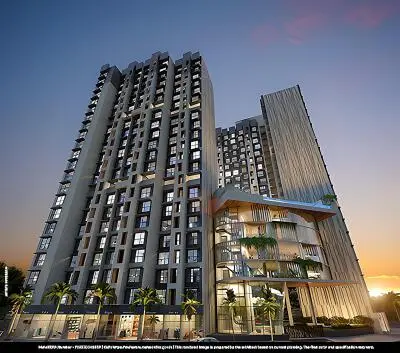
In February 2026, Mumbai’s residential real estate market logged its strongest monthly performance in more than a decade, with property registrations and associated fiscal revenue climbing to levels not seen since 2012. Data from the Maharashtra Department of Registrations and Stamps shows about 13,000 transactions were recorded across the metropolitan region, generating over ₹1,100 crore in stamp duty receipts — a significant uptick compared with the same period last year. This trend signals a structural shift in buyer preferences and a rebalancing of urban housing demand toward better-connected, higher-value communities.
Urban planners and market analysts point to urban infrastructure expansion and upgraded suburban connectivity as key drivers. With ongoing investments in transport links such as the Coastal Road and enhanced arterial corridors, formerly peripheral areas — especially in the Western Suburbs — have become focal points for both end users and investors. These micro-markets collectively accounted for a dominant share of the month’s registrations, reflecting how improved mobility and access can redistribute real estate growth beyond core city districts.A deeper look at transaction patterns reveals that premium and mid-market segments are steadily gaining ground over lower-priced housing. Properties priced above ₹2 crore now occupy a significantly larger slice of sales compared with previous years, while homes under ₹1 crore have proportionally declined. This evolution is occurring amid stable macroeconomic conditions and sustained household demand, suggesting that Mumbai’s housing market is maturing past volume-centric, entry-level inventory toward a more diverse price distribution.
Market specialists highlight that this premiumisation does not necessarily signal an exclusionary trend but may instead reflect a broader economic shift where homebuyers prioritise quality, sustainability features, and long-term asset value. Compact units under 1,000 sq ft remain popular — particularly in transit-linked corridors — but there is growing appetite for larger units, often driven by work-from-home needs and lifestyle aspirations.The concentration of activity in suburban zones also underlines the importance of balanced urban development. As core business districts reach capacity and land scarcity escalates prices, families and professionals are seeking neighbourhoods that offer both connectivity and liveability. These areas often feature denser, mixed-use developments with better access to public transport, parks, and essential services — aligning with goals for people-centred, climate-resilient cities.
For civic authorities, the challenge now is to ensure that infrastructure keeps pace with demand without exacerbating spatial inequities. Future urban growth will lean heavily on maintaining integrated planning frameworks that link housing supply with transport, green infrastructure, and social amenities — helping Mumbai evolve into a more inclusive metropolitan landscape.