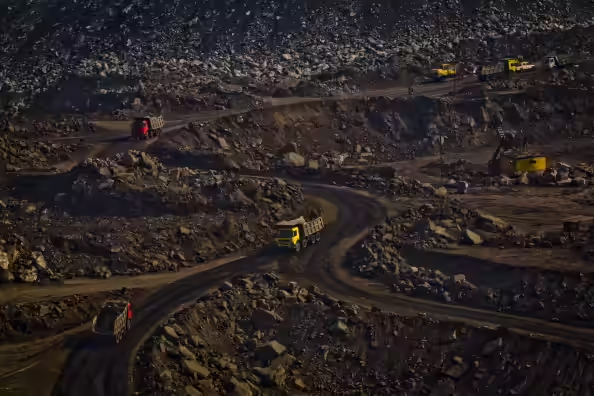
India’s coal mining sector registered a robust performance in February 2026, with captive and commercial mines producing 20.49 million tonnes and dispatches reaching 17.72 million tonnes, according to official government data. The figures represent a nearly 19 per cent year-on-year jump in monthly output, alongside cumulative increases over the financial year, reflecting sustained operational momentum across the mining value chain.
This growth underscores coal’s enduring role as a primary energy and industrial feedstock in a nation still heavily reliant on fossil fuels. While renewable generation capacity has surged in recent years, coal continues to fuel a large share of India’s electricity supply and underpins core manufacturing sectors such as steel and cement — industries integral to urban expansion and infrastructure projects. The captive and commercial mining segment, which includes private producers alongside publicly held operations, has become a dynamic contributor to meeting these energy and material demands. Cumulative production from these mines in the financial year through February rose by around 11.6 per cent compared with the same period last year, while dispatches increased by nearly 7 per cent. Government officials attribute this progress to strengthened operational efficiency, capacity augmentation initiatives and improved coordination across the supply chain. For policymakers, this performance demonstrates that domestic coal supply chains are adapting to both demand pressures and logistical challenges in a complex energy landscape.
For cities and infrastructure stakeholders, steady coal availability can ease short-term concerns about power shortfalls and industrial feedstock access. Reliable fuel supply is particularly crucial during peak demand seasons and in areas where grid stability remains tied to coal-fired generation. Urban developers note that consistent energy inputs support construction activity across metropolitan regions, where electricity and materials supply uncertainty can delay timelines and elevate costs.Yet the continued expansion of coal production also highlights a persistent tension between near-term economic needs and longer-term sustainability goals. Coal combustion remains one of the largest sources of greenhouse gas emissions and air pollutants, posing urban air quality challenges — particularly in northern and industrially dense regions. Environmental planners caution that without clear pathways to mitigate emissions, increased production could exacerbate particulate matter concentrations and carbon intensity in fast-growing cities.
Balancing energy security with decarbonisation will require coordinated action. Analysts argue that strengthening coal logistics and operational performance should be complemented by investments in cleaner technologies, such as carbon capture, utilisation and storage (CCUS), and broader integration of flexible low-carbon generation. Transition policies that support retraining workforces, modernising aging infrastructure, and smoothing shifts to alternative energy sources are critical to reconciling economic resilience with climate targets.
As India continues its urbanisation trajectory, the coal sector’s performance this February offers a snapshot of competing priorities: a functional domestic fuel system that supports industrial and power demands, juxtaposed with the urgency of advancing cleaner energy systems for future cities.