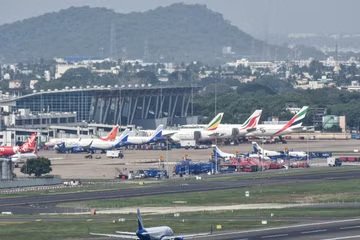
Chennai International Struggles With Overseas Connectivity
Chennai’s air connectivity with Middle Eastern destinations has entered its fourth consecutive day of disruption, with 31 international flights cancelled amid continued closures in the Gulf region. While services to Southeast Asia, Europe, and neighbouring countries remain largely unaffected, the repeated cancellations are creating operational and economic ripples across the city’s aviation sector and broader business ecosystem.
Industry observers point out that Chennai International Airport, a key hub for both cargo and passenger movement, plays a strategic role in connecting southern India to global markets. Extended interruptions to flights bound for Dubai, Abu Dhabi, and other Gulf destinations not only inconvenience travellers but also delay business operations and trade flows that rely on timely air transport. Logistics firms and export-oriented businesses report heightened operational costs as alternative routes or carriers are explored. A senior airport official noted that while arrivals from Dubai resumed early on Tuesday morning, one outbound flight carrying 60 passengers, including crew, was forced to return due to the sudden closure of airspace. Such in-flight reversals underscore the operational complexity of international aviation in a volatile geopolitical environment and highlight the need for resilient scheduling and contingency planning.
Urban mobility and climate-conscious infrastructure planners emphasise that Chennai’s reliance on a limited number of long-haul air corridors makes the city particularly vulnerable to external shocks. “Diversifying connectivity options and integrating multimodal transport solutions could mitigate economic fallout and improve urban resilience,” said an urban transport strategist. The repeated cancellations also draw attention to sustainable airport operations and the role of contingency planning in reducing both economic and environmental costs of disrupted flights.
For citizens, the disruptions compound travel stress, with passengers facing longer waits, higher ticket prices on rerouted flights, and limited alternatives for urgent travel. From a market perspective, airlines must balance operational efficiency against rising fuel costs and environmental targets, while cities like Chennai weigh the economic implications for international trade, tourism, and business hubs. Looking ahead, experts urge investment in adaptive air transport infrastructure and smarter logistics networks. Contingency protocols, data-driven scheduling, and closer collaboration between municipal authorities, airlines, and regional airspace regulators could help Chennai maintain stable international connectivity even amid sudden external disruptions.