Chennai Traffic Delays Persist At Tambaram Transit Hub
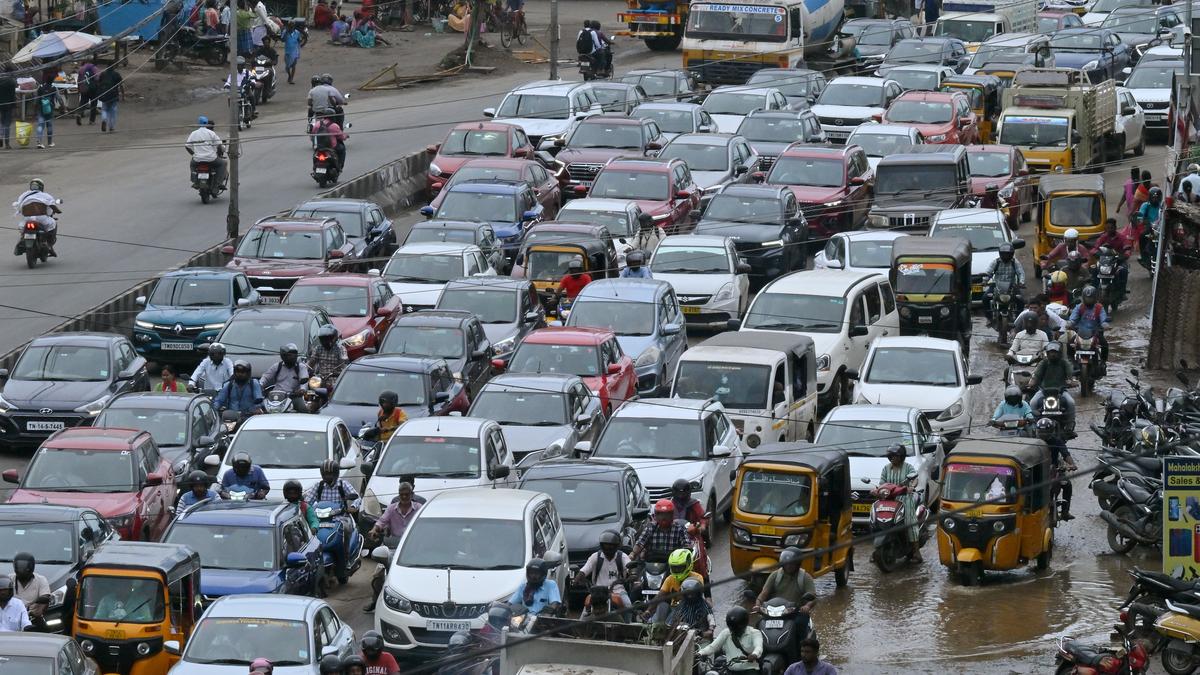
Chennai continues to grapple with chronic traffic gridlock along GST Road near Tambaram, highlighting systemic challenges in urban mobility despite recent infrastructure upgrades. The stretch of GST Road adjacent to Tambaram railway station, a crucial transit node for suburban commuters, experiences sustained congestion during peak hours. Recent additions, including a pedestrian subway and an elevated skywalk connecting the bus stand, railway station, and commercial areas, have had limited impact on traffic flow. Residents and urban mobility observers note that operational patterns, rather than infrastructure gaps alone, exacerbate delays.
Urban planners highlight that buses, both government-operated and private, frequently stop on the main carriageway to board and alight passengers instead of using designated bays within the station precincts. This irregular halting disrupts vehicular movement, creating bottlenecks that extend nearly two kilometres during morning and evening peaks. The situation also affects commuters from neighbouring suburbs, causing missed connections and increasing travel time for those accessing long-distance trains or returning to residential areas. The entry points to the railway station compound the problem.
Encroachments, parked auto-rickshaws, and small commercial carts narrow vehicle lanes, slowing traffic and raising safety concerns for both motorists and pedestrians. A senior municipal official emphasised that while physical infrastructure like subways and skywalks improves pedestrian safety, they cannot fully counter operational inefficiencies or curb informal roadside practices without active enforcement. From an economic perspective, sustained congestion at a key transit hub can have broader implications for Chennai’s suburban growth. Increased travel times discourage public transport use, push commuters towards private vehicles, and elevate emissions, undermining the city’s zero-carbon mobility objectives. Experts in urban transport note that integrating bus scheduling, enforcing dedicated pick-up zones, and optimising lane management could mitigate delays without additional construction.
Environmental and social considerations are also critical. Persistent traffic not only contributes to vehicular pollution but also impacts equitable access to transport for daily wage workers, women, and elderly commuters navigating high-density transit corridors. A people-first approach to urban mobility would require coordinated action between transport authorities, municipal enforcement, and city planners to ensure efficiency while maintaining safety and inclusivity. Analysts suggest that addressing operational bottlenecks, combined with periodic evaluation of pedestrian and vehicular infrastructure, could provide a sustainable roadmap for Tambaram. Without such integrated measures, GST Road is likely to remain a chronic congestion hotspot, limiting the effectiveness of past investments in subways and skywalks.