


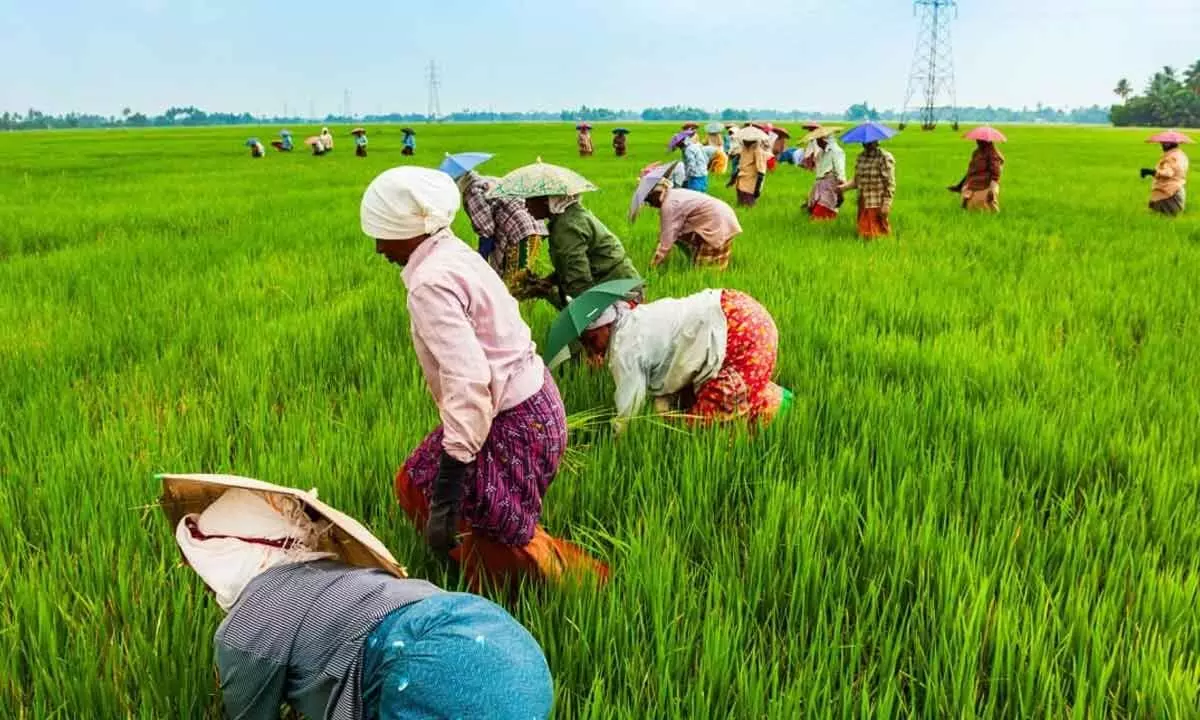
A new field study across dryland regions of Telangana indicates rising anxiety among farmers over the sustainability of traditional cultivation practices, with 80 per cent of respondents reporting that shifting weather patterns are undermining established farming methods. The findings point to growing climate vulnerability in one of India’s most rainfall-dependent agricultural belts, with implications for rural incomes, food systems and urban supply chains.
The research, conducted jointly by International Crops Research Institute for the Semi-Arid Tropics and University of Agricultural Sciences Raichur, assessed farmer perceptions across dryland mandals. A striking 90 per cent of participants expressed concern about the long-term availability of water resources, reflecting intensifying stress on borewells, tanks and seasonal streams.Telangana’s semi-arid districts depend heavily on monsoon rainfall and groundwater extraction. Erratic precipitation, prolonged dry spells and sudden high-intensity rainfall events have disrupted sowing cycles and reduced predictability in crop yields. Researchers found that 58 per cent of respondents believe agriculture has become significantly more vulnerable due to climate variability — a view consistent with global assessments by the Intergovernmental Panel on Climate Change, which classifies farming among the most climate-sensitive economic sectors.
Agricultural economists note that perception studies are critical because adaptation decisions are shaped as much by belief systems as by meteorological data. Farmers who perceive climate risks are more likely to diversify crops, adopt drought-resistant varieties or invest in micro-irrigation. However, access to finance and technical extension remains uneven in many dryland pockets.The implications extend beyond rural boundaries. Telangana’s urban centres, including Hyderabad, depend on surrounding districts for pulses, oilseeds and coarse cereals. Climate vulnerability in production zones can influence food prices, rural migration and pressure on urban infrastructure. As cities expand, the interface between agricultural resilience and metropolitan planning becomes increasingly visible.
Water security emerged as the dominant concern in the survey. Groundwater tables in several dryland mandals have shown fluctuations over the past decade, driven by over-extraction and variable recharge. Climate experts argue that integrated watershed management, farm ponds, soil moisture conservation and crop diversification are essential to buffer volatility.Policy analysts suggest that adaptation strategies must combine technological interventions with community-led water governance. Expanding climate advisory services, strengthening crop insurance and scaling regenerative farming practices could mitigate risk while lowering carbon intensity.
The study reinforces a central challenge for Telangana’s development model: balancing rapid urbanisation with climate-resilient rural systems. As the state seeks sustainable growth pathways, building resilience in dryland agriculture will remain fundamental to food security, equitable income distribution and long-term environmental stability.
Telangana climate vulnerability worries farmers
