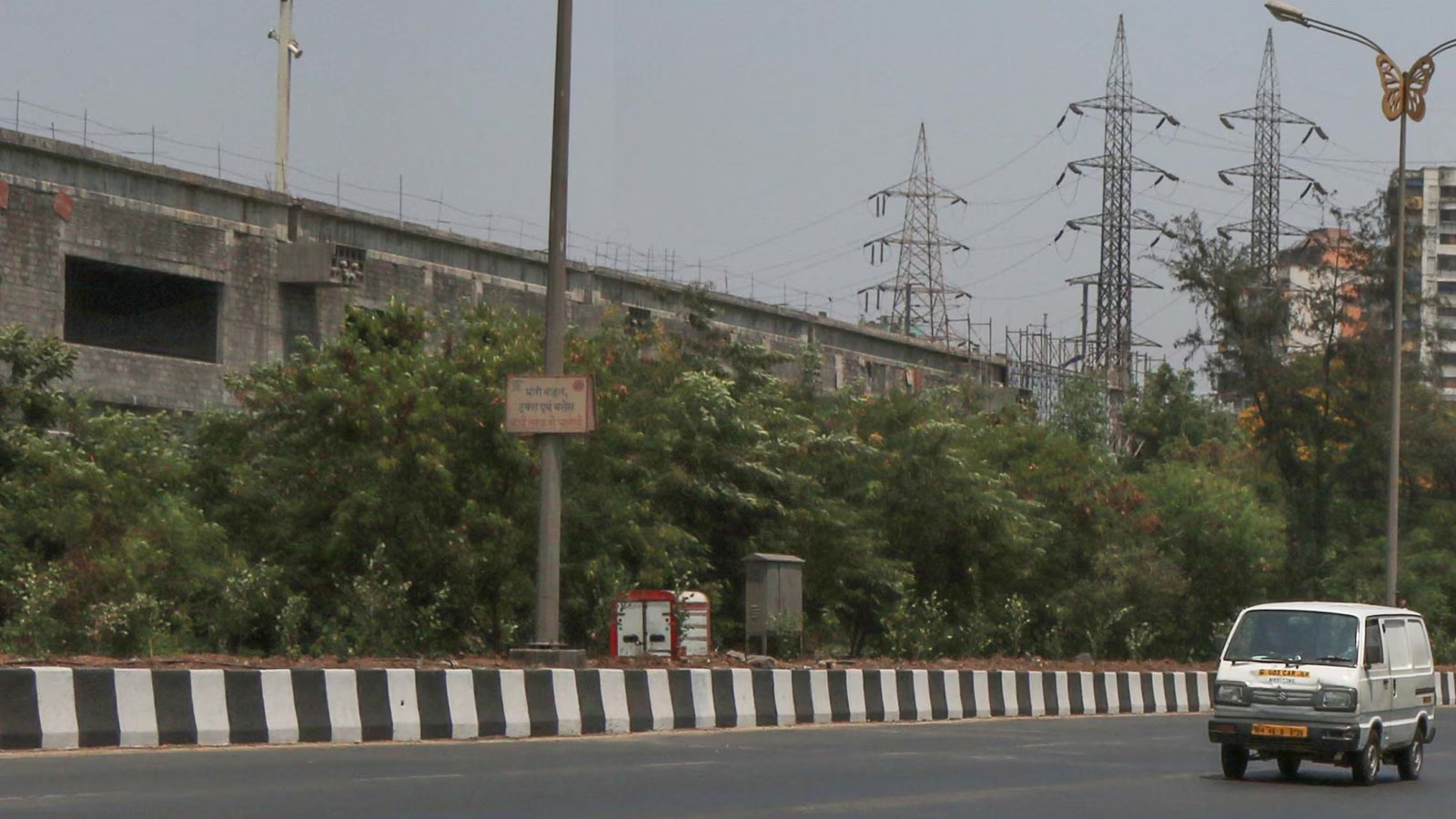
Pune’s electricity network is set for a major overhaul as the state government clears a ₹1,100 crore investment aimed at stabilising supply across the city and its industrial periphery. The funding, routed through the Centre-backed Revamped Distribution Sector Scheme, seeks to address recurring outages that have disrupted households, commercial establishments and manufacturing units in one of Maharashtra’s fastest-growing urban corridors.
The proposed Pune power infrastructure upgrade follows sustained concerns raised by legislators over unreliable supply in residential clusters and industrial estates. Areas within Pimpri-Chinchwad, a key manufacturing and automotive hub adjoining Pune, have witnessed rising demand as new housing projects, IT campuses and logistics parks come online.Officials indicated that nearly ₹450 crore of the total allocation will be directed towards strengthening networks in Pimpri-Chinchwad alone. Works are expected to include the replacement of ageing transformers, augmentation of substations, installation of additional feeders and measures to reduce aggregate technical and commercial losses a metric that captures both transmission inefficiencies and revenue leakages.
One industrial constituency representative flagged that power theft and inadequate metering in certain pockets have compounded the strain on the grid. In areas such as Kudalwadi, thousands of commercial units reportedly operate with limited formal metering coverage, affecting billing efficiency and system planning. Energy analysts note that plugging such gaps is essential not only for revenue recovery but also for ensuring equitable distribution and accurate load forecasting. The Pune power infrastructure upgrade also comes at a time when electricity consumption patterns are shifting. Urban planners project sustained population growth in the metropolitan region over the next two decades, with Pimpri-Chinchwad alone expected to see sharp increases in residential density. Higher appliance ownership, electric mobility adoption and expanding data infrastructure are likely to intensify peak demand.
A senior energy department official said the scheme prioritises modernisation and network resilience, including automation systems that allow faster fault detection and restoration. Experts argue that upgrading distribution systems is central to India’s broader decarbonisation pathway, as a robust grid enables integration of rooftop solar, electric vehicle charging and decentralised renewable energy sources. For the real estate sector, improved reliability could reduce dependence on diesel generators, lowering operating costs and urban air pollution. Housing societies and commercial complexes have increasingly invested in backup systems to offset outages, raising questions about long-term sustainability and emissions.
Implementation of the Pune power infrastructure upgrade will commence after procedural approvals and tendering processes are completed. Industry observers stress that timely execution will be critical to restoring investor confidence and supporting equitable urban growth.As Pune continues to evolve into a knowledge and manufacturing powerhouse, dependable electricity will remain foundational not only for economic competitiveness, but also for building climate-resilient, people-first cities that can absorb future shocks without compromising daily life.