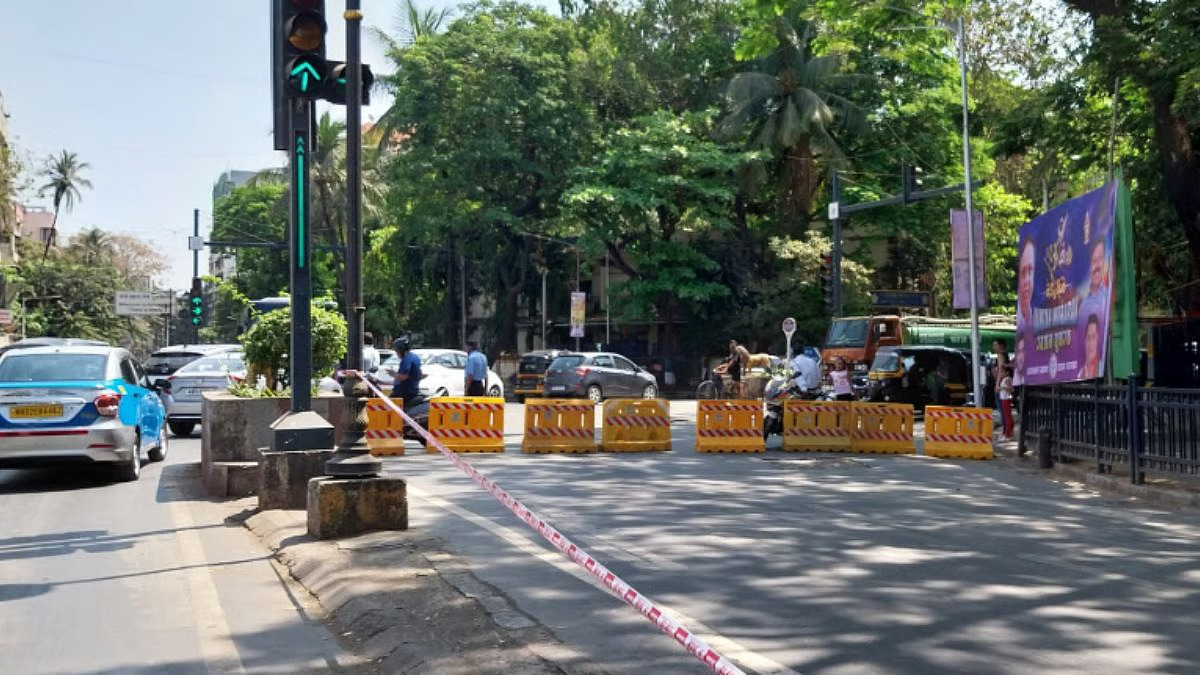
The ongoing demolition of the dilapidated Meena Hotel along Juhu Road has sparked concerns over public safety and urban traffic management. Visual evidence shared on social media shows partial road closures, debris scattered near moving vehicles, and apparent absence of dust containment measures, raising questions about planning and risk mitigation during the exercise.
Traffic along Juhu Road, a key arterial route, was disrupted as one side of the carriageway was blocked to facilitate demolition operations. Observers noted that vehicles navigated dangerously close to rubble, while pedestrians and workers moved within the active site. Industry experts highlight that such disruptions underscore the challenges of conducting demolition activities in high-density urban corridors without adequate safeguards. Urban planners emphasise that strict compliance with dust-control protocols, protective barriers, and timed work schedules is crucial for both public safety and minimising environmental hazards. In busy stretches like Juhu Road, where daily vehicular and pedestrian traffic is heavy, even minor lapses can escalate into serious accidents or prolonged congestion. “Demolition in high-traffic zones requires a combination of engineering controls and civic coordination to protect commuters and local residents,” said a senior municipal official involved in urban infrastructure oversight.
The incident also draws attention to wider urban planning and procedural gaps in handling derelict or disputed properties. Manual demolition without enclosed netting or proper debris management can impact air quality, contribute to noise pollution, and compromise mobility along primary urban corridors. Local residents expressed frustration over the timing of the work, which coincided with peak traffic hours, aggravating congestion and travel delays. Traffic officials confirmed that temporary measures were in place to regulate vehicles, but acknowledged that without proactive risk management, such interventions offer only partial mitigation. Transport analysts note that integrating demolition schedules with low-traffic periods, combined with clear signage and commuter advisories, could significantly reduce safety risks and traffic disruptions.
The Meena Hotel case highlights broader implications for Mumbai’s approach to ageing building stock in densely populated zones. As urban authorities pursue redevelopment and infrastructure renewal, coordinated planning between municipal engineering, traffic management, and environmental safety departments becomes essential. Experts recommend adopting standardised protocols for site containment, dust suppression, and staged demolition to minimise impact on surrounding communities. Going forward, the situation underscores the need for enhanced enforcement of urban safety standards, particularly for demolition projects in high-density neighbourhoods. By integrating public safety, traffic management, and environmental protection into demolition planning, municipal agencies can reduce hazards, prevent commuter disruption, and maintain more resilient urban transport corridors.
Mumbai Meena Hotel In Juhu Demolition Raises Safety And Traffic Concerns