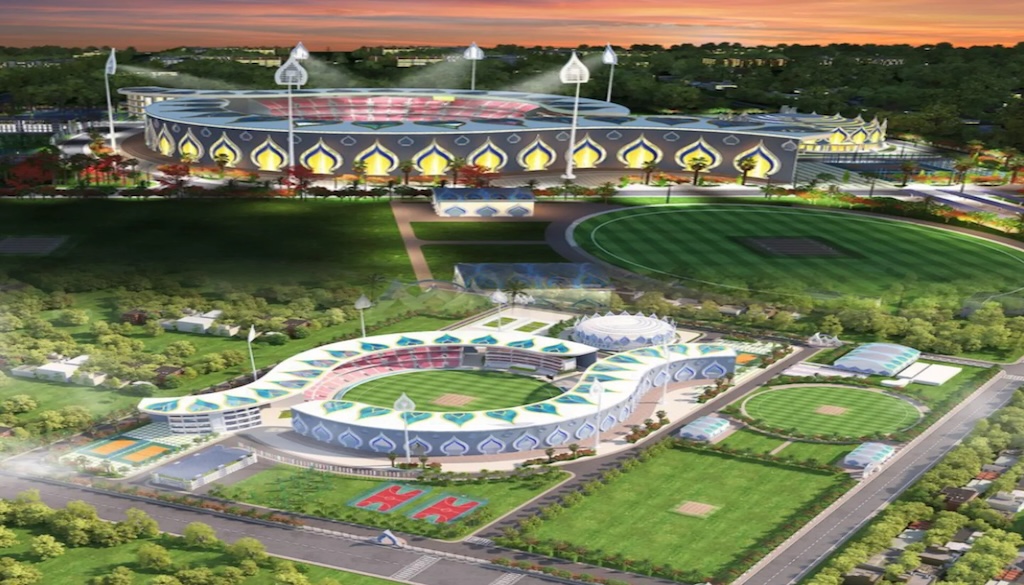
Patna Stadium Renovation Advances Local Sports Infrastructure
PATNA — A comprehensive ₹32-crore renovation of Jagjivan Stadium in Patna has been authorised and set into motion by the East Central Railway, positioning the facility for modernised sports infrastructure and expanded community use.
The initiative, which follows a detailed inspection of the site and adjacent residential colony by railway leadership, underscores the role of transport agencies in catalysing civic amenities that extend beyond core mobility functions and into urban quality-of-life enhancements. Jagjivan Stadium, located in the Danapur area under the Danapur Division of the East Central Railway, will be upgraded with new sports facilities, a contemporary pavilion, and a modern hostel that together aim to serve local athletes, youth groups and families in the surrounding urban community. Architectural plans reviewed during the inspection reflect a shift toward inclusive use, with spaces designed to accommodate multiple disciplines and events.
Officials on site also evaluated sanitation, residential amenities and general infrastructure standards at the adjacent Madhubihar Railway Colony — a key settlement for railway employees. Having deemed the living environment satisfactory, they directed the construction of a community hall and children’s park to broaden social infrastructure and enhance resident wellbeing. Sports infrastructure in Patna plays an important social and economic role in a city where demographic growth and rising youth populations are increasing demand for recreation and organised activity spaces. Developing modern facilities like Jagjivan Stadium aligns with national and state urban development goals that view accessible sports infrastructure as part of healthy, equitable cities. Such amenities can help reduce pressure on limited public spaces while offering structured channels for physical activity, talent development and community cohesion. Urban planners note that sports venues also anchor mixed-use districts, supporting local commerce and informal economies on event days through vendors and services.
The railway’s involvement in sports facility upgrades reflects a broader trend among transport organisations investing in community infrastructure that complements major mobility projects. In parallel, the Danapur Division has initiated other sports ground upgrades such as a cricket and football facility at the Amrit Bharat Railway Stadium in Hajipur. These projects collectively signal a strategic widening of infrastructure roles where transport agencies help build multi-purpose public assets. From an urban development perspective, the renovated stadium is more than a leisure project. Its expansion intersects with goals to promote active lifestyles, create inclusive public spaces, and enhance social wellbeing amid Patna’s rapid population increase. Integrating recreational infrastructure into comprehensive city planning helps reduce social inequality, improve community health outcomes and generate local economic activity, particularly when new facilities are designed with accessibility and gender-neutral participation in mind.
Fiscal discipline, project timelines and execution quality will be watched closely by residents and civic stakeholders. Timely completion of upgraded facilities, along with ongoing maintenance, will be critical to ensuring that the stadium serves not just railway employees but the broader Patna population. As cities like Patna seek to modernise public infrastructure holistically, investments in sports and community facilities — alongside roads, transit and utilities — represent strategic moves toward resilient, people-centred urban growth.