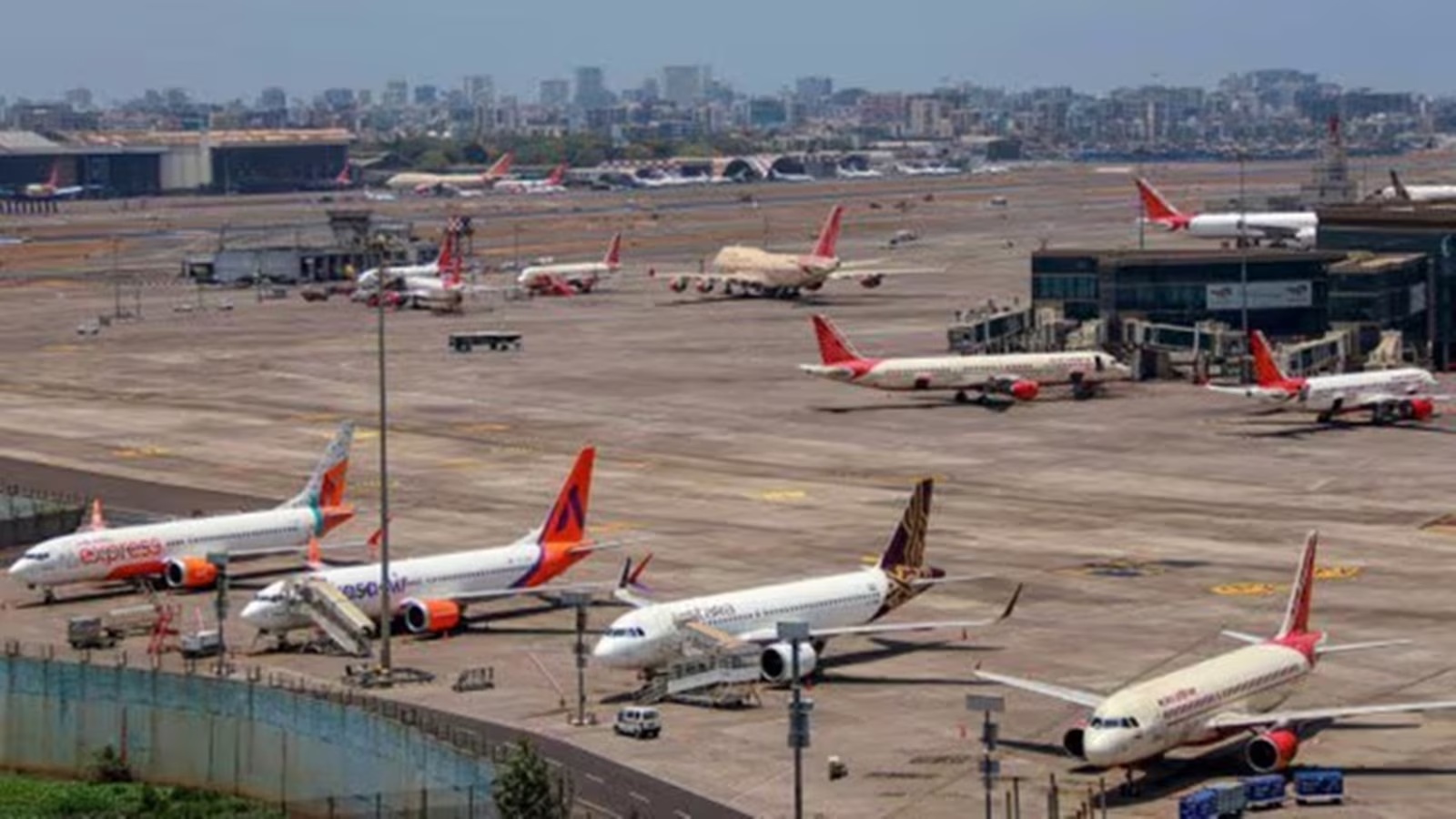
Pune airport witnessed a tense mid-air manoeuvre on Thursday evening when an Air India Express flight arriving from Indore aborted its initial landing attempt, climbed back into the air, and returned for a safe touchdown roughly 25 minutes later. Around 160 passengers were on board. While the aircraft landed without incident, the episode has renewed attention on operational communication and runway management at the city’s defence-controlled airport.
According to passengers and flight tracking data, the aircraft approached Pune airport shortly after 5 pm. During touchdown, the landing was reportedly unstable, prompting the pilots to initiate a go-around a standard aviation safety procedure in which an aircraft discontinues its landing and circles back for another attempt. Aviation specialists explain that a go-around can be triggered by several factors, including approach instability, sudden wind variations, runway occupancy, or visual misalignment. The manoeuvre is considered a precautionary step designed to ensure aircraft alignment, braking distance adequacy and passenger safety. The aircraft remained airborne for approximately 20 to 25 minutes before executing a second, uneventful landing.
Passengers described uncertainty inside the cabin during the holding pattern, noting limited communication from the cockpit regarding the reason for the aborted landing. Airline representatives had not issued a detailed public statement at the time of reporting. Pune airport, which operates within a shared civil-military airfield, has physical and operational constraints, including runway length considerations and air traffic coordination protocols. Over the past year, there have been isolated instances of aborted landings linked to weather disturbances and runway obstructions, though aviation analysts stress that such events remain statistically rare.
From an urban infrastructure perspective, the incident underscores the growing pressure on secondary city airports handling rising passenger volumes. Pune airport caters to a rapidly expanding metropolitan region driven by technology, manufacturing and higher education sectors. As air connectivity deepens economic integration, maintaining resilient operational systems becomes critical. Aviation safety experts point out that transparent communication during such events can significantly improve passenger confidence. In high-growth aviation markets, soft infrastructure including crew briefings, passenger updates and crisis management protocols is increasingly viewed as integral to service reliability.
The episode also intersects with broader debates about capacity expansion. Pune’s existing airport infrastructure faces limits in accommodating peak-hour traffic and larger aircraft operations. Proposals for a new greenfield international airport have been under discussion, while interim upgrades to navigation systems, runway safety areas and terminal facilities continue. For passengers, the safe completion of the flight reinforced the effectiveness of established safety protocols. For planners and policymakers, the event serves as a reminder that as cities scale up air connectivity, parallel investments in operational resilience, infrastructure modernisation and passenger communication must keep pace. As traffic rebounds across regional aviation corridors, ensuring that Pune airport evolves into a safer and more efficient urban gateway will remain central to the city’s long-term economic and mobility ambitions.