


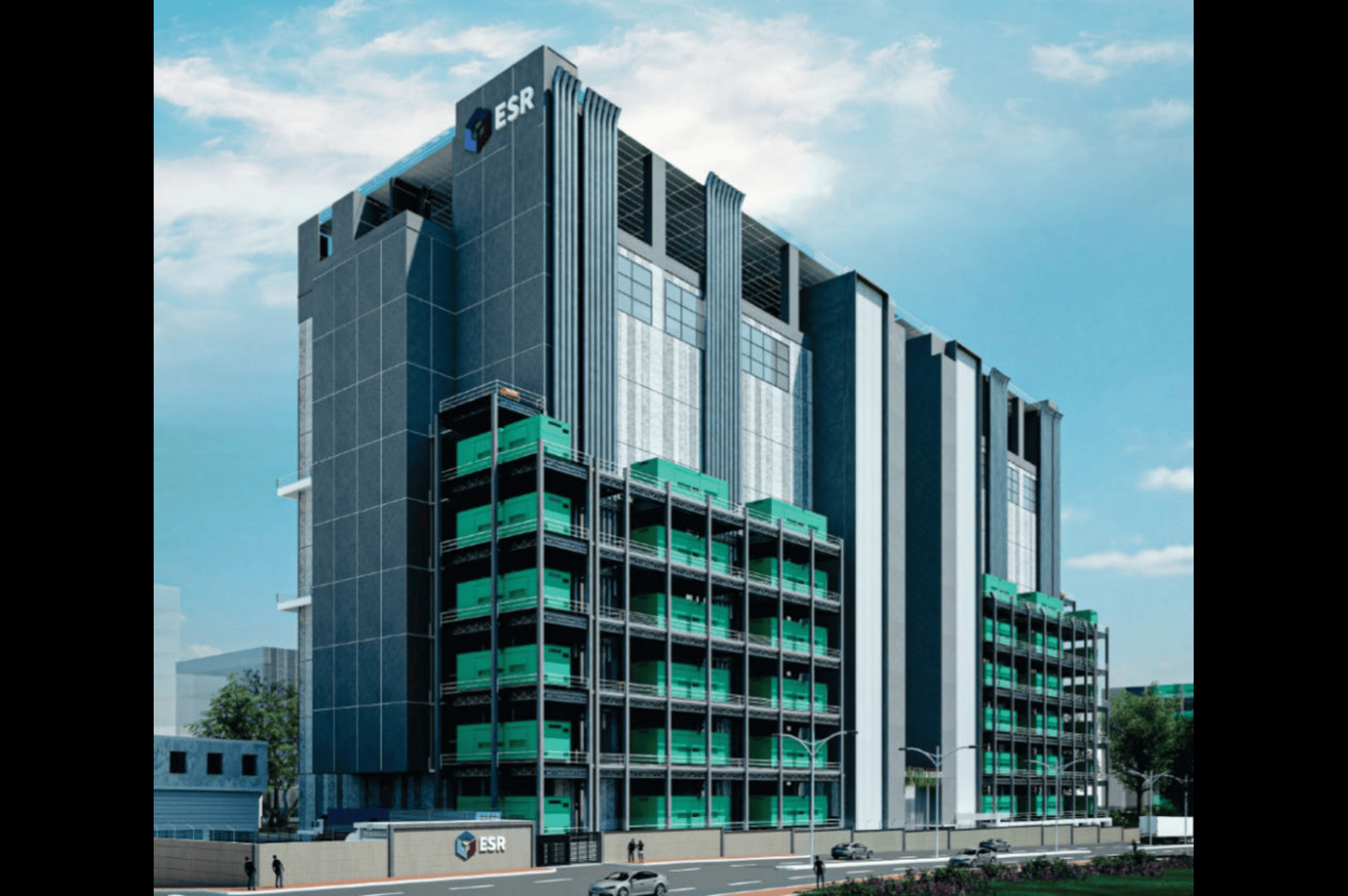
A Singapore-headquartered logistics and real assets platform has entered India’s digital infrastructure sector with a 60-megawatt facility in Rabale, Navi Mumbai, marking one of the larger single-site data centre commitments in the country’s busiest technology corridor. The Rs 800-crore (approx. $100 million) investment underscores Mumbai’s position as India’s leading data centre micro-market and reflects the accelerating demand for hyperscale computing capacity.
The project, branded as ESR Rabale MU1, is being developed on roughly 3.25 acres in the industrial belt of Rabale, a node that has emerged as a preferred destination for data centres due to proximity to submarine cable landing stations, established power networks, and fibre connectivity. According to industry officials, the facility has already been committed to a major information and communications technology occupier under a long-term arrangement. The structure will be delivered as a powered shell meaning the core electrical and mechanical infrastructure will be in place, while interior fit-outs are customised to client requirements. Designed to support up to 60MW of IT load, the campus is being positioned as hyperscale-ready, catering to global cloud providers, enterprise platforms, and artificial intelligence workloads that require high-density computing. Mumbai currently accounts for more than half of India’s operational data centre capacity, with Navi Mumbai playing a critical role due to land availability and power access. Analysts tracking the sector say that as cloud adoption deepens across banking, e-commerce, healthcare, and government services, the demand for large-scale, secure and resilient data storage is rising sharply. Beyond capacity creation, the new data centre investment highlights the intersection of digital growth and urban infrastructure planning. Data centres are energy-intensive assets, and their expansion places pressure on local grids and water systems. Urban planners note that future-ready facilities in Mumbai will increasingly be evaluated on energy efficiency, renewable power sourcing, and cooling technologies that reduce environmental impact.
The Rabale project also signals confidence in India’s regulatory and market stability at a time when global capital is reassessing supply chains and digital expansion strategies. Industry experts estimate India’s total data centre capacity could double over the next five years, with Mumbai continuing to anchor growth while secondary markets such as Chennai and Hyderabad scale up. For Navi Mumbai’s industrial zones, the entry of global-grade digital infrastructure is reshaping land use patterns shifting from traditional warehousing and manufacturing toward high-value, technology-driven assets. While such investments generate skilled employment and tax revenue, city administrators will need to ensure that infrastructure augmentation keeps pace, particularly in power reliability and transport connectivity.
As Mumbai consolidates its role as India’s digital gateway, projects like ESR Rabale MU1 illustrate how data infrastructure is becoming as critical to urban competitiveness as ports, highways and airports with long-term implications for sustainable and equitable city growth.
Also Read: Bengaluru Ring Road Project Aims To Cut Congestion
ESR Mumbai Project Boosts Data Infrastructure
