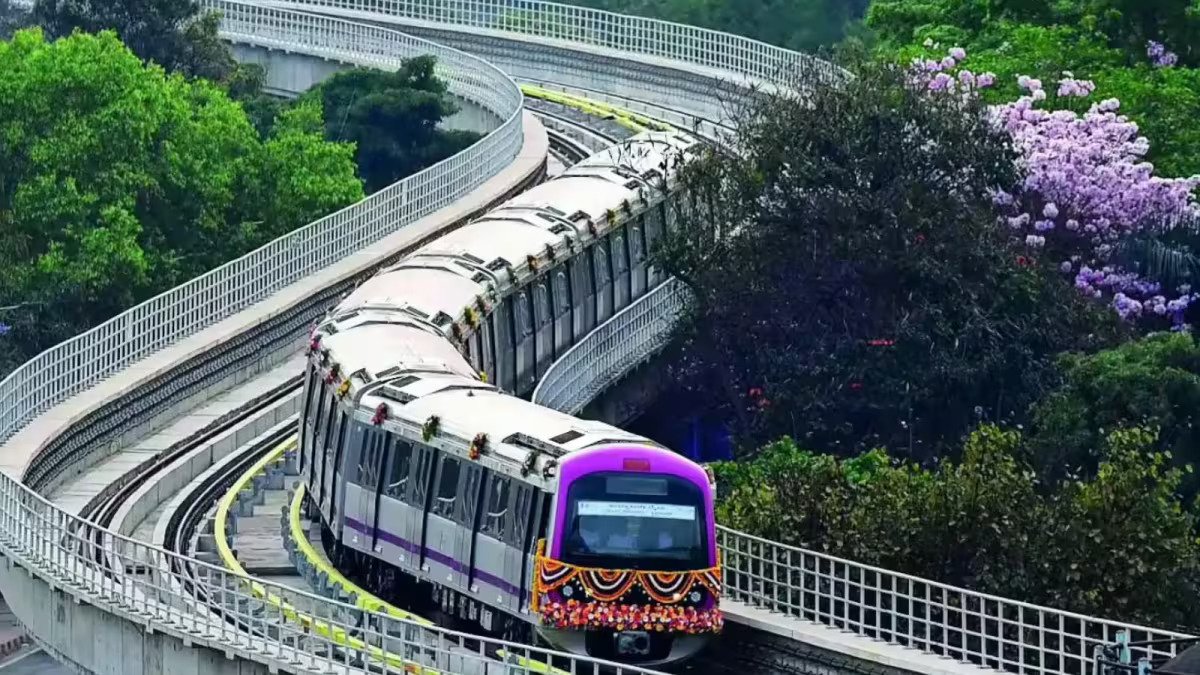
Rising fares on the city’s rapidly expanding metro network are prompting a noticeable shift in commuter behaviour, as long‑time riders reassess the value of mass transit against the convenience of private vehicles. Transport authorities and urban planners warn the trend could undermine efforts to reduce congestion on arterial roads and advance sustainable mobility. Since the beginning of this year, the Bangalore Metro Rail Corporation Limited (BMRCL) has moved forward with incremental fare increases following a broader restructuring last year. While officials say adjustments are necessary to improve service quality and cover operational costs, many residents say the higher prices are eroding one of the metro’s core advantages: affordability.
For decades, Namma Metro has been positioned as a reliable, predictable alternative to Bengaluru’s notoriously congested streets. The network’s expansion across key corridors made it possible for office‑goers and students alike to cut commute times significantly. But interviews with commuters and transport analysts suggest that the calculus is changing. “We used to plan around the metro because it was fast and cost‑effective,” said a software professional who now regularly uses a two‑wheeler instead. “Now with the fare increases and added parking or last‑mile costs, it sometimes feels cheaper to just use my own vehicle.” Many riders echo this sentiment, underscoring that the real cost of a metro journey is often higher when factoring in bike‑taxis, auto‑rickshaws or personal expenses to reach stations.
Traffic department data indicate a steady rise in two‑wheeler registrations, with vehicles increasingly visible during peak hours on main thoroughfares. Urban mobility experts say this surge is not just a reaction to metro pricing but also reflects persistent gaps in integrated transport planning especially last‑mile connectivity. “A metro system should ideally reduce dependency on private vehicles,” explained a senior urban planner. “But when access to stations is inconvenient or additional costs pile up, we see a modal shift back to cars and bikes. That undermines broader goals of reducing emissions and improving citywide mobility.” Environmental advocates are increasingly concerned that a return to private transport could exacerbate pollution and erode progress toward climate resilience targets. Bengaluru’s air quality has fluctuated widely in recent years, with vehicle emissions accounting for a significant share of particulate matter in the atmosphere.
From an economic standpoint, commuters balancing rising fuel prices against metro fares are making choices that reflect immediate household budgets, not long‑term urban sustainability. Industry analysts note that without complementary policies such as subsidised last‑mile services, dynamic pricing, or employer‑assisted transit passes, ridership could plateau or decline on key routes. City planners stress the need for a holistic approach that strengthens both the metro and feeder systems, while pricing structures remain sensitive to lower‑income riders. As the BMRCL board prepares to finalise its fare policy following public feedback, transport experts say the real test will be whether adjustments succeed in keeping the metro competitive and inclusive without compromising financial viability. Bengaluru’s transport future hinges on striking that balance maintaining an affordable, efficient metro while curbing the growing tide of private vehicles that threaten to choke the city’s arteries once again.