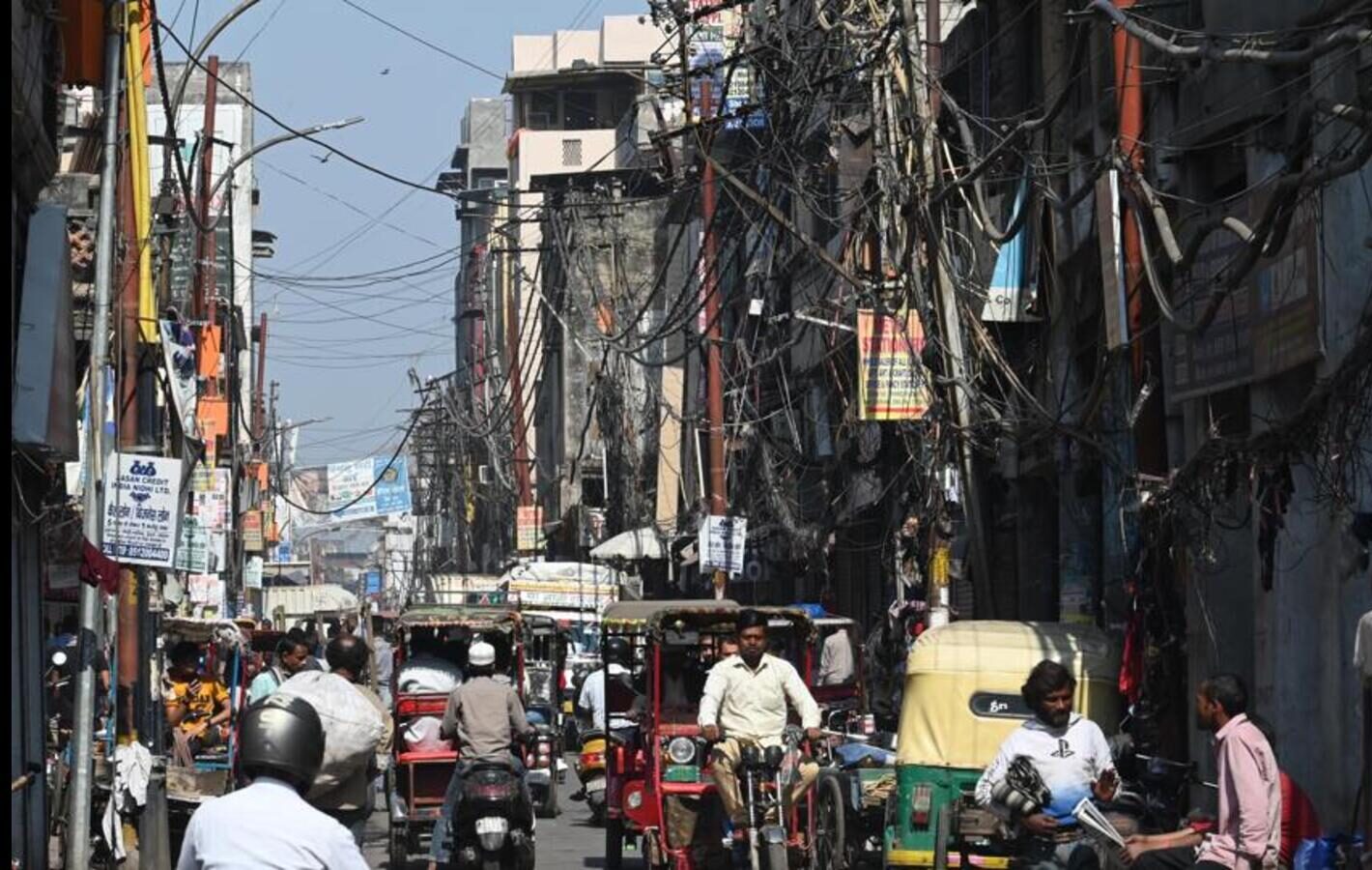
Delhi has initiated a major power infrastructure overhaul in Chandni Chowk, marking the beginning of a ₹160 crore Underground Cable Project aimed at removing overhead wiring from one of the capital’s most congested and historically significant precincts. The move signals a broader effort to modernise core infrastructure while reducing fire risk and improving supply reliability in dense commercial districts. The Underground Cable Project will replace a maze of overhead lines with subterranean power infrastructure, directly benefiting an estimated 10,000 electricity consumers in and around Chandni Chowk.
Officials indicated that construction will be undertaken in phased night-time blocks to minimise disruption to traders, pedestrians and traffic in the high-footfall corridor.
Urban safety experts have long flagged overhead cabling in traditional markets as a fire hazard, particularly in mixed-use neighbourhoods where commercial and residential spaces coexist. By shifting to insulated underground systems, authorities expect fewer outages during extreme weather and lower vulnerability to accidental damage. Alongside the Chandni Chowk works, the city administration also advanced grid resilience measures with the foundation of a 66/11 kV Gas Insulated Substation at Mandoli and four Battery Energy Storage System installations planned across Shivalik, Dwarka and Goyla Khurd. These systems are designed to stabilise peak demand loads and integrate renewable power more efficiently into Delhi’s distribution network.
Energy planners note that underground distribution networks, combined with decentralised storage, form a critical layer in climate-resilient city planning. As Delhi experiences hotter summers and rising electricity consumption, grid reliability becomes central to economic continuity especially for retail hubs and small enterprises operating on tight margins. From a real estate and urban design perspective, the Underground Cable Project also carries aesthetic implications. Removing visual clutter created by overhead wires is expected to enhance the heritage streetscape, potentially strengthening tourism appeal and improving the commercial environment for local businesses.
City officials have positioned the intervention as part of a wider push to balance conservation with infrastructure renewal. Chandni Chowk’s narrow lanes and ageing utilities have long posed engineering challenges. Upgrading systems without disturbing built heritage requires careful coordination between power utilities, civic bodies and conservation planners. Industry observers say such projects reflect a shift in Indian cities towards embedding resilience and safety into legacy districts rather than focusing solely on greenfield expansion.
As underground cabling expands across dense neighbourhoods, it could set a template for retrofitting older markets in other metropolitan centres.
The next phase will test execution capacity particularly traffic management and stakeholder coordination. If delivered on schedule, the Underground Cable Project may demonstrate how historic urban cores can be modernised without compromising their cultural fabric, while improving safety and long-term energy reliability.
Delhi Infra Push In Chandni Chowk