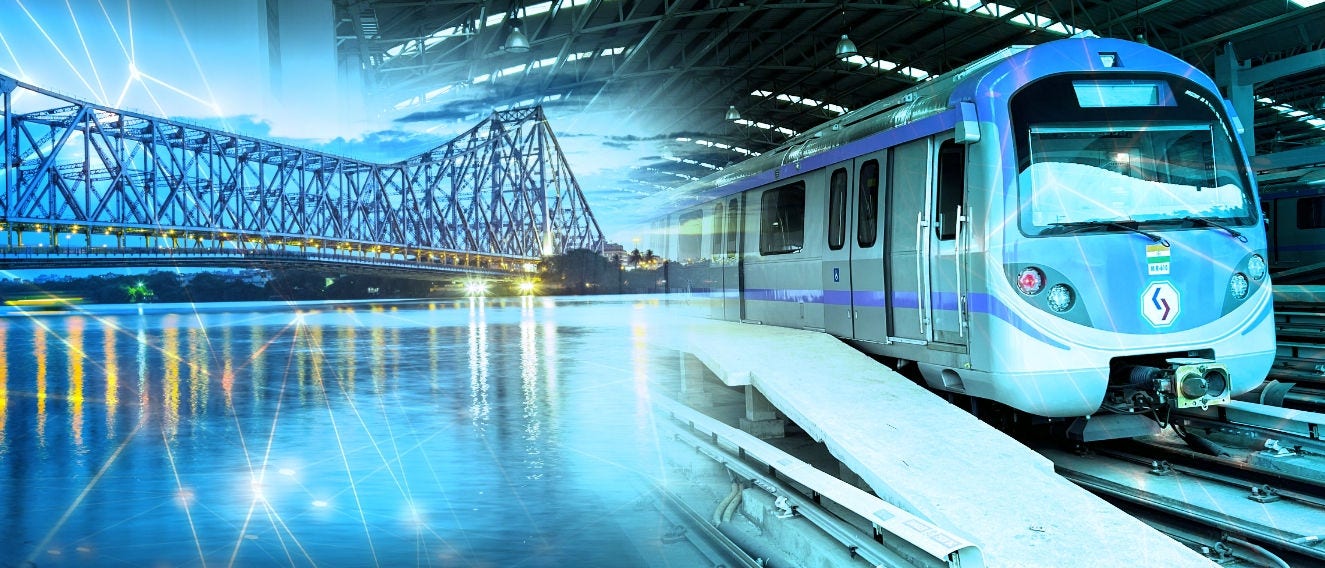
Kolkata’s oldest metro corridor has introduced a full-scale battery-based emergency power system, allowing trains on the North–South Blue Line to move to the next station during major power disruptions. The installation, commissioned this week at a central substation along the underground stretch, makes the corridor the first in India to deploy such a system at scale. For daily commuters, it signals an end to the anxiety of being stranded inside tunnels.
The Battery Energy Storage System (BESS) has been integrated into the 17-kilometre underground section between Dum Dum and Tollygunge, one of the busiest public transport spines in eastern India. During grid or traction failures, the stored energy will automatically power trains at operational speeds sufficient to clear tunnels safely, while also supporting essential station services such as ventilation and air circulation. Metro engineers conducted multiple full-load trials over recent weeks, simulating large-scale outages to test performance under stress conditions. According to technical officials, the system can sequentially evacuate multiple trains and sustain operations long enough to restore network stability. The infrastructure is rated at 4 MW and combines advanced chemistry cell batteries with power conversion units.
The move comes against the backdrop of rising climate volatility and urban energy risk. Transport economists note that metro systems in dense cities must increasingly factor in resilience planning, especially after past nationwide grid failures exposed vulnerabilities in critical infrastructure. By introducing Battery Backup Kolkata Metro capabilities, the corridor reduces dependence on external grid reliability and improves passenger safety standards. Beyond emergency response, officials indicate that the system will also capture and optimise energy use, potentially lowering electricity consumption over time. For a metro network that is both expanding and modernising, energy efficiency directly affects operating costs and long-term financial sustainability. Urban planners say such investments align with India’s broader push for advanced battery storage under national energy transition policies.
Kolkata’s Blue Line, operational since the 1980s, carries hundreds of thousands of passengers daily, connecting residential, commercial and institutional districts. A breakdown inside tunnels has historically required manual evacuation along tracks, a safety risk and a service disruption. With Battery Backup Kolkata Metro infrastructure now in place, those scenarios are expected to be significantly reduced. As Indian cities expand metro networks to address congestion and emissions, resilience is emerging as the next frontier beyond capacity addition. Energy storage systems embedded within urban transport corridors could become standard practice, especially in older systems undergoing retrofits. For Kolkata, the shift marks a practical step toward safer, lower-carbon, and more dependable public mobility, a prerequisite for inclusive and climate-ready urban growth.