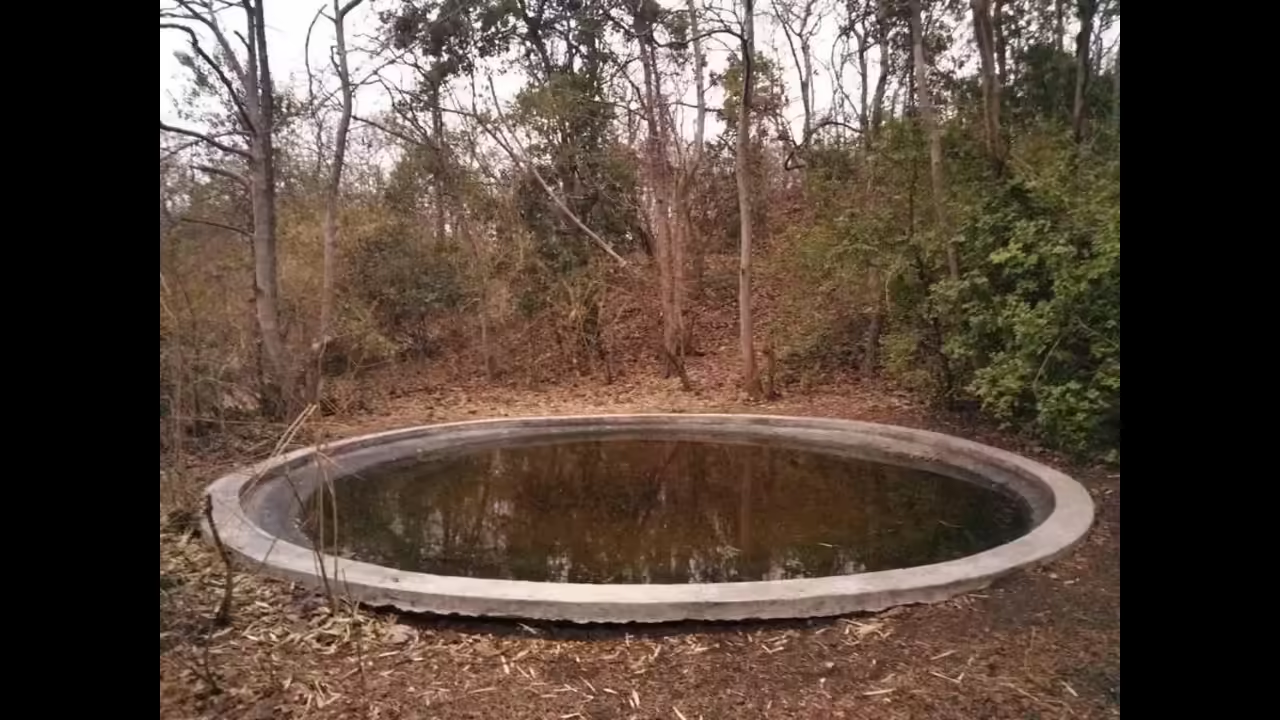
Maharashtra Conservators Urged To Restore Waterholes
Wildlife habitats across the Marathwada region are confronting a rising threat from diminishing water sources as early summer temperatures climb above long-term averages, prompting conservationists to call for systematic recharging and maintenance of critical water holes that sustain fauna during dry periods. Field observers and forest officials say proactive measures are now essential to protect biodiversity and ensure ecological resilience in these sagging landscapes.
Recent heat waves have pushed regional temperatures — for example, in Chhatrapati Sambhajinagar — significantly above seasonal norms, accelerating the drying of natural depressions and artificial waterholes that are lifelines for wild herbivores and carnivores alike. In sanctuaries such as Gautala Autramghat, Yedshi Ramling Ghat and Naigaon Peacock Sanctuary, many of these water points begin shrinking as early as February, jeopardising access to life-sustaining water ahead of the peak summer months.Experts in wildlife ecology emphasise that these water holes are not just incidental features of the terrain but central to maintaining ecological balance. With limited perennial water sources in Marathwada’s semi-arid environment, seasonal ponds serve as crucial hydration points for deer, antelope, peafowl, sloth bears and other species. Without effective cleaning, desilting and refilling, ponds that once supported diverse assemblages risk becoming ecological dead zones, increasing the likelihood of animal mortality and inter-species conflict around dwindling water reserves.
Forest management teams, responding to mounting public concern, have begun issuing operational directives to local staff for routine cleaning and recharging of these waterholes. Where natural refill has faltered, tankers and manual refilling are being used to shore up water levels temporarily. Such interventions, while reactive, underscore the increasing stress that heat extremes and shifting precipitation patterns impose on fragile ecosystems that are already grappling with habitat fragmentation and human pressure.The issue resonates beyond wildlife conservation: water scarcity in sanctuaries reflects wider hydrological strain in rural Maharashtra, where demand for agricultural, urban and ecological water uses competes fiercely with limited supply. Although the state’s dam reservoirs hold above-average water stocks in many divisions, localized shortages persist in drought-prone districts including those in Marathwada, complicating water security for both humans and non-humans alike.
Climate scientists warn that patterns of heat intensification and erratic monsoon distribution — potentially influenced by broader climatic phenomena — are likely to amplify such challenges in the coming decade. In this context, routine maintenance of surface water bodies and innovative recharge strategies, such as groundwater augmentation and watershed development, become indispensable elements of climate-adaptive management. Strategic interventions, including desilting, micro-catchment development and improved soil moisture conservation, could mitigate the severity of seasonal drying and bolster ecological connectivity.
For policy makers and forest administrators, the situation in Marathwada underscores a broader imperative: integrating wildlife water needs into regional water planning frameworks. Protecting and enhancing waterholes not only supports biodiversity but also strengthens ecosystem services that benefit surrounding agricultural and pastoral communities. As Maharashtra braces for hotter summers and more variable rainfall, these interventions may determine whether wild landscapes can remain vibrant and resilient in the face of mounting environmental pressures.