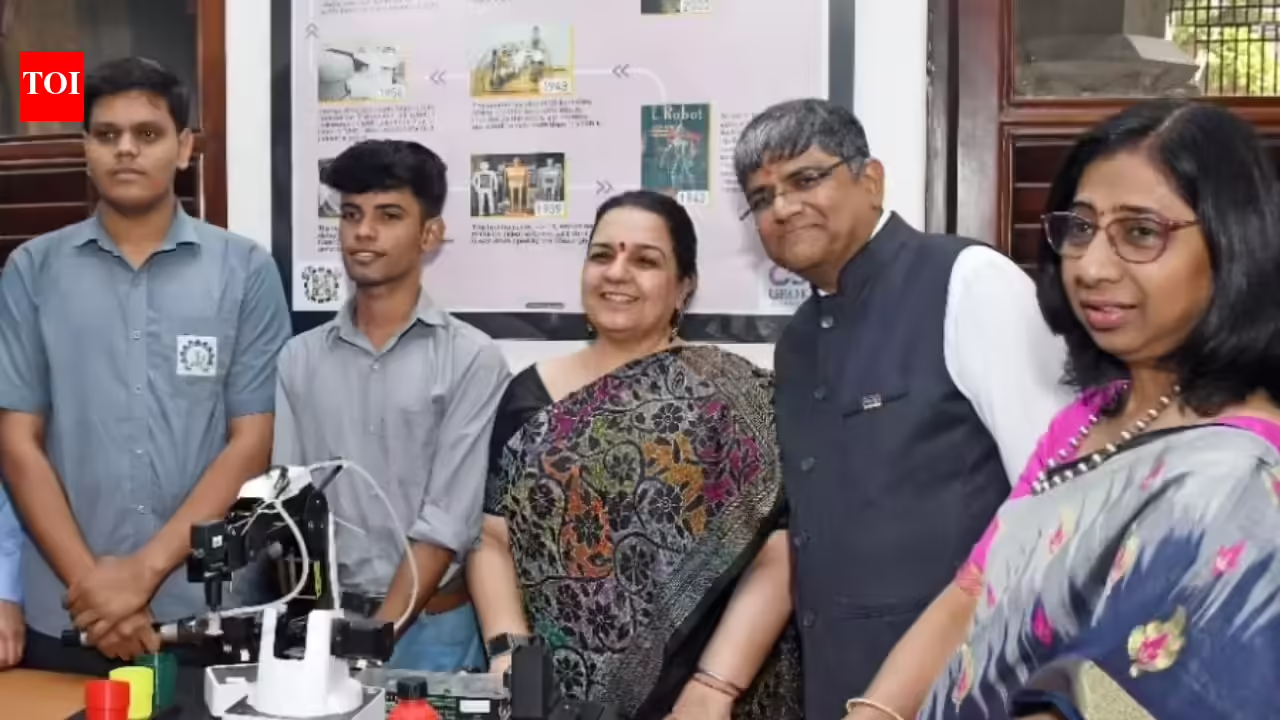
Mumbai’s vocational education landscape received a strategic boost earlier this month with the inauguration of an Industry 4.0-focused innovation laboratory at the city’s Industrial Training Institute (ITI) in Elphinstone. The facility, launched through a partnership between the Rotary Club of Bombay and the Government of Maharashtra, aims to align skill training with emerging industrial needs, enhancing employability and practical readiness among youth entering the technical workforce.
The new lab, established under a memorandum of understanding signed between the civic group and the state government in August 2025, is designed as a hands-on innovation and incubation centre where students can engage with advanced technologies and industry-relevant project work. Public officials emphasised that this initiative reflects broader policy commitments to modernise vocational education and create pathways for underprivileged youth to acquire future-ready skills at no cost.Urban development analysts say the lab’s launch comes at a time when Indian cities are recalibrating workforce development to match rapid technological change. Technology-led learning hubs can play a pivotal role in bridging the gap between academic training and real-world applications, especially in sectors such as smart manufacturing, automation, digital fabrication and the internet of things (IoT) — all of which are gaining traction under national skill missions and industry growth strategies.
The RCB–ITI innovation facility adopts a project-based learning model, emphasising “learn–build–apply” pedagogy to support student engagement with practical tasks rather than purely classroom-centred instruction. Trainers and mentors from industry will guide cohorts through simulations, prototyping and collaborative problem solving — approaches that are increasingly valued by employers seeking adaptable, digitally fluent technicians.Vocational educators note that such labs could help reverse persistent gaps in India’s skilling ecosystem, where traditional curricula often lag behind evolving industry demands. By integrating digital tools and real-world workflows into the training environment, the initiative can strengthen student confidence and readiness for roles in sectors central to urban growth, such as construction technology, advanced manufacturing and infrastructure services.
In practical terms, the lab also bolsters Maharashtra’s urban economic resilience by equipping cohorts with employable skills that support city infrastructure projects. With rapid expansion in sectors like mass transit, housing and smart utilities, workforce development initiatives that embed technology literacy and innovation competencies can contribute to more inclusive growth outcomes.Yet, experts caution that scaling such efforts across multiple ITIs and vocational institutions will require sustained public-private collaboration, investment in trainer capacity and ongoing alignment with industry evolution. Without these, the impact of isolated labs may remain limited.
Looking ahead, the innovation lab at ITI Mumbai could serve as a replicable model for other municipalities seeking to modernise skill education, especially in rapidly urbanising states. Success will hinge on deepening industry engagement, tracking graduate outcomes and ensuring equitable access for students from diverse socioeconomic backgrounds — factors that determine whether vocational programmes translate into meaningful career pathways in India’s urban economy.