Chennai Invests In City-Scale Composting Infrastructure
Chennai is set to expand its waste management infrastructure with three new windrow composting facilities aimed at reducing the city’s dependency on landfills. The Greater Chennai Corporation (GCC) plans to process a significant portion of biodegradable waste locally, addressing both environmental concerns and operational inefficiencies at existing dumpyards. The initiative marks a shift towards more sustainable urban waste solutions, potentially lowering carbon emissions from landfill decomposition and improving soil and groundwater quality.
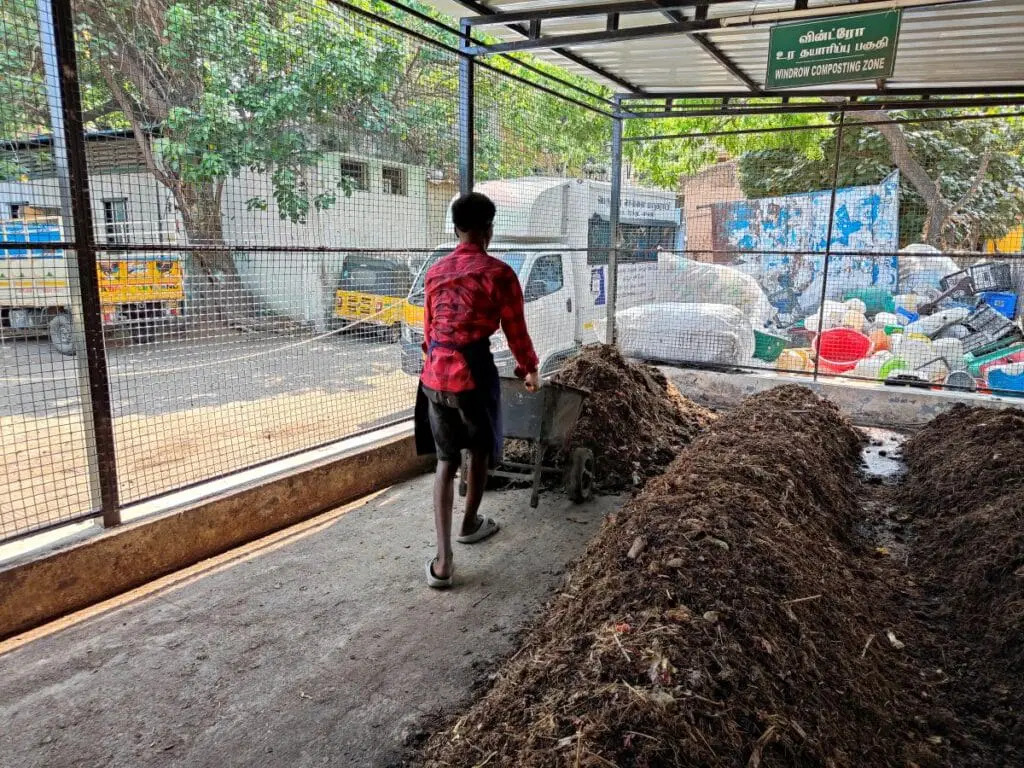
The largest facility, with a 1,000-tonne capacity, will be located on a 20-acre section of previously biomined land at the Perungudi dumpyard. Two smaller plants, each capable of handling 50 tonnes, are planned for the Madhavaram and Manali zones, with project costs estimated at approximately ₹15 crore. Officials indicate that detailed project reports are being finalised before funding approvals. Windrow composting involves layering biodegradable waste, including crop residues and animal manure, into long rows. Mechanical turners aerate the piles, enabling natural decomposition through aerobic processes. After approximately two weeks, the organic material is transformed into compost or agricultural fertilisers. While smaller in scale compared with proposed bioCNG plants at Kodungaiyur, windrow systems are simpler to operate and require less industrial infrastructure.
Current figures highlight the gap in Chennai’s waste management: the city generates around 3,000 tonnes of wet waste daily, but only 250 tonnes are processed, largely due to limited processing facilities and infrastructure. Urban planners emphasise that successful implementation of the new composting centres will require robust waste segregation at source. Without systematic separation of organic and non-organic waste, there is a risk that mixed refuse may continue to overwhelm landfill and incineration operations. Experts point out that while investment in centralised composting infrastructure is necessary, citizen-level participation and localised solutions are critical for achieving meaningful reductions in landfill pressure. Door-to-door collection schemes, residential segregation, and community composting initiatives could complement these large-scale plants, ensuring a cleaner, more sustainable urban environment.
From an economic and environmental perspective, the expansion of windrow composting supports Chennai’s broader urban resilience goals. By converting wet waste into usable fertiliser, the city can reduce landfill-associated methane emissions, improve soil health, and create local employment opportunities in waste management and recycling sectors. GCC officials are expected to integrate monitoring frameworks to track performance, ensuring that the plants operate efficiently while maintaining environmental compliance. The coming months will test whether the combination of new infrastructure and behavioural incentives can shift Chennai toward a more circular approach to organic waste, balancing urban growth with climate-conscious practices.