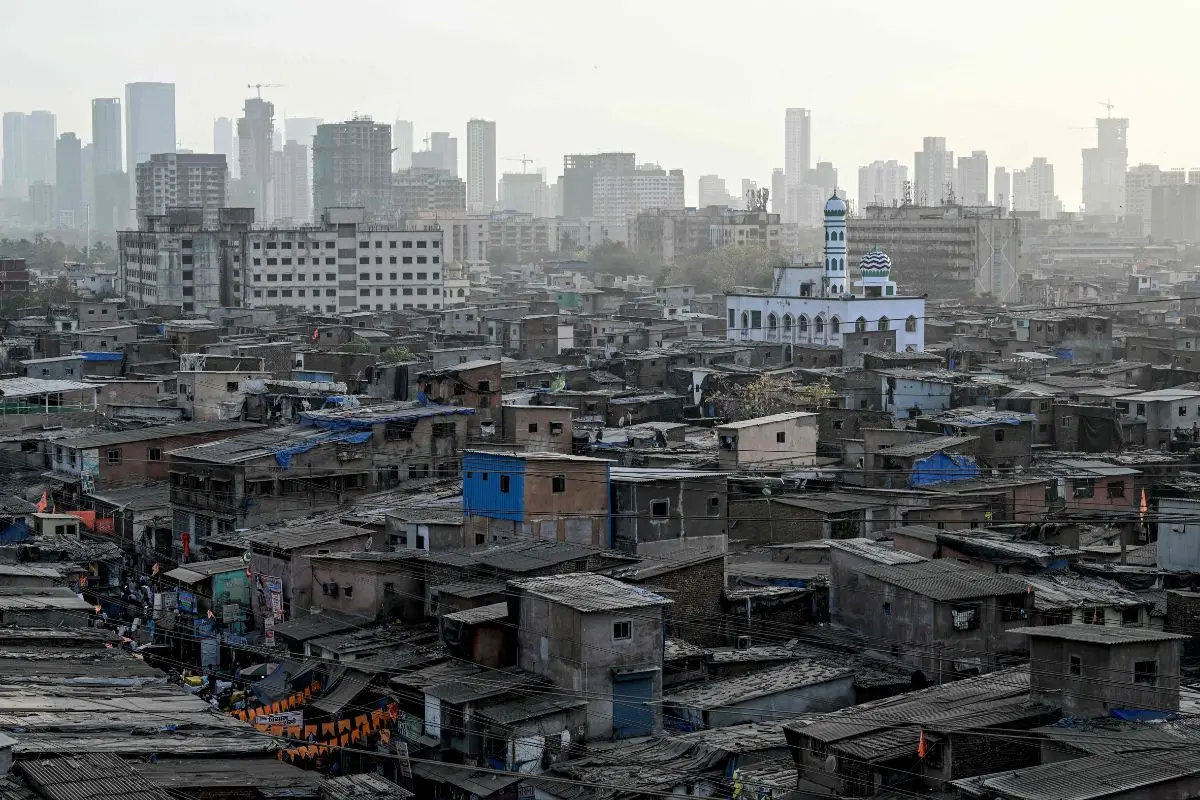
The Maharashtra government has transferred possession of 118 acres in Malad’s Mukteshwar precinct to the Slum Rehabilitation Authority, marking a critical step in the long-running Dharavi Redevelopment Project. The land will be used to resettle sections of Dharavi’s population who cannot be accommodated within the original settlement, underscoring the scale and complexity of Mumbai’s most ambitious urban renewal exercise.
Officials confirmed that the Malad-Malvani parcel forms part of a larger land pool identified across the Mumbai Metropolitan Region to facilitate phased rehabilitation. While 140 acres were initially earmarked at Mukteshwar, 22 acres remain subject to litigation. The newly handed-over 118 acres are expected to accelerate housing construction under the Dharavi Redevelopment Project.
The redevelopment is being implemented through a special purpose vehicle formed by the state government and a private developer, with development rights structured under a revenue-sharing model. The Malad land will remain under public ownership, while the project entity has secured development rights after paying a premium to the state.
According to planning documents reviewed by Urban Acres, the Malad site is intended primarily for residents deemed ineligible for in-situ rehabilitation within Dharavi. These include households occupying upper floors and those who settled in the area after a defined eligibility cut-off period. Rehabilitation units are proposed at 350 sq ft, larger than those in many earlier slum redevelopment schemes. Urban planners note that the allocation of peripheral land parcels reflects a shift towards distributed rehabilitation. With an estimated 10 lakh residents and plans to construct over one lakh new homes, the Dharavi Redevelopment Project requires land beyond the original footprint to maintain viability while balancing infrastructure capacity.
A portion of the Malad site will also include a sale component to be marketed commercially. Analysts say such cross-subsidisation is common in large-scale slum renewal projects, helping fund rehabilitation housing without placing the full fiscal burden on the state. The broader strategy involves nearly 540 acres identified across Kurla, Kanjur, Bhandup, Mulund and parts of Deonar. Integrating these sites into Mumbai’s transport, water and sanitation networks will be central to ensuring that relocation does not replicate informal living conditions elsewhere.
Urban development experts emphasise that rehabilitation at this scale must align with climate-resilient planning. Malad’s coastal proximity and drainage sensitivities demand flood-mitigated design, efficient waste systems and access to public transport to prevent new socio-spatial inequities.
The Dharavi Redevelopment Project carries a seven-year timeline for rehabilitation housing and a longer horizon for full redevelopment. As land transfer formalities progress, attention will shift to construction pace, eligibility verification and transparent allotment processes. For Mumbai, the Malad handover signals forward movement but the success of the Dharavi Redevelopment Project will ultimately depend on execution quality, inclusive planning and long-term urban integration.
Dharavi Redevelopment Gains Malad Land Parcel