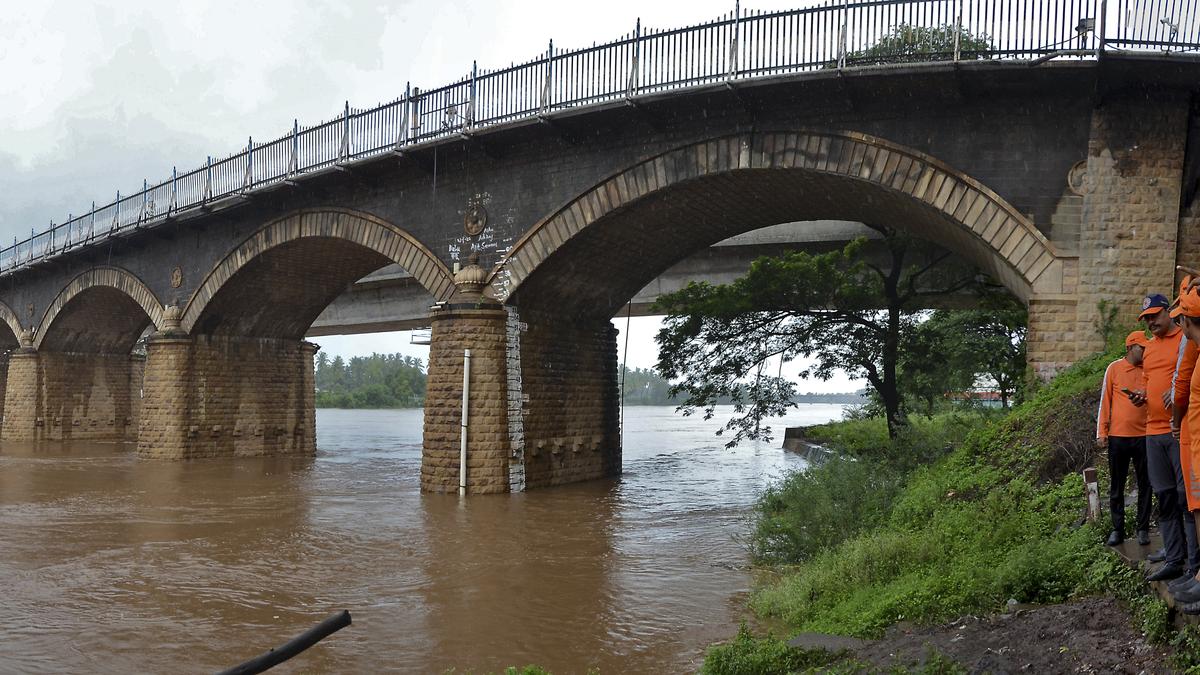
River-facing transport infrastructure in western Maharashtra is confronting escalating climate stress, with multiple bridge structures across Kolhapur district identified as vulnerable to extreme flooding and slope instability. The findings carry serious implications for regional mobility, agricultural supply chains and urban safety, especially as rainfall variability intensifies across the state.
Bridges spanning the Panchganga and other local rivers form critical links between rural production clusters and Kolhapur city’s trading and service hubs. However, recent technical assessments indicate that several of these structures were designed using historical flood benchmarks that no longer reflect present-day hydrological patterns. Increased rainfall intensity, sediment build-up and erratic river discharge are placing additional pressure on foundations, piers and approach embankments.Engineers familiar with the evaluation process suggest that scouring — the erosion of soil around bridge foundations during high-velocity flows — poses one of the most immediate structural risks. In hilly catchments, landslide-prone slopes near bridge abutments add another layer of vulnerability. Without reinforcement, such conditions can accelerate wear and reduce the lifespan of key assets.
The issue goes beyond engineering. Kolhapur’s expanding peri-urban development has altered natural drainage channels and narrowed floodplains, intensifying water flow during peak monsoon events. Urban planners note that unregulated construction near riverbanks and inadequate stormwater systems amplify the stress on river bridges, making climate resilience a land-use challenge as much as a structural one.The emerging risk profile is prompting calls for adaptive retrofitting rather than reactive repairs. Proposed interventions include deeper pile strengthening, enhanced scour protection systems, bio-engineered slope stabilisation, and the integration of real-time water-level monitoring. In select locations, increasing span widths or elevating deck levels may be necessary to accommodate higher discharge volumes projected under future climate scenarios.
From an economic standpoint, the resilience of Kolhapur’s river bridges directly influences trade continuity. The district serves as a conduit for agricultural produce, foundry goods and small-scale manufacturing outputs. Disruptions caused by flooding or structural instability could ripple through local markets and logistics networks, affecting livelihoods across the region.Urban infrastructure specialists argue that climate screening should now be mandatory for all major public works in flood-prone districts. Embedding climate risk modelling into design codes, procurement frameworks and maintenance budgets would allow Maharashtra’s tier-two cities to avoid costlier reconstruction in the future.
As monsoon cycles grow less predictable, Kolhapur’s response may become a template for other riverine districts navigating similar pressures. Strengthening river bridges today is not only a matter of public safety but a prerequisite for sustaining equitable growth and climate-ready urbanisation across the state.