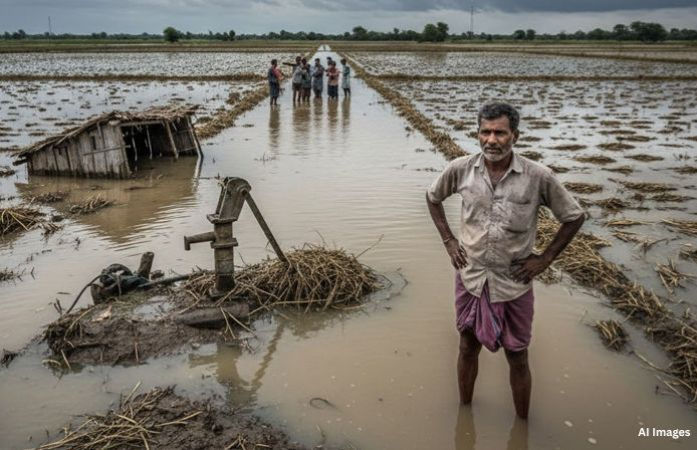
Eastern Gujarat is preparing for another bout of weather volatility after the India Meteorological Department forecast light showers and thunderstorms across four districts over the next 24 hours. The advisory covering Sabarkantha, Aravalli, Mahisagar and Dahod comes days after unexpected rainfall disrupted normal February conditions, raising fresh concerns for agriculture-dependent communities and local infrastructure systems.
The latest unseasonal rain alert follows overnight showers reported in Dahod and adjoining rural pockets, as well as parts of Panchmahal district. Cloud cover was also observed in northern Gujarat, signalling broader atmospheric instability across the state’s eastern belt. For farmers cultivating standing rabi crops, the timing is particularly sensitive, as excess moisture during this stage can damage produce and affect yields. Agricultural economists note that such climatic fluctuations, once rare in late winter, are becoming more frequent. While rainfall in moderation can replenish soil moisture, sudden storms and thunderstorms increase the risk of crop lodging and fungal outbreaks. In districts where farming is closely tied to local incomes and rural consumption, even brief weather disruptions can ripple through supply chains and wholesale markets.
Beyond agriculture, urban planners point out that unseasonal rain events test the preparedness of smaller municipalities. Drainage systems in semi-urban centres such as Dahod and adjoining towns are often designed for predictable monsoon cycles rather than sporadic winter rainfall. Short bursts of rain, combined with rapid surface runoff from expanding built-up areas, can strain civic infrastructure. The IMD’s unseasonal rain alert also coincides with warmer-than-normal night temperatures in several parts of Gujarat. Ahmedabad recorded minimum temperatures significantly above seasonal averages, while Vadodara and Gandhinagar also experienced elevated night-time readings. Such deviations from typical February conditions suggest shifting weather patterns that urban climate experts increasingly link to broader climatic variability.
In contrast, coastal and Saurashtra districts recorded relatively cooler nights, underlining the uneven nature of the current weather system. However, meteorologists caution that isolated thunderstorms may intensify locally, particularly in eastern districts closer to hilly terrain. For policymakers, these developments highlight the growing need for climate-responsive planning in both rural and urban Gujarat. From crop insurance mechanisms to resilient drainage infrastructure and data-driven early warning systems, adaptation strategies are becoming central to safeguarding livelihoods and property. As the state transitions towards warmer months, authorities will be closely monitoring whether this unseasonal rain alert marks a brief disturbance or signals a longer spell of erratic pre-summer weather. For now, farmers and civic bodies alike remain on watch, balancing immediate precautions with longer-term resilience planning.