


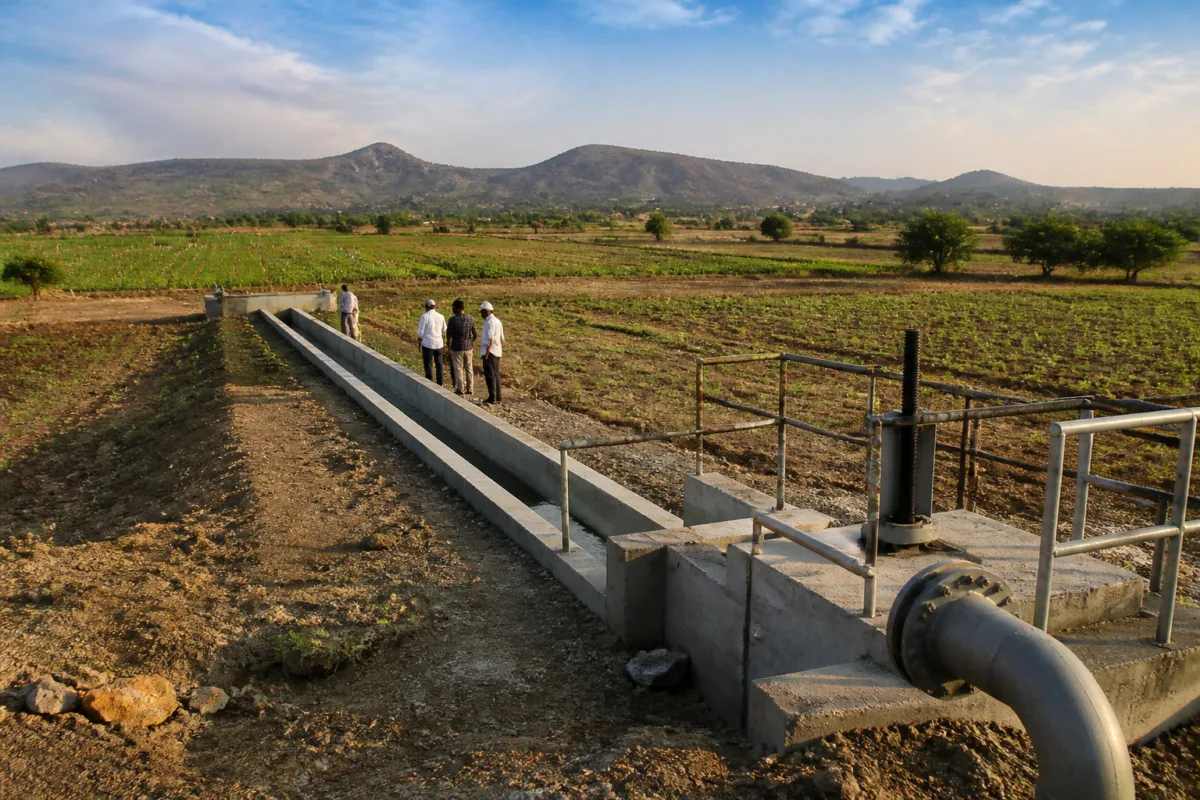
The Lakdi-Nimbodi lift irrigation scheme has received administrative approval worth ₹348.11 crore after a three-decade wait, with the project expected to bring irrigation to 7,250 hectares across 17 villages in Indapur and Baramati talukas, Lokmat – Pune reported.
The approval is intended to address water insecurity in drought-prone areas where farming currently depends heavily on rainfall, wells and borewells. The report said the scheme could support double-cropping, vegetable and fruit cultivation, green fodder production, livestock rearing and dairy activity once water reaches farms.
In Indapur taluka, the project covers Lamjewadi, Shetphal-Gadhe, Mhasobachiwadi, Niragude, Lakdi, Nimbodi, Shindewadi, Kazad, Vyasewadi and Dhaygudewadi in Akole. Together, these 10 villages are expected to receive irrigation benefits across 4,337 hectares.
The seven villages covered in Baramati taluka are Katphal, Sawal, Jainakwadi, Parwadi, Kanheri, Katewadi and Gadikhel. The planned irrigation coverage in these villages is 2,913 hectares.
The scheme is based on the planned use of 0.90 TMC of water. However, the report noted that administrative approval does not mean water has begun reaching farms. Pump houses, pipelines, reliable electricity supply and an effective distribution system will still be required before the intended benefits can be delivered.
Farmers in the affected areas reportedly face rising costs when groundwater levels fall. These include expenses for deepening borewells, replacing pumps and increasing electricity use, without any certainty that crops will receive sufficient water. The uncertainty also discourages investment in orchards and vegetables and restricts the scope for a second crop.
The report said the authorities will also need to clarify how much water each village will receive, the distribution schedule, water charges and the role of water-user associations. Equitable and planned distribution will be important once the project becomes operational.
For the 17 villages, the key test now is implementation. The project’s public value will depend on whether construction progresses from approval to functioning pumping and distribution infrastructure, and whether water ultimately reaches farm boundaries rather than remaining only an approved allocation.

