


A dispute between Maharashtra’s Food and Drug Administration (FDA) and the Pimpri-Chinchwad Municipal Corporation (PCMC) over medicines supplied to Yashwantrao Chavan Memorial Hospital has raised questions about manufacturing permissions, quality testing and the civic body’s safeguards for public healthcare procurement.
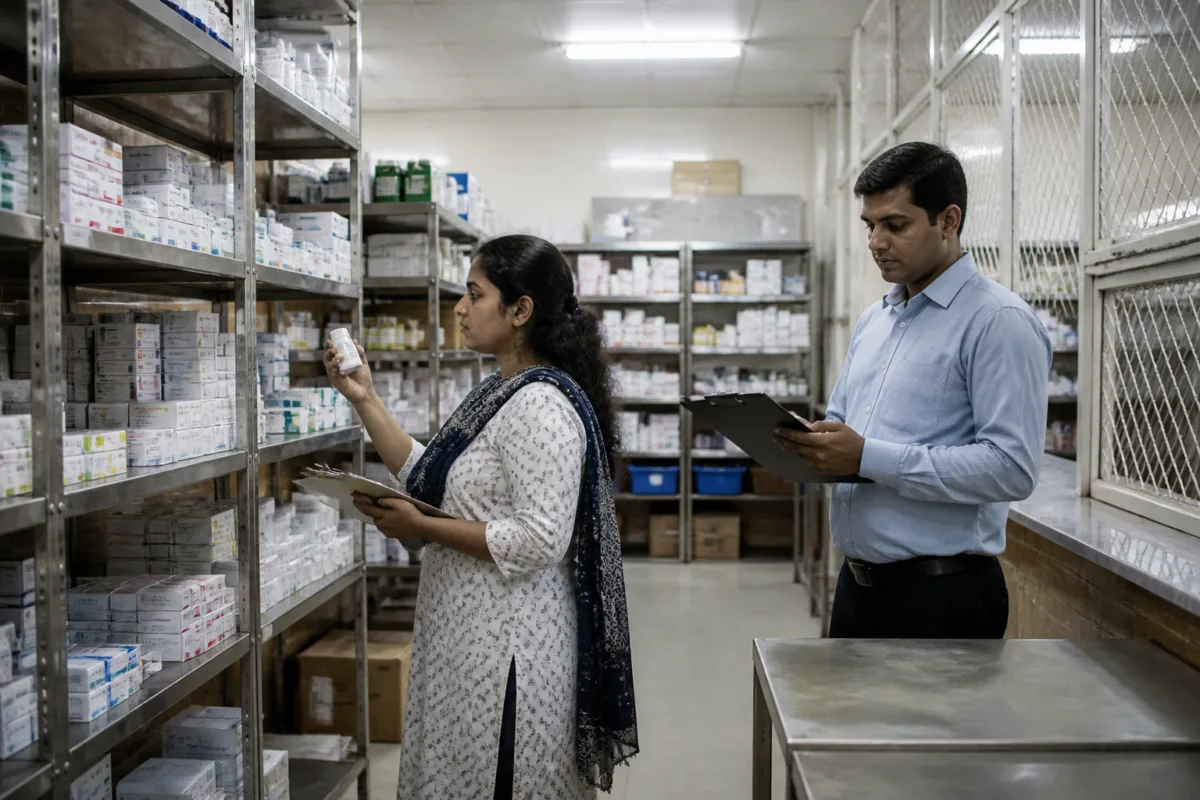
The FDA seized 10 categories of medicines from YCM Hospital’s central drug store after investigating supplies made under a rate contract by a manufacturer based in Jejuri. The regulator valued the hospital stock at ₹1.72 crore. PCMC has disputed that figure, saying the medicines were worth ₹11.95 lakh and had already been segregated after an earlier quality complaint.
According to the report, Drug Inspector S.S. Bugad collected samples from the hospital’s central store for testing. During an examination of the manufacturer’s records, officials allegedly found that the company did not have valid manufacturing permissions for several medicines supplied to the civic hospital.
Laboratory analysis reportedly found that some samples did not meet prescribed quality standards. The reported deficiencies involved assay, dissolution, description, uniformity of weight and labelling. The FDA has also raised concerns about medicines marked for government supply despite questions over their manufacturing authorisation.
The regulator issued the company a show-cause notice on October 29, 2026. It is preparing to initiate court proceedings, according to the report. The FDA also inspected the manufacturer’s facility in Jejuri MIDC on October 30, where medicines valued at approximately ₹17.58 lakh were seized by Drug Inspector R.H. Shaikh.
PCMC has presented a different account of the sequence of events. Additional Municipal Commissioner Kuldeep Jangam said the matter began with a patient complaint received last year about the effectiveness of certain medicines. The civic body sent samples to the FDA in February, and received the regulator’s report in July, according to Jangam.
He said the medicines had been withdrawn from circulation and stored separately before the latest seizure. Jangam also said that the manufacturer and supplier had been blacklisted for three years in September, that 239 medicines sourced from them had been discontinued and that penalties had been imposed. PCMC had written to the FDA in July requesting that the segregated stock be collected, he said.
The differing accounts point to two separate questions in the management of medicines at a large municipal hospital: whether the products entered the supply chain despite inadequate manufacturing permissions or quality failures, and whether the civic body’s internal response sufficiently prevented their use and enabled prompt regulatory action.
PCMC maintains that the medicines were already isolated and that action against the manufacturer and supplier had preceded the FDA’s collection of the stock. The FDA, meanwhile, has treated the case as involving production and sale without the necessary permissions and has relied on the seizure and laboratory findings in pursuing the matter.
The dispute over valuation also remains unresolved. The FDA’s estimate for the hospital stock is more than 14 times the amount cited by PCMC. The available report does not provide the basis for either calculation, leaving the difference to be settled through the departments’ records and any subsequent legal proceedings.
For patients and hospital users, the immediate significance is the reported withdrawal and segregation of the medicines. The wider institutional issue is the need for clear traceability between civic procurement contracts, supplier authorisations, quality testing, complaint handling and regulatory enforcement. The FDA’s proposed court proceedings and the records maintained by PCMC will determine how the competing accounts are ultimately assessed.

