


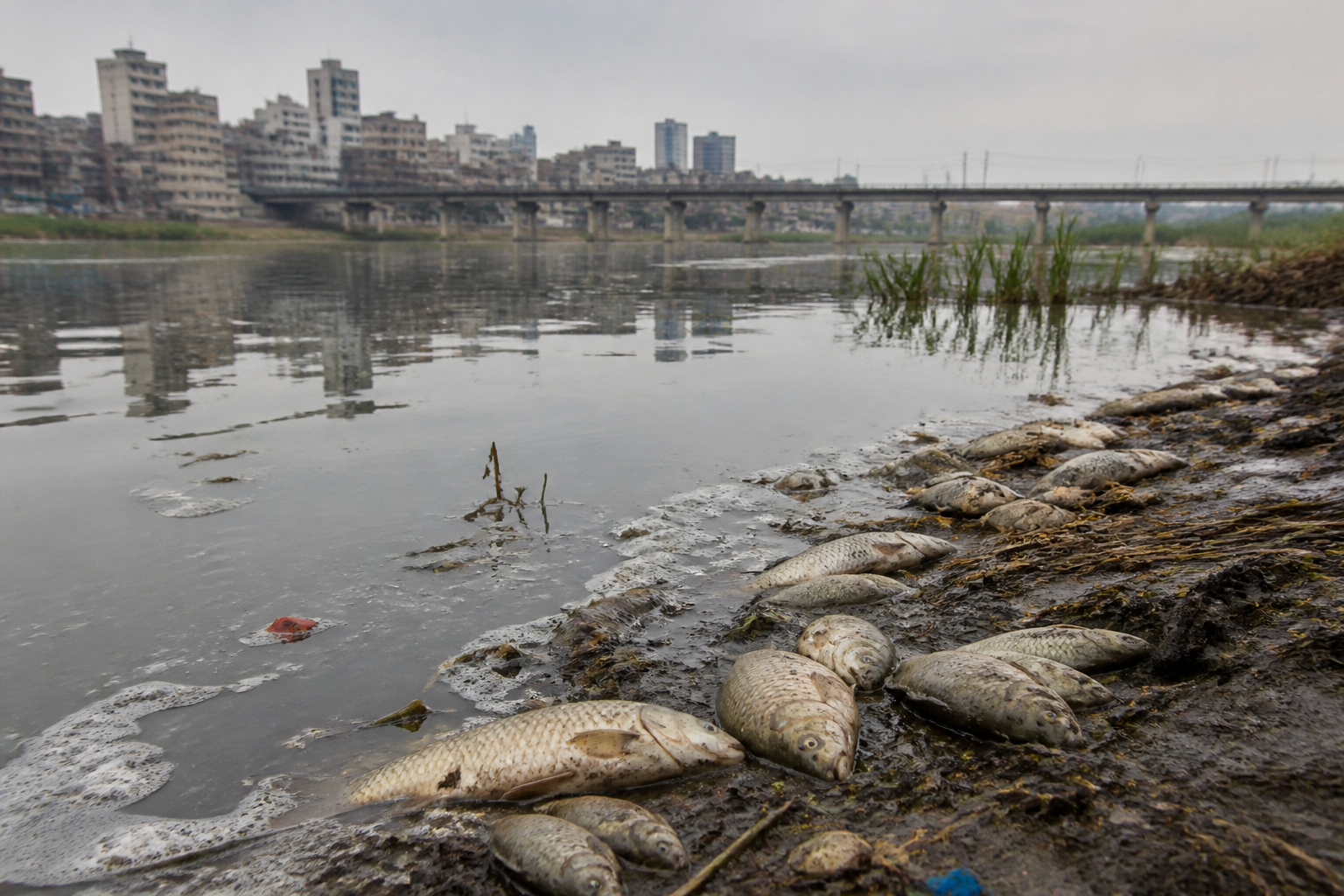
The discovery of hundreds, possibly thousands, of dead fish along the Yamuna riverbank in Burari, Delhi, has raised concern over the condition of the river’s aquatic ecosystem, with a Delhi University expert warning that a sudden rise in contaminants or a toxic discharge could be involved.
The fish deaths were reported on Wednesday evening, but the cause has not yet been established. The incident occurred along the Yamuna in Burari, where the scale of the deaths has prompted questions about pollution levels and the river’s ability to support aquatic life.
Radhey Shyam Sharma, head of the Department of Environmental Studies at Delhi University, said a sudden mass death of fish can indicate a sharp increase in contaminants in the water. He pointed to the possibility of a toxic discharge, while stressing that fish act as biological indicators of changes in aquatic conditions.
“Sudden mass death of fish always signifies a sudden spike in some contaminant or some kind of toxic discharge, because fish are biological indicators and their death signifies a disbalance,” Sharma said, according to the report.
The expert’s assessment does not establish the cause of the Burari incident. However, it identifies a possible link between the sudden deaths and a change in water quality. The report did not provide details of any water-quality test, identified discharge point or official finding confirming the presence of a specific pollutant.
Sharma also warned that pollutants in the river could potentially seep into groundwater, creating wider health concerns. He said even relatively small quantities of effluents could damage aquatic life if pollutant concentrations exceed permissible limits.
According to Sharma, exposure to excessive pollutants could affect fish beyond immediate mortality, including through reproductive and morphological abnormalities. These effects would depend on the nature and concentration of contaminants in the water.
The incident also highlights the sensitivity of aquatic ecosystems to abrupt changes in river conditions. A visible fish kill can indicate a localised pollution event, but the available report does not establish whether the deaths were confined to one stretch of the Yamuna or linked to a broader deterioration in water quality.
The available information does not identify the source of any suspected contamination or record a confirmed response from a government agency. The immediate unanswered questions are what caused the deaths, whether water samples have been collected, and whether testing will determine the presence of toxic substances or excessive effluents in the Burari stretch.

