


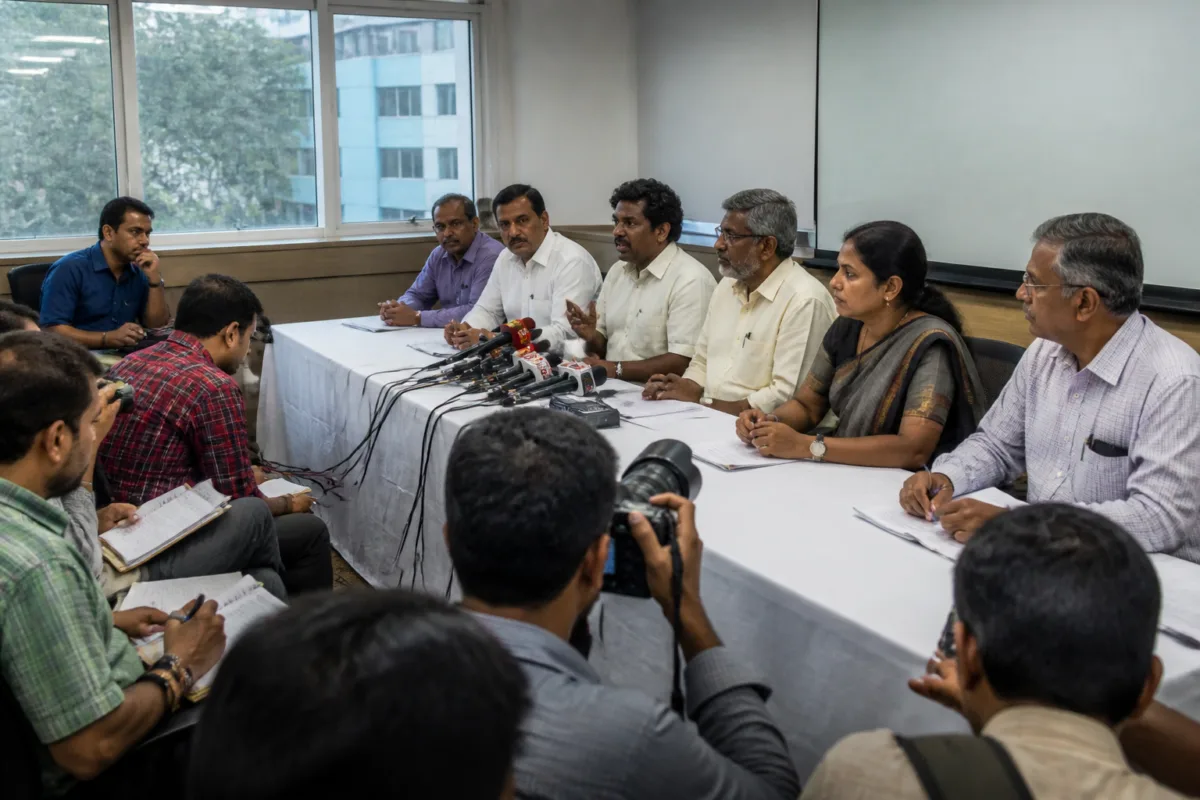
A demand for a separate OBC column in India’s census has reopened a central governance question: how can public policy allocate resources or assess representation when the size and social composition of a major population group remains disputed? At a press conference in Bengaluru, OBC Federation of India founder-president J.M. Jerappa urged the Union government to include a dedicated OBC category in the census. The demand is not for a new welfare announcement, but for a change in the information system on which welfare, budgeting and representation claims are built.
According to Prajavani’s report, Jerappa said a separate census column could help provide social, economic and political justice to what he described as 80 crore people from OBC communities. He also demanded a separate ministry for backward classes, implementation of the Justice Rohini Commission report and the Madhusudan Naik report, and budgetary allocations in proportion to population. These are demands made by the federation and its representatives; the report does not establish that the Union government has accepted them or announced a timetable for implementation.
The importance of the census demand lies in the difference between a political estimate and an official enumeration. The report quotes actor and speaker ‘Chief Minister’ Chandru as saying that OBC communities account for about 56% of the population and that the absence of precise data has resulted in injustice to the group. That figure is presented in the report as a claim made at the press conference, not as a newly released official census finding. Establishing a separate column would therefore be intended to replace broad estimates with a formally collected population record.
This distinction matters because population data performs several functions at once. It describes who lives in the country, but it can also become the basis for arguments over the scale of welfare programmes, representation in education and employment, and the distribution of public money. When the relevant data is unavailable or contested, the debate shifts from policy outcomes to the reliability of the underlying count. The Bengaluru speakers are using that gap to argue that the state cannot deliver meaningful justice without first establishing how many people are affected.
The report also highlights the unequal visibility of social groups within the census framework. Chandru said the census contains separate columns for Scheduled Castes and Scheduled Tribes but not for backward classes. His argument is that caste is not only a social identity but also a factor connected to educational, economic and political status. In that framing, the absence of an OBC column is not a technical omission. It limits the ability to compare the group’s population share with its access to opportunities and public support.
The federation’s position links enumeration to three areas of governance: representation, expenditure and institutional responsibility. Jerappa demanded that funds be earmarked in the budget according to population. Chandru called for justice in political, educational and employment opportunities. The proposed separate ministry would create another institutional mechanism focused specifically on backward-class issues. None of these measures automatically follows from a census count, but the speakers’ demands show how population data is being positioned as the first step in a wider administrative and political claim.
The cost of the census was also part of the argument. Jerappa said the government was spending ₹11,700 crore on the exercise and asked that the expenditure not be wasted by excluding OBC enumeration. The report does not provide a government document or further breakdown of this figure, so its accuracy and scope cannot be independently assessed from the supplied material. Within the federation’s argument, however, the figure is used to frame the issue as one of public value: if the state is undertaking a large and expensive enumeration, the exercise should produce data that can answer the questions central to social policy.
That argument introduces an institutional question about what a census is expected to do. A basic population count can support administrative planning, but the federation is seeking a more detailed social inventory. Such an inventory would carry consequences beyond the census operation itself because it could become part of future disputes over representation, welfare eligibility, budget priorities and the design of public programmes. The available report does not specify the proposed questionnaire, definitions, verification process or publication schedule. Those details would determine how useful and comparable the resulting data could be.
The demand also reveals the difference between counting a population and converting information into policy. Even if a separate OBC column were introduced, the count alone would not decide how funds should be distributed or how educational, employment and political opportunities should be structured. Those decisions would require rules, administrative capacity and a process for interpreting the data. The federation’s demands therefore connect a statistical exercise to a much larger governance chain, although the report does not describe the legal or administrative steps required to move from enumeration to implementation.
Jerappa referred to the Justice Rohini Commission report and the Madhusudan Naik report, calling for their implementation. The supplied report does not explain the findings, recommendations or present status of either document. It also says Jerappa referred to a Supreme Court order and argued that the Union government should act accordingly, but it does not identify the case or reproduce the order. Those gaps are important. They prevent the specific legal basis of the demand from being assessed here and underline the need to distinguish the speakers’ interpretation from the contents of the underlying documents.
The political framing at the press conference was sharply critical. Jerappa said that the Bharatiya Janata Party and the Congress were like two sides of the same coin on the issue, despite seeking OBC votes. The statement reflects the federation’s position and is not independently established by the report. More concrete was the announcement of a one-month national campaign from Kanyakumari to Kashmir. The campaign is the next stated action emerging from the meeting, but the report gives no schedule, route or organisational details.
For urban governance, the issue matters because cities are where competing claims over population, services and representation become visible in administrative form. Bengaluru hosted the press conference, but the demand itself is national. Questions about who is counted, how groups are classified and how public resources are allocated can influence the legitimacy of decisions made by governments at multiple levels. The report does not link the demand to a specific Bengaluru scheme or municipal budget. Its urban relevance instead lies in the relationship between demographic information and the institutions that plan and finance public services.
The evidence presently confirms three things. A named organisation has demanded a separate OBC census column, its representatives have linked the demand to justice in budgeting and representation, and a national campaign has been announced. It does not confirm that the Union government has agreed to the demand, that the cited population estimate is an official figure, or that the referenced reports and court order require the precise action described by the speakers. Those distinctions will be essential if the campaign produces a formal memorandum, a government response or documentary details about the proposed enumeration.
The next stage of the story is therefore institutional rather than rhetorical: whether the campaign results in a documented demand before the Union government, whether the government responds, and whether the reports and legal references cited at the Bengaluru press conference are made publicly available. Until then, the debate remains centred on a basic but consequential question—whether India’s census should record OBC populations separately and how such data would be used after it is collected.

